|
|
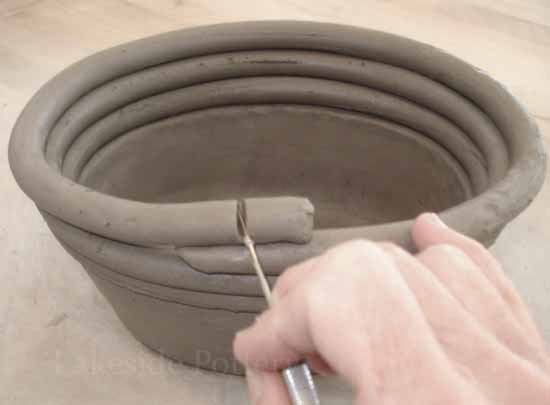
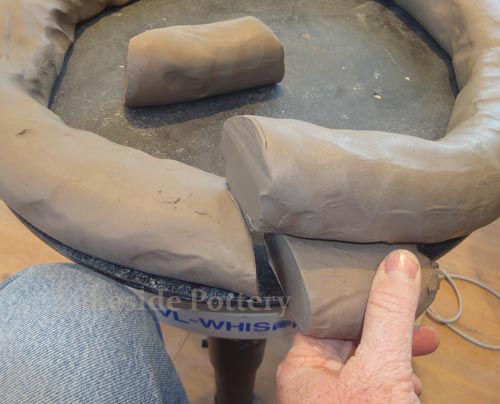
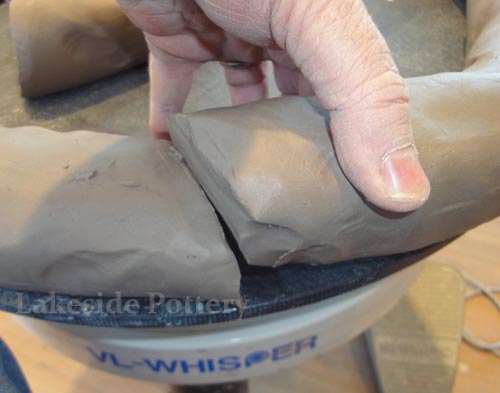
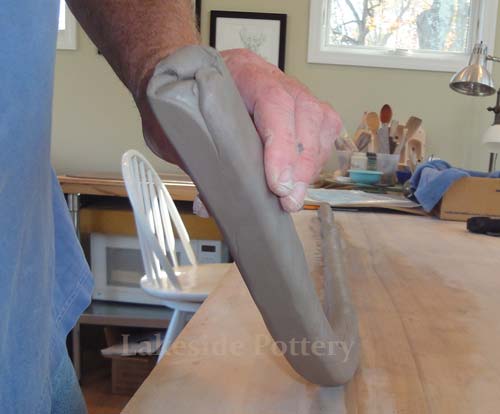
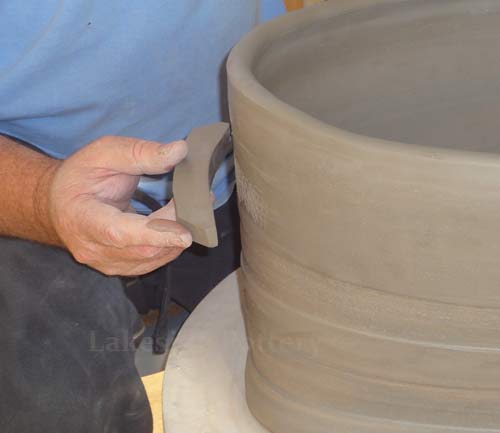
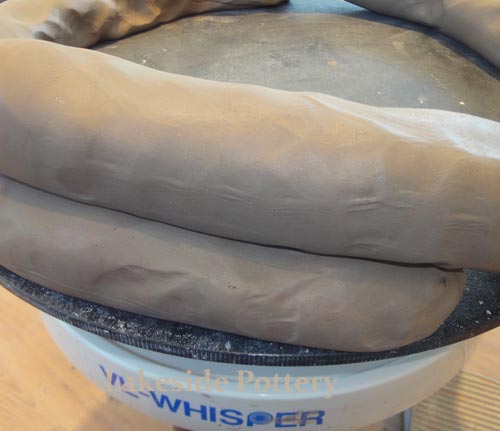
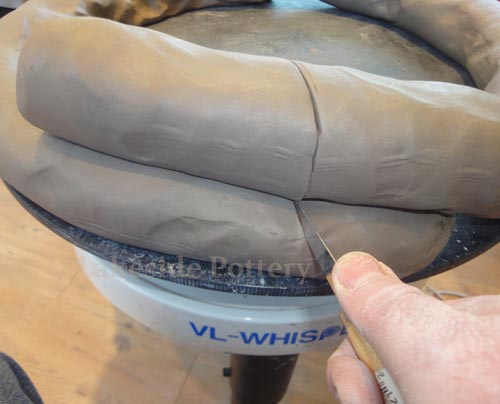
2) matching the coils pint of contact is really important. The technique below will insure a perfect match and a solid connection.
Cut both layers straight down
 |
Remove the loose ends
 |
Top piece will fit perfectly
 |
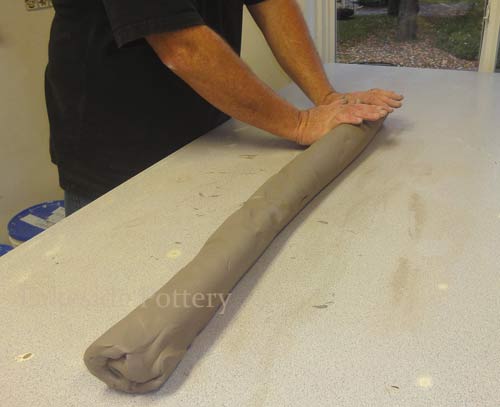
Squeeze and center first coil
 |
|
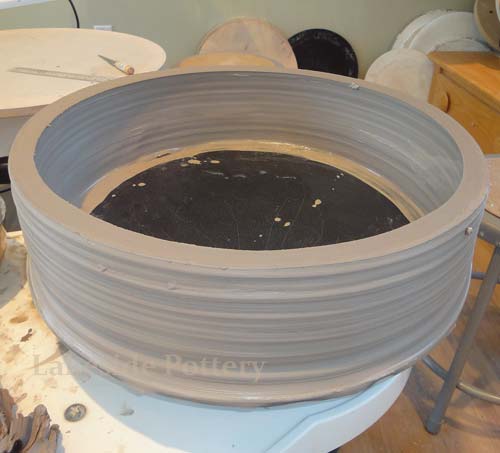
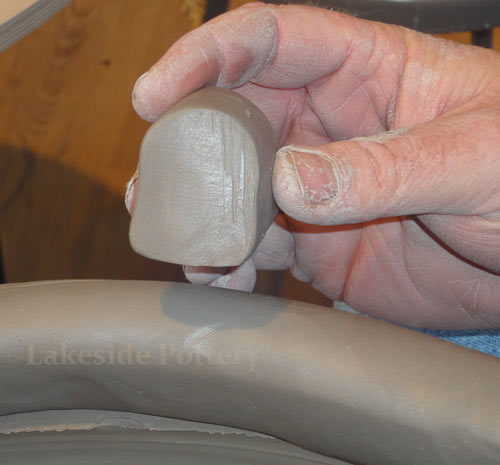
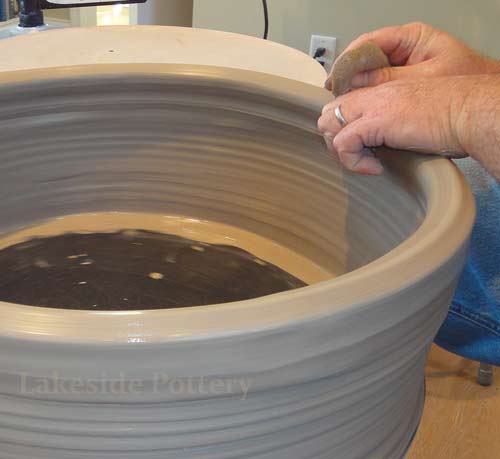
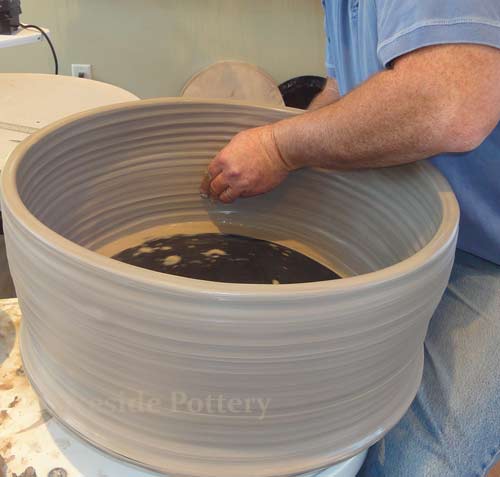
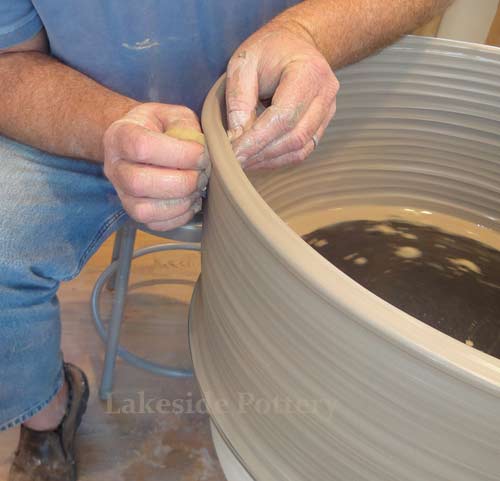
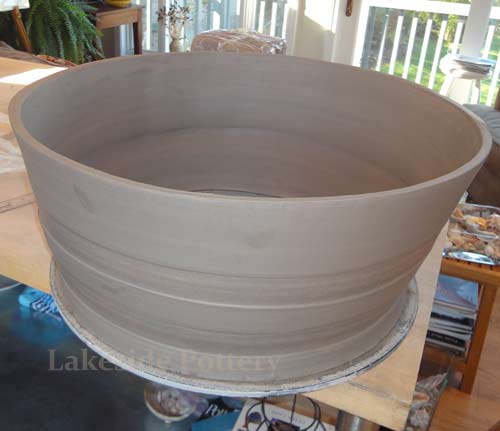
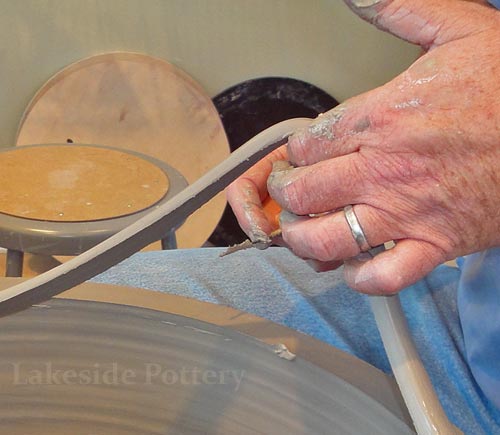
3) Because the coil is rolled by hand and it not perfect, some unevenness will travel to the top. Remove it by cutting the very end of the rim off with a pintool while the wheel is turning slowly. This cut will also provide a solid platform for the next coil. Make sure you do not raise the wall too tall and leave a thick rim to accept the next coil. If too thin, the pot will collapse with the extra height.
Remove the uneven rim
 |
Place next coil (no water yet)
 |
Use the same coil fitting technique
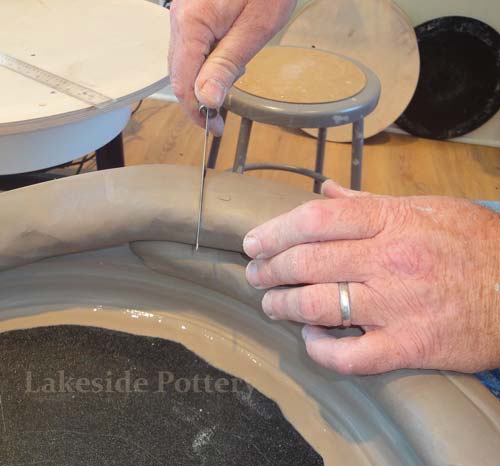
 |
Push coil down tightly
 |
|
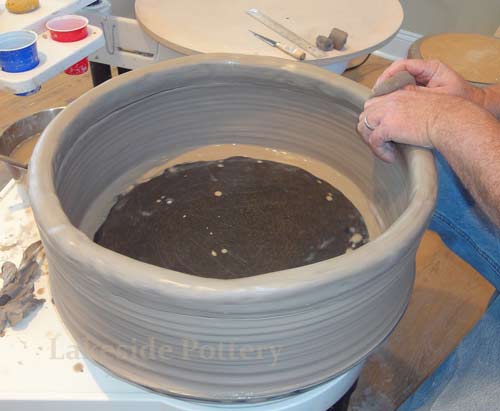
4) The rim of the second layer is now thinner and might not take the weight of compressing in the third coil. After rolling the coil, place some pressure on top to flatten the bottom as shown below.
Even walls and raise wall slightly
 |
Third coil with flat bottom
 |
Place as show and cut ends
 |
Cross section of third coil
 |
|
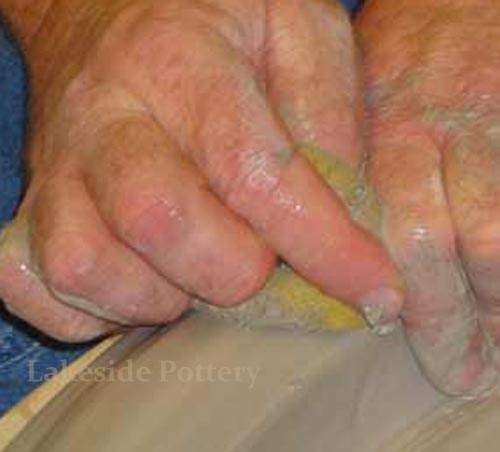
5) Once wall is even but still pretty thick, raise the walls starting from the bottom. Compress the walls every so often with two ribs.
Wet coil
 |
Compress and pull a bit
 |
Start from bottom and pull
 |
Compress walls using two ribs
 |
|
|
6) In this commission project, they asked for groves on the outside of the pot. This process is skipped in this tutorial. When the pot is leather hard enough to remove and place on a slab, make 1/2" thick slab, smooth and place on a larger wooden bat. Wooden bat will help with more even drying and will not warp as the pot is carried around. Mark the dimensions of the pot on the slab with the wet sponge so that the pot can be placed accurately on center.
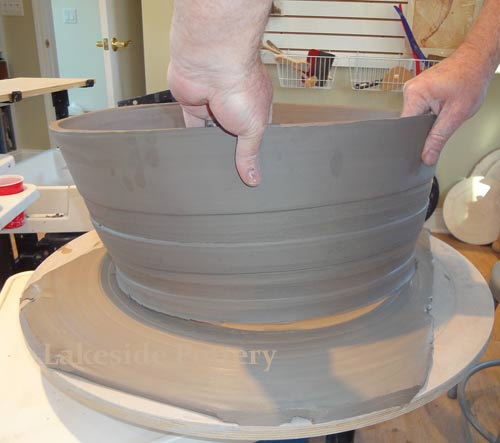
Pot is ready for removal
 |
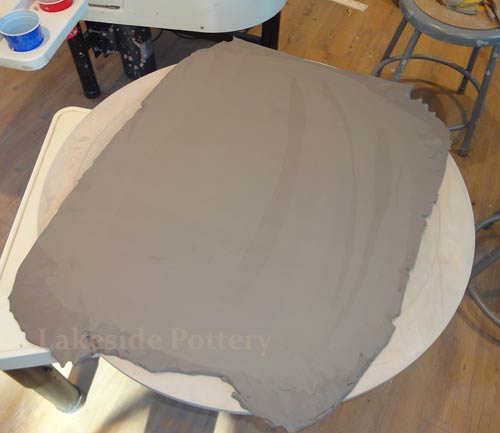
1/2" thick slab
 |
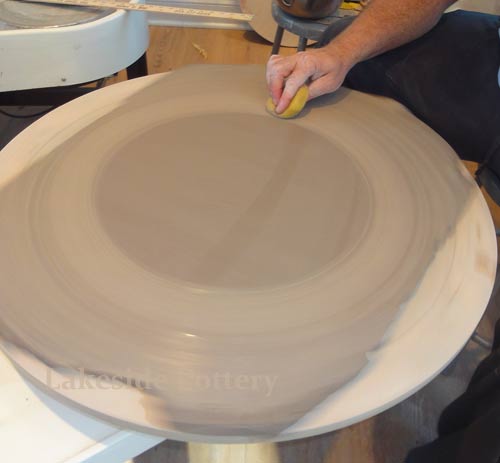
place slab on wooden bat
 |
Smooth and wet slab
 |
|
|
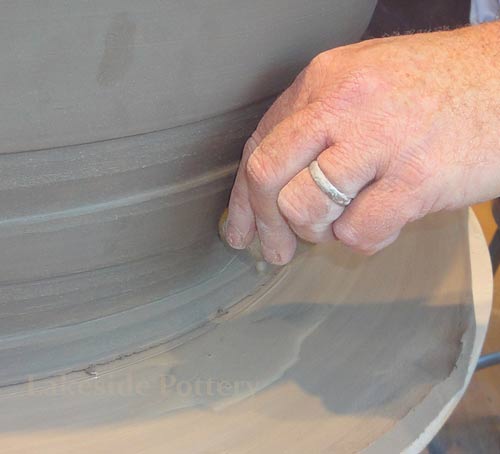
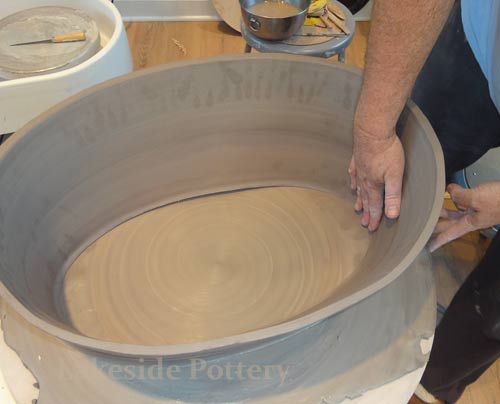
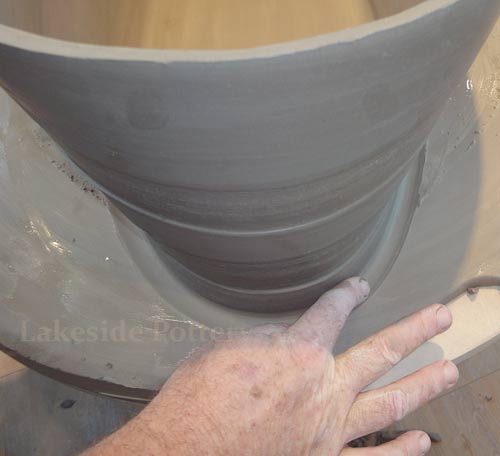
7) Use two people, four hands, to carry the pot onto the center of the already wet slab. Wet the slab with a lot of water so that altering can be easier sliding the walls to their new location.
Two people to place pot on slab
 |
Wet slab with a sponge
 |
Alter shape to desired shape
 |
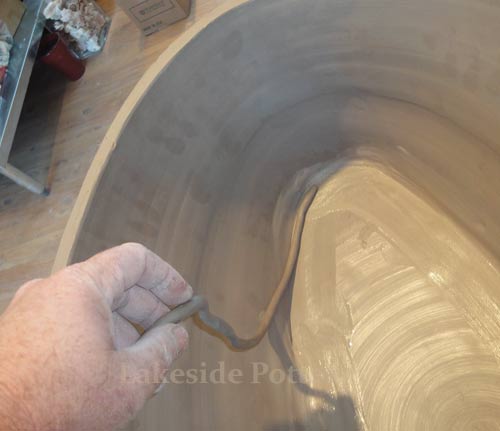
Place coil in seam
 |
|
|
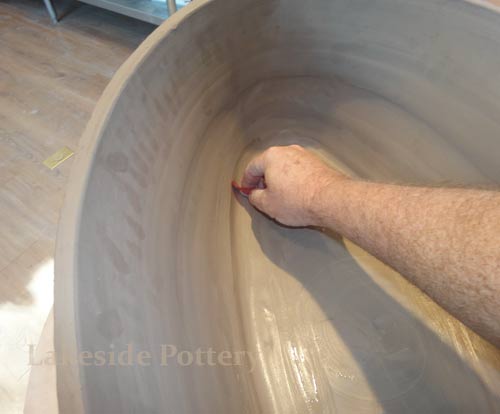
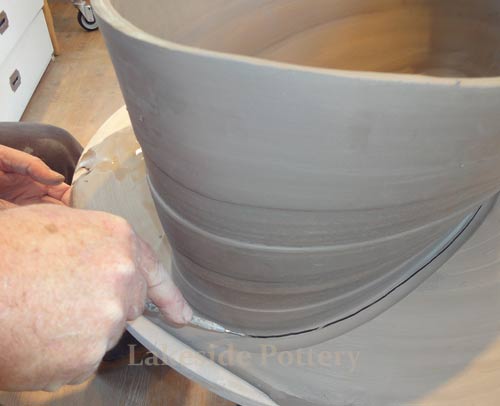
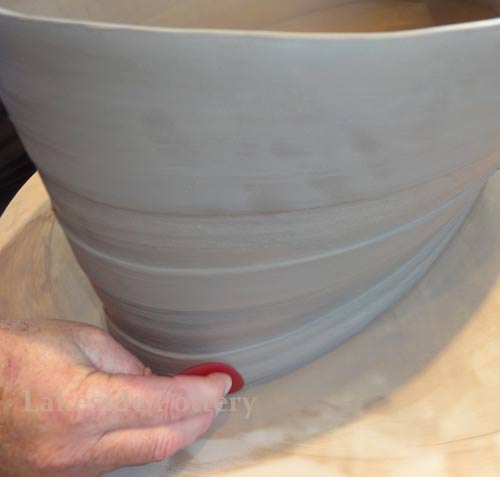
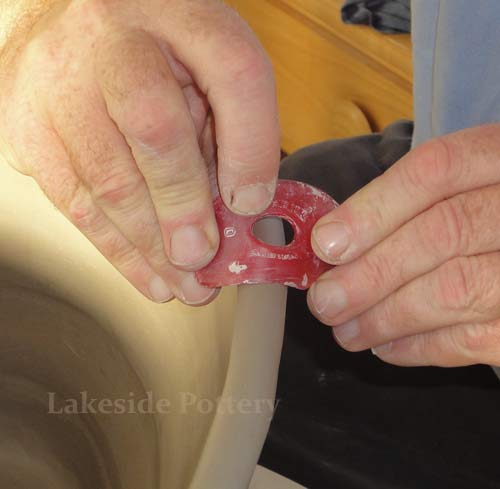
8) Use very soft coil on the inside to blend the seam and smooth with a tool. We like to use Sherrill Mud tools red rib. When using the pint tool to cut off excess slab, turn the wheel by hand while your other hand remain in the same location.
Smooth inside with a rib
 |
Blend in the outside wall into slab
 |
Cut off slab while turning wheel  |
Smooth and compress seam
 |
|
|
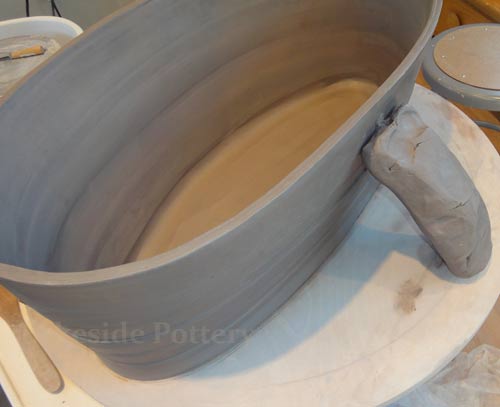
9) The walls might shift as they become more leather hard. Using some heavy clay post as shown below will help in keeping the walls in place. Use an extruder to make the rim.
Place some weight to hold walls
 |
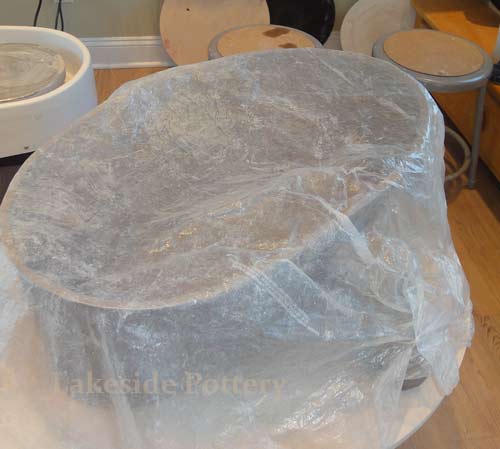
Cover loosely for several hours
 |
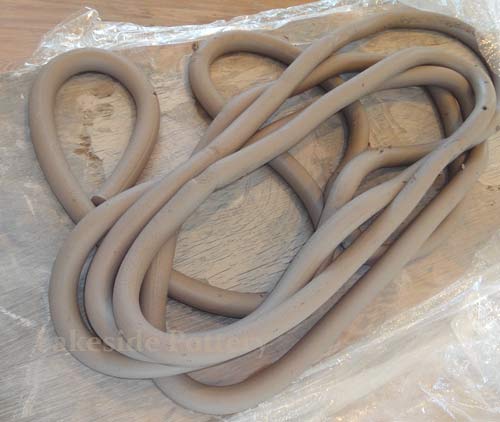
Extruded soft coils
 |
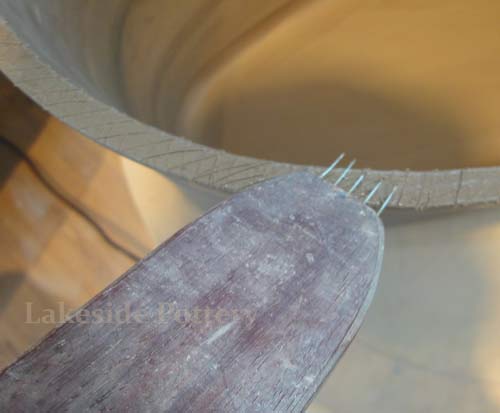
Score rim
 |
|
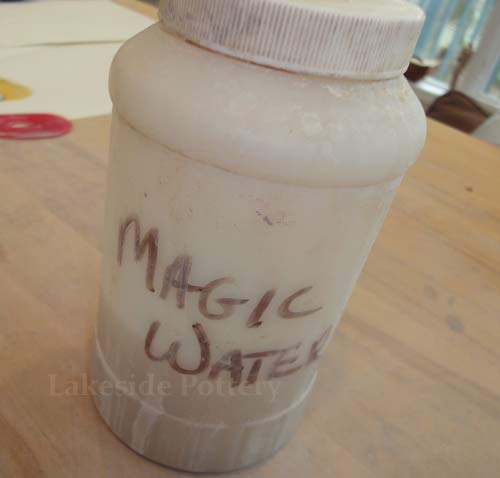
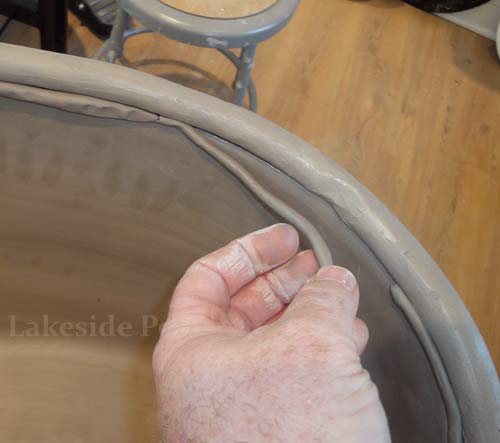
10) Using Magic Water instead of slip is a much preferred way with larger forms. To know more about magic water and it's recipe see Magic Water Link. The coil for the rim needs to be soft for better attach em net. However, to smooth it, it is better to wait a few hours to let is harden a bit.
Magic water is a better option
 |
Place coil on rim
 |
Fill in the gaps with thin coil
 |
Round top (red rib)
 |
|
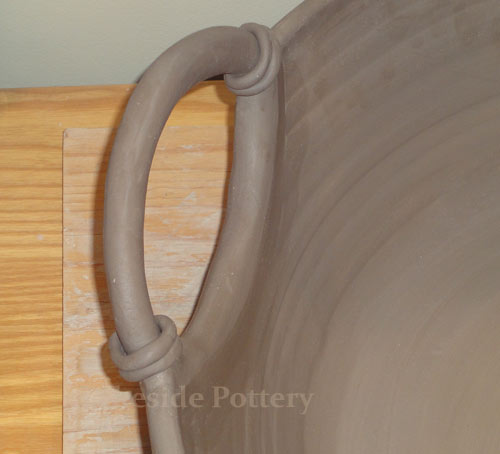
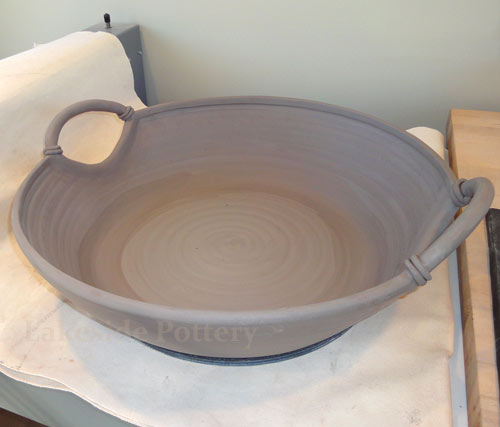
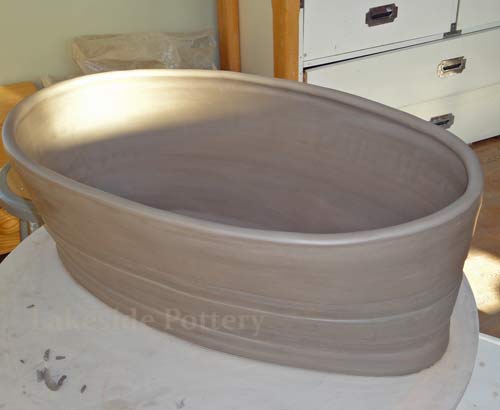
11) Make the handle thick and strong enough to carry the pot's weight.
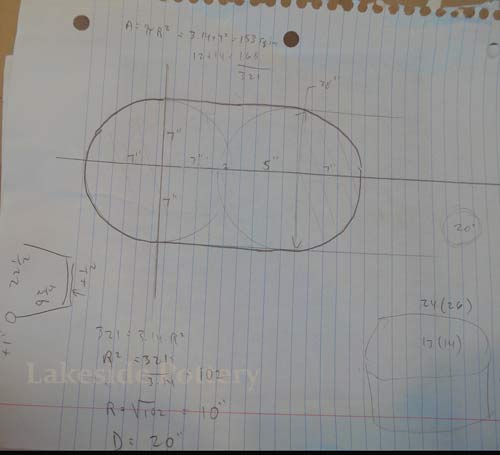
A 28" long, 17: wide and 12" tall
 |
Placing the handles
 |
Handle - close up
 |
|
|
|
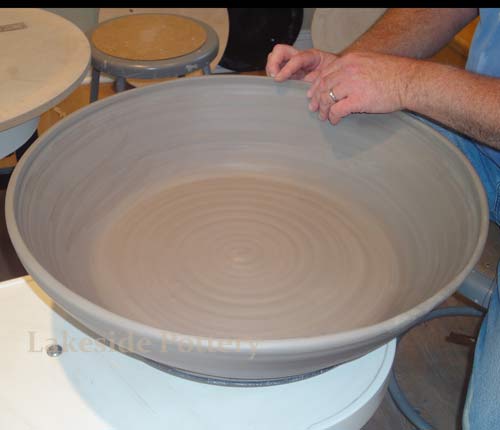
12) Below is another pot (24") that used the same coiling / slab technique but without altering.
Three coils 24" pot  |
handle close up
 |
All finished
 |
|
|
Drying
1) Cover tight and let the clay moisture content equalize for 2-3 days.
2) Cover the whole pot loosely for 1-2 weeks and make sure the rim does not dry first. If the rim drys first on such large bowl, cracking at the rim's is very likely. Drying Tip: Flip the plastic cover once a day while drying. The moisture that accumulates on the plastic surface will be facing up after flipping, thus, removing water a bit faster from the enclosed large pot.
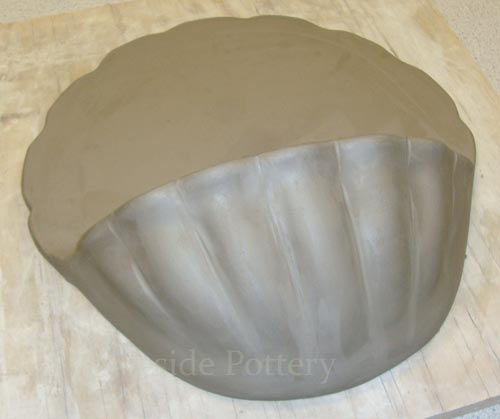
3) Before trimming, make sure the pot is on the harder side of "leather hard" to insure the pot does not warps when it is flipped over for trimming. See trimming over a foam tutorial.
|