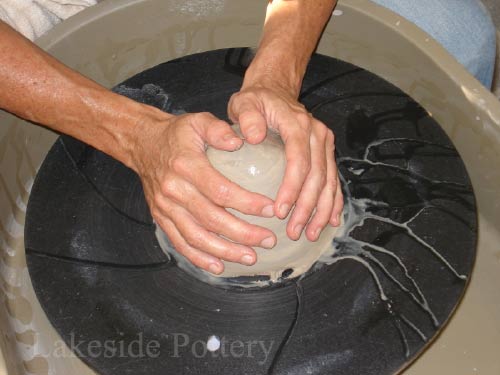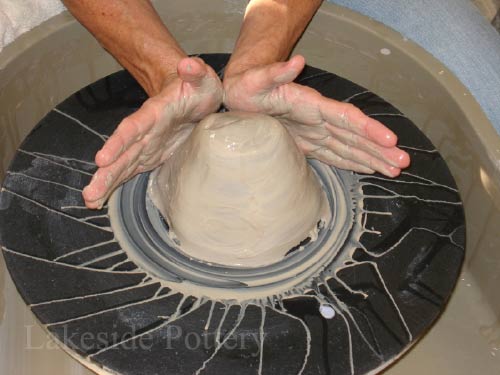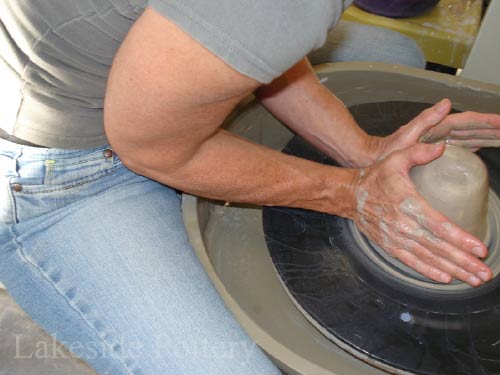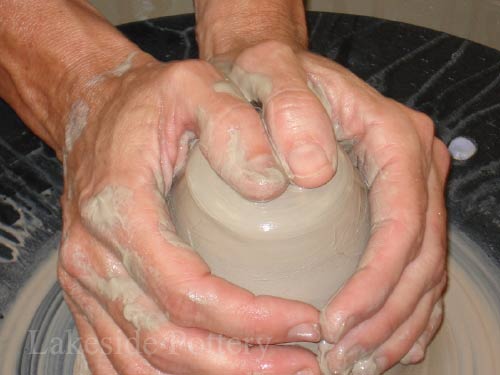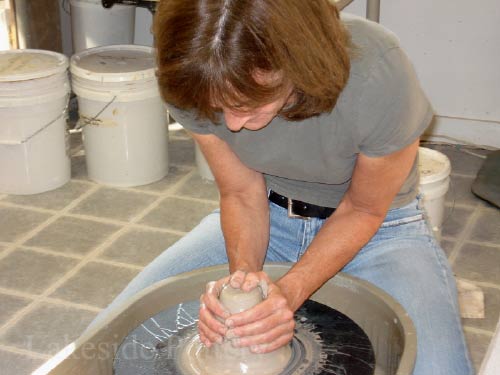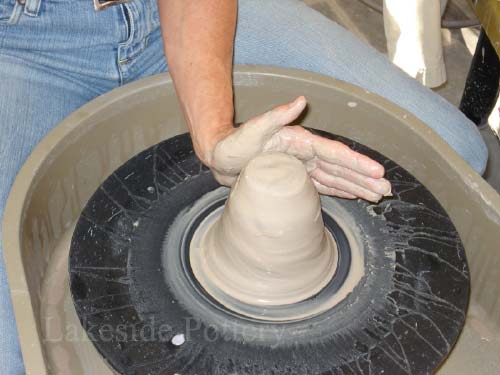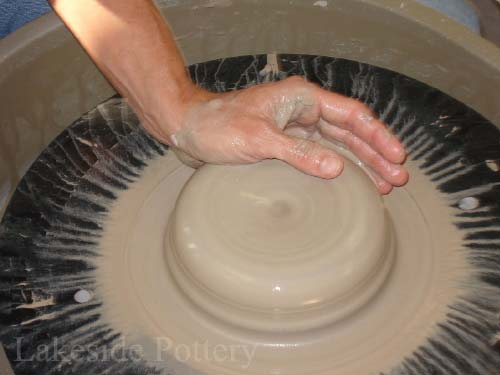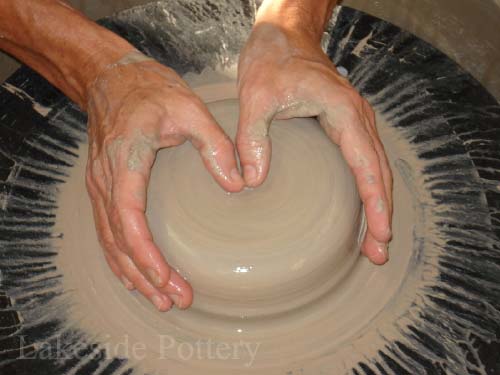















Centering the clay is one of the most important steps in throwing pottery. If your clay is not centered when you begin to pull up the piece, it will be off balance, and you will fight the clay the whole time. When centering clay it is important to use your whole body. Get yourself seated in a comfortable position, so that your forearm can press against your thighs.
|
|
Centering clay...
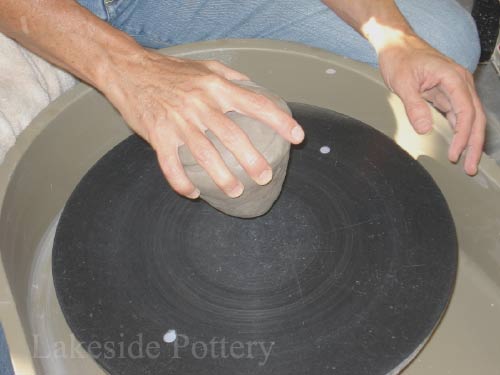
Throw the clay down close to the center of the wheel. You want the clay to stick well, so give it a good toss onto the wheel. |
|
|
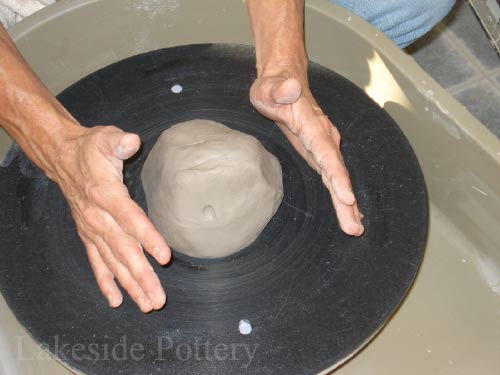
Pat into a cone |
|
|
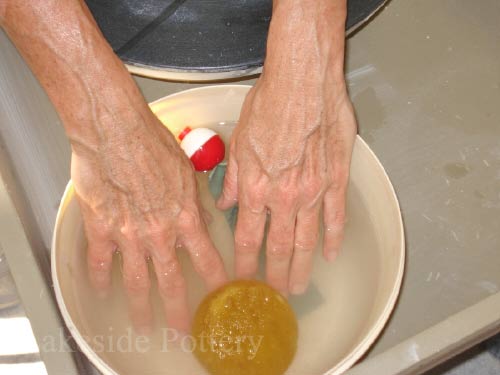
Wet the clay and with the wheel spinning a moderate to fast speed, force the clay to the center of the wheel and raise it while both hands are touching each-other.
Use your whole body to force the clay into the center and elbow against your thigh Use both hands and your body to keep your arms from moving with the clay, press the clay on both sides to force the clay upwards. |
|
|
|
|
|
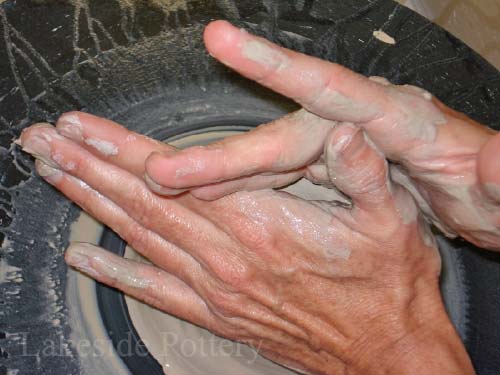
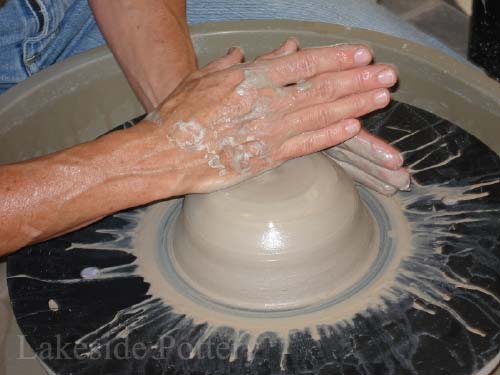
Bring the clay down by using the widest part of your right hand while the left hand pushing the clay towards the center and down.
Both hands are touching each-other |
|
|
|
|
|
Slow the wheel down
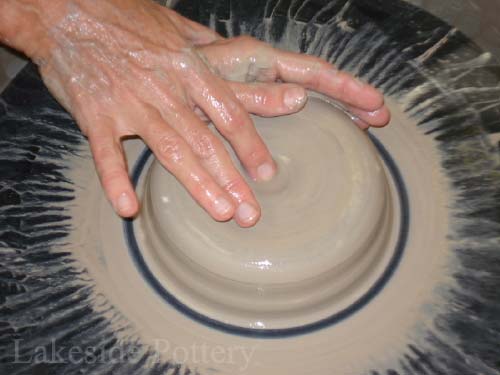
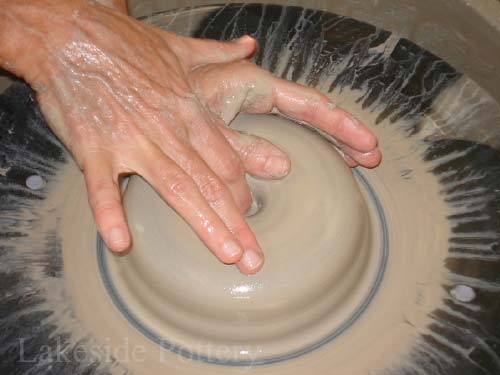
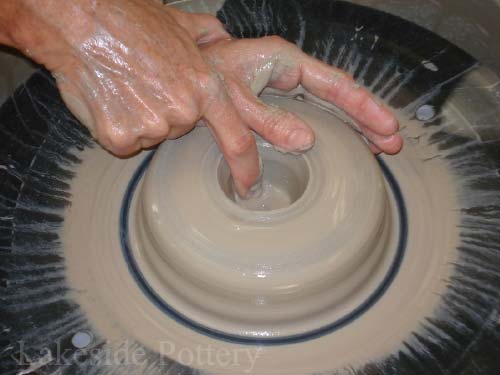
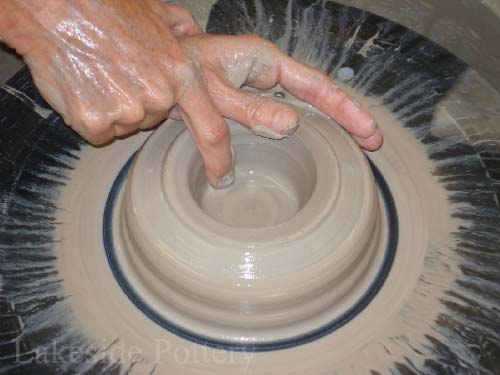
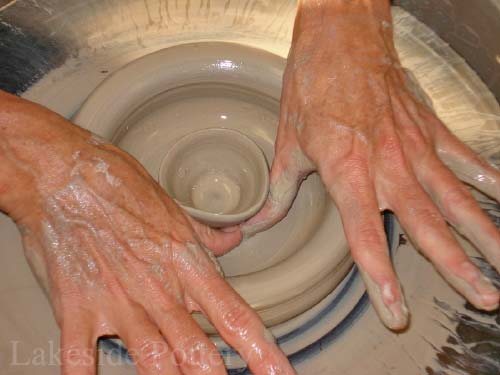
Opening up the center of the clay can be a tricky task. If you do not manage to keep you hands totally still, the hole in the center will wobble around, even though the outside of the clay appears to still be centered.
While pressing down with the thumb use your other hand to help hold your thumb still. Also, press your arms into your side to help hold your arms still. Be careful to leave enough clay for the bottom of the piece.
You can use the 2-thumbs approach as well
|
|
|
|
|
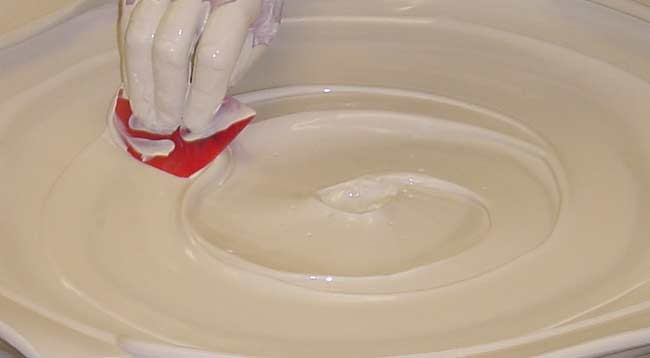
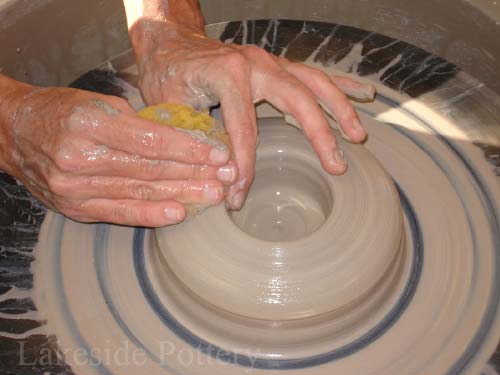
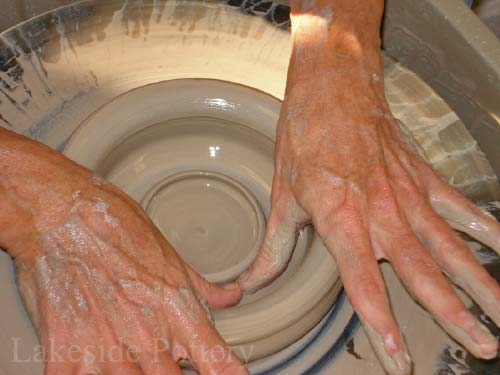
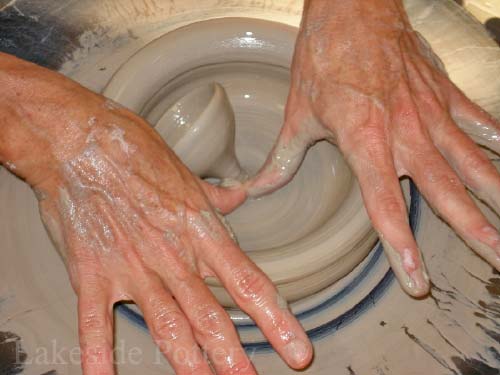
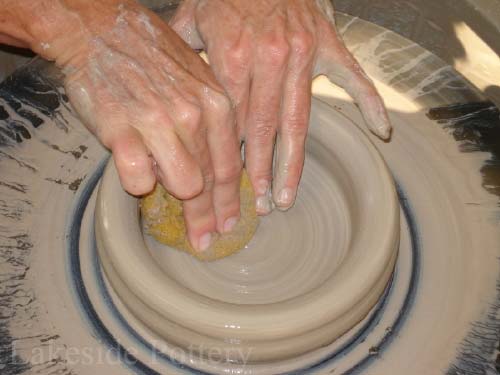
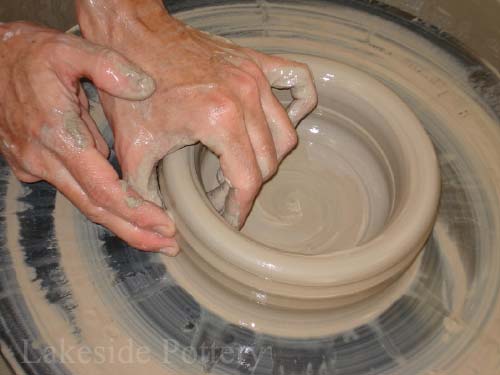
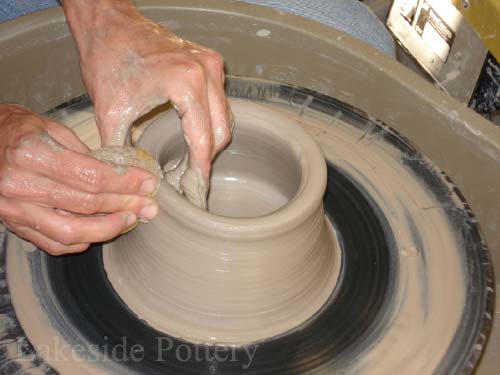
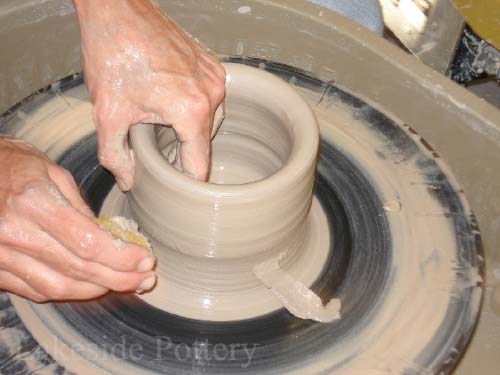
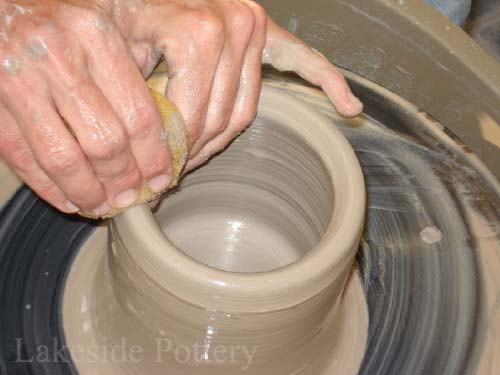
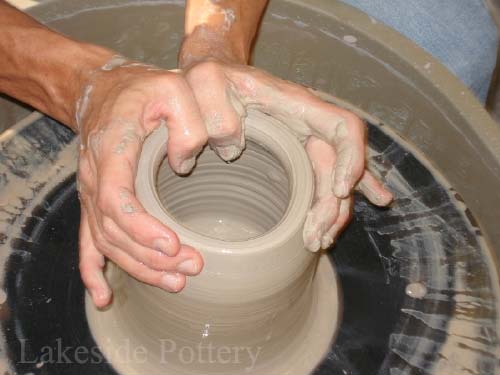
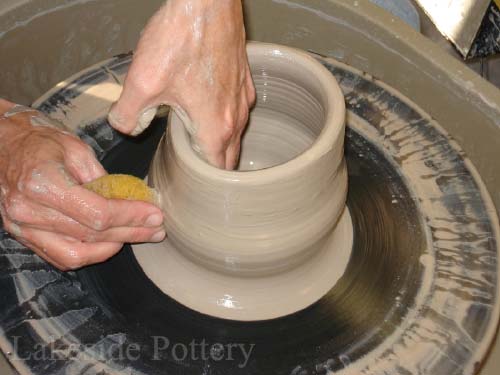
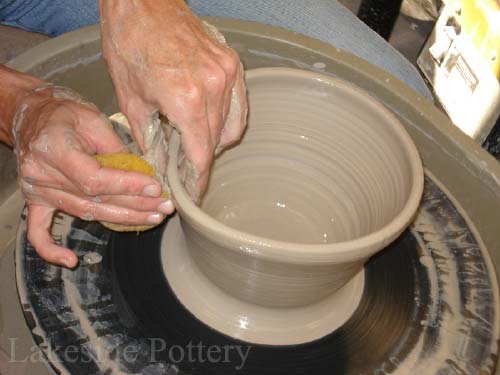
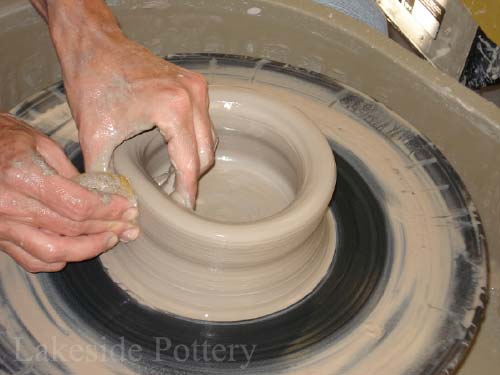
Use both hands to widen the opening. Move toward you slowly and steady. If water pools on the inside use a sponge to remove the water |
||
|
|
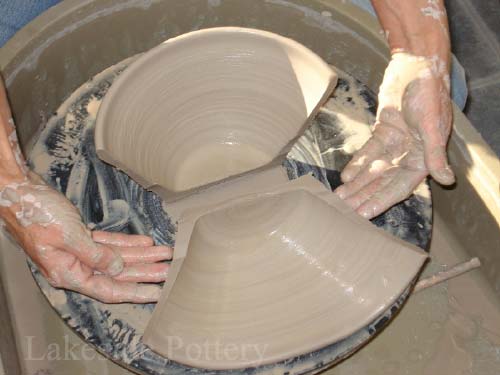
This has been cutaway to show the bottom to be about 1/4 inch thick and the walls about 3/4 of and inch thick ready to pull up the wall. |
||
|
|
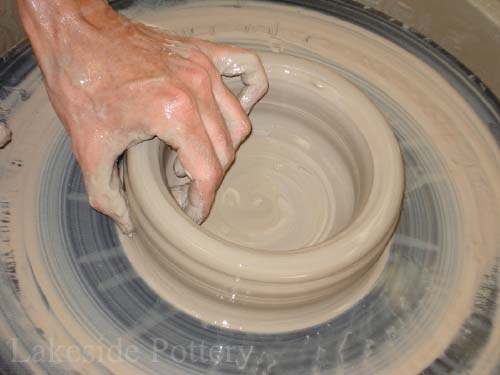
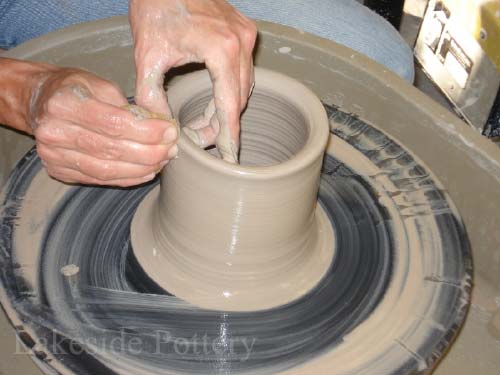
This shot shows how to position your hands for pulling the walls up. Notice the left thumb and fingers the same height to each other. Also, the right hand is locked around the left thumb to help hold it still. |
||
Step 3 - Pulling up the Walls and Shaping
If centering and opening was done well, pulling the walls up will not be too difficult. The speed of the wheel should be at a slow the medium-fast speed. Pulling up the walls usually will take two or three pulls. Don't try to pull it up in one pull.
|
|
<--Notice the hand placement.--> |
|
|
Pull the walls up by squeezing the clay and pulling up - all in one motion. The speed at which you pull up will be affected by the speed of your wheel. The faster the wheel is spinning the faster you can pull up. In the beginning it is better to start slowly then when you feel more comfortable move onto a faster speed. |
|
|
Repeat the pulling until you get the walls to the desired thickness. Usually about 1/4 inch thick |
|
|
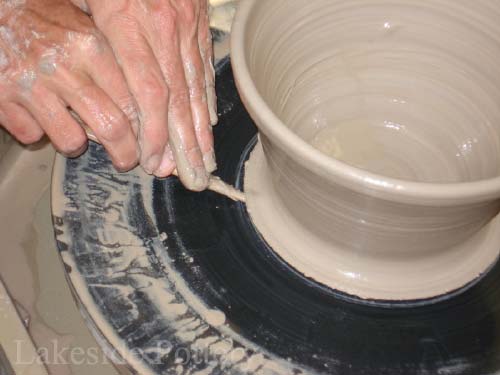
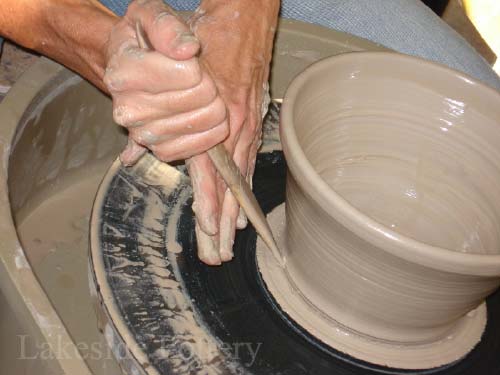
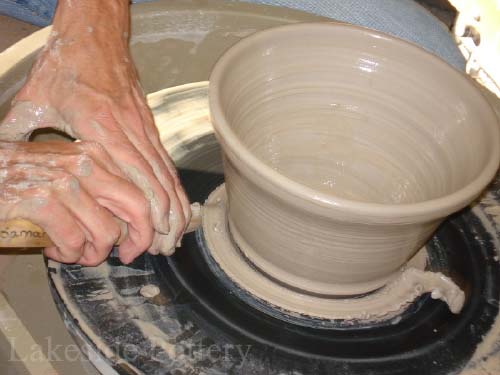
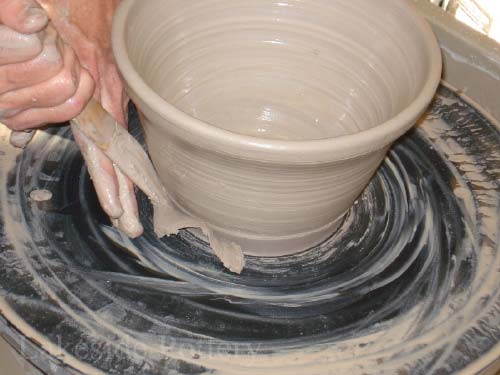
Trim the base of the piece with a wood tool that has been cut on a diagonal |
|
|
|
|
Shaping the piece - Narrowing |
||
|
|
By applying pressure the outside you can narrow the opening of the piece. |
|
|
Placing your fingers on the inside and gently pressing out will widen your piece. (Be careful. Remember your piece is spinning and if you pull too far it may fall.) |
|
|
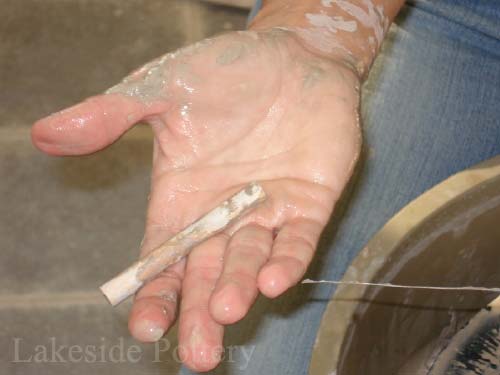
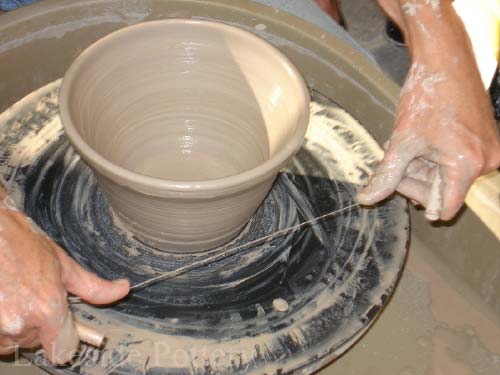
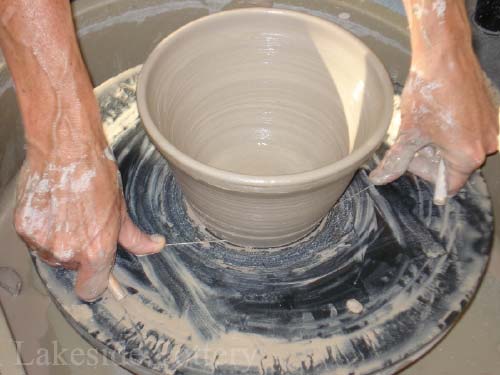
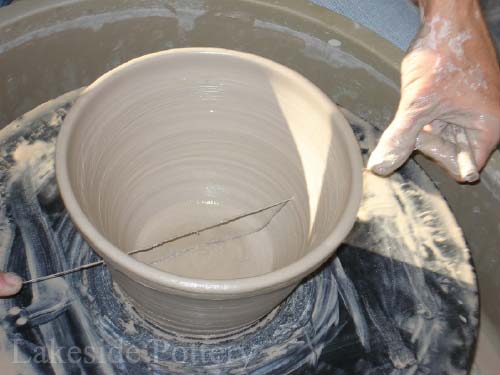
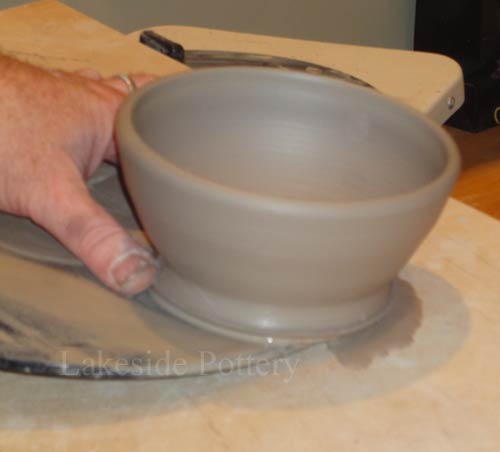
Use a wire or fish line to cut the bottom before you set this aside to firm up. When the water evaporate the piece will shrink. The cut will allow the bottom to shrink and keep the bottom from cracking.
After the piece is shaped and cut - let the piece set till it is leather hard. Then you are ready to go onto step 4 |
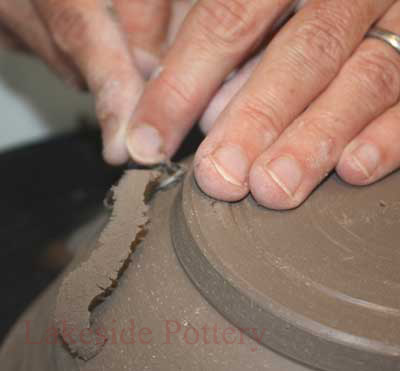
Trimming is a term for shaving clay at the base of a piece. Trimming works best when the clay is leather hard. Trimming finishes the shape of the piece as well as finishes the base to the correct thickness'.
|
|
Turn the piece to be trimming over. Be careful not to set it down to hard and dent the top |
|
|
Spin the wheel and check to see if the piece is centered. Adjust the piece as necessary to center it |
|
|
|
|
Press clay balls around the top of the piece to hold the piece in the center while you are trimming. |
||
|
|
With the wheel spinning, draw two lines where the foot will be left after trimming |
|
|
Trim the inside of the base and the outside. |
|
|
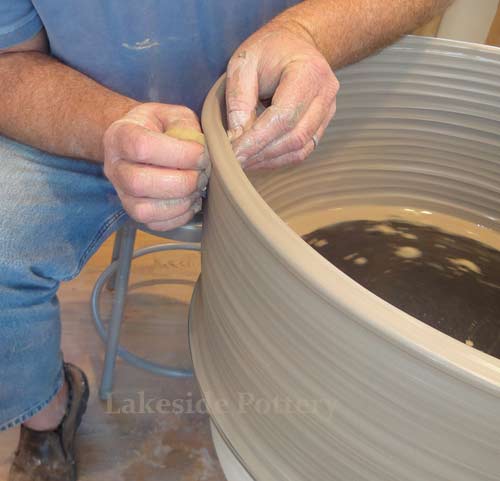
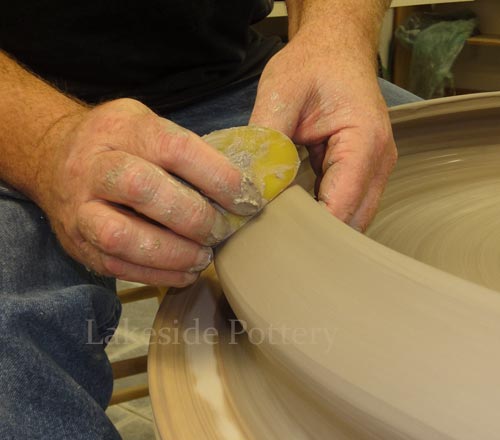
Use a sponge and your finger to smooth the area that was trimmed |
|
|
If the piece has a handle or something that obstructs your ability to flip the pot over, use a post to elevate the piece from the inside |
1) Let the greenware dry thoroughly in room temperature) 3-6 days depending air humidity
2) Bisque fire the dry greenware (cone 06 - 04)
3) Under glaze / glaze
4) Fire to the glaze/clay mature temperature (cone 6 for Morty's stoneware clay)
| Back to top | ||||
| Home
Copy right John Hester. 2003 |
||||