#lakesidepottery
|
Heatwork Chart: Transformation of Ceramic Materials by Heat
|
|
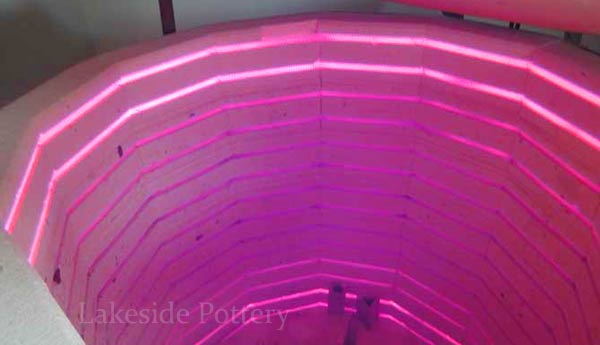
Kiln Color
|
Cone
|
°F
|
°C
|
Description
|
|
white
|
14
|
2552°
|
1400°
|
Porcelain: cone 10-13
|
|
yellow
|
10
|
2380°
|
1300°
|
High-fire/Stoneware: cone 8-10, average=cone10
|
|
|
6
|
2192°
|
1200°
|
Mid-range glaze: cone 2-7
|
|
|
04
|
1950°
|
1100°
|
Low-fire/Earthenware:
cone 015-1, average=cone 04
|
|
yellow- orange
|
|
|
1000°
|
|
|
|
010
|
1650°
|
900°
|
Clay particles beginning to vitrify; the lowest BISQUE temperature (cone 010-04)
|
|
|
|
1450°
|
800°
|
Vitrification begins, carbonaceous material is burned off.
|
|
red
|
018
|
1292°
|
700°
|
RED HEAT
|
|
dull red
|
|
|
600°
|
|
|
|
|
1060°
|
500°
|
573° C, quartz inversion in both heating and cooling stages.
|
|
|
|
|
400°
|
From 480-700° C, chemical water
(water smoking) occurs.
|
|
|
|
|
300°
|
From 300-800° C, carbonaceous material burns off.
|
|
.
|
|
439°
|
200°
|
220° C, cristobalite expansion (heating), squeeze (cooling)
|
|
dark
|
|
212°
|
100°
|
Water converts to steam (expands).
|
Temperature Ranges
Low-fire / Earthenware
- Average is Cone 04 (1950° F / 1100° C)
- Ranges from Cone 015 - 1 (up to 2109° F / 1154° C)
- a relatively soft, porous clay body, and a clearly separate glaze layer.
- Glaze colors are generally more varied and bright than stoneware.
Mid-range
- Ranges from Cone 2 - 7 (2124-2264° F / 1162-1240° C)
- a relatively soft, porous clay body, and a clearly separate glaze layer.
- Glaze colors are generally more varied and brighter than stoneware.
- A common temperature range for industrial ceramics.
High-fire / Stoneware
- Average is Cone 10 (2381° F / 1305° C)
- Cone 8 -12 range (2305-22419° F / 1263-1326° C)
- a hard, vitrified, non-absorbent clay body
- a body-glaze layer that forms between the clay body and glaze.
Very High-fire / Porcelain
- Cone 10 -13 range (2381-2455° F / 1305-1346° C)
- a hard, vitrified, non-absorbent clay body
- a body-glaze layer that forms between the clay body and glaze
|
|