|
103)
|
Hi Tammy, thank you for your note and input. To make the clay softer can be achieved in one of four ways:
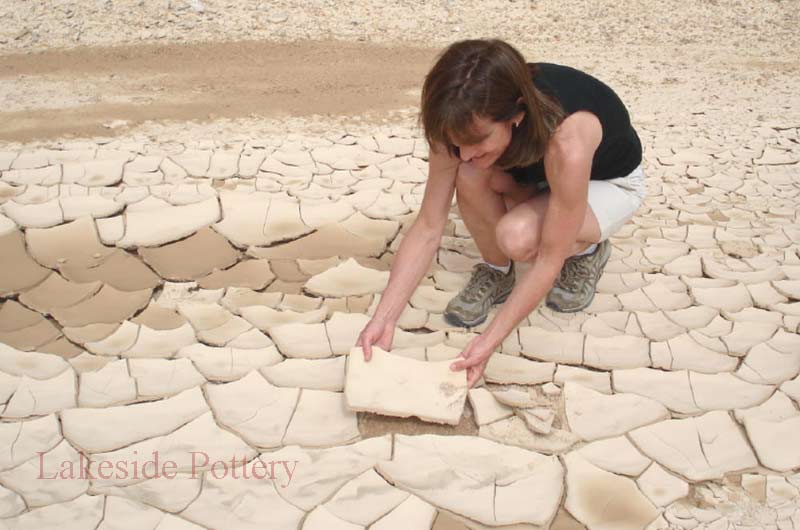
1) Recycle / reclaim it: Slice it to 1/2" slices and place in bucket of water for a couple of days. Then, place in a plaster board (the best way) or plywood to let it dry to the right consistency, Then wedge well.
2) Soften it: Make many holes with your finger or a tool (e.g., like Swiss cheese). Place in water over night and wedge well.
3) Let it get completely dry, break with a hummer and let is soak in water. Then follow the process described in note #1 above
4) Buy new clay!
|
Name:
|
Tammy
|
|
Email:
|
tammy25usa117[at] hotmail.com
|
|
Input:
|
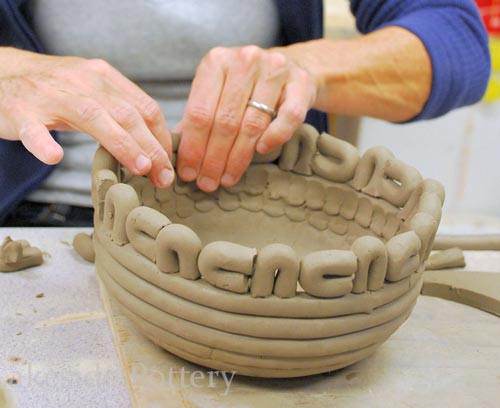
hi I love your site I was wondering if u could tell me how to get low fire earthenware clay easily go threw a handheld shimpo extruder I cant get it workable so that it can go threw the extruder to make coils for a bowl the block of clay is pretty dry I would love to have some ideas on how to make the clay soft enough for it to be workable I am new to ceramics but wanting to learn I hope to hear from you and thank you for any help u can give me
|
|
|
102)
|
Hi Jim, thank you for your note and input. SCM is - Strontium Crystal Magic.
|
Name:
|
Jim
|
|
Email:
|
heroldj[at] springvalley.k12.wi.us
|
|
Input:
|
Like your site. Developing glazes for students. new to me. What is SCM?
|
|
|
101)
|
|
Name:
|
Kim
|
|
Email:
|
khyman[at] pittsfield.net
|
|
Input:
|
While doing research for a after school program I will begin this week; I discovered your website. I wish I lived closer so I could drop in and watch you in action. Your program looks wonderful!
|
|
|
100)
|
Hi Michelle, a very good question. We do not publish recipes that we us and do not belong to us (may belong to one of the artists in our studio that prefer to keep it to themselves. Which glaze are you interested in specifically? We might guide you to where you can purchase the equivalent. Kindly, Morty and Patty
--------------------------
Dear Lakeside Pottery, I have been potting for several years in a studio and have decided that I would like to more fully explore mixing my glazes and firing in my own kiln.
I am getting a bit frustrated glazing in a studio where the mixture of any glaze changes seem to change from week to week due to contamination, etc.
There are several glazes that I see listed in your unpublished glazes that I am interested in the recipe. I am wondering what determines whether you publish the recipe and whether the recipes can be purchased?
Thank you very much. Michele
Related Link: Lakeside Pottery's Mid-range (Cone 6) Glaze Recipes
Related Link: Electric Kiln Firing and Tips
|
|
99)
|
Hi Anne, perhaps we can figure it out but you'll much better off contacting Skutt service department - they are very good. Call 503-774-6000 and ask for Perry or Daniel. You can say hello from Lakeside Pottery. Kindly, Patty and Morty
|
Name:
|
Anne Bradbury
|
|
Email:
|
anne.bradbury[at] shaw.ca
|
|
Input:
|
I have a new Skutt kiln 1027 with an electronic control, I'm having trouble keeping the temperature consistent throughout the kiln i.e. Under firing on the lower shelves and over firing on the top shelf. Have you any idea what maybe causing this. I do not have an environment. I did enjoy your pottery tips .Thanks
|
|
|
98)
|
Hi Robin, see article below about Matte glazes so that you can make a decision yourself.
http://www.lakesidepottery.com/HTML%20Text/Tips/Are-matt-glazes-food-safe.htm
The Lapis glaze is not available to the public but you can purchase it at: http://coyoteclay.com/pots%20by%20glaze/lapis%20satin/lapis%20satin%20pots.htm
|
Name:
|
Robin List
|
|
Email:
|
rlist89[at] msn.com
|
|
Input:
|
Hi....I would like to ask a question. Is the Matte Black glaze food safe? I also noticed that Lapis is not food safe. Can you explain why? If possible, could you send me the recipe for the Lapis? Thanks for your time.
Robin
|
|
|
97)
|
Hi Sarah, tank you fro your note and glad the tutorial is helpful. Slip is required to be applied when the clay is relatively wet for proper bonding and maintaining similar shrinkage for both, the slip and the clay body. It will chip or flake off otherwise. Patty and Morty
|
Name:
|
Sarah
|
|
Email:
|
Sarahmpowell[at] msn.com
|
|
Input:
|
Thank you for this information, it's exactly what I've been looking for. I have another question: can you use this on a very leather hard pot or does it have to be applied to a wet piece? I would like to trim my pots prior to putting on the slip but don't know if that is too late. Thanks again
|
|
|
96)
|
Hi Sharon, thank you for your input and good luck with setting your self up. We are so sorry but the variable of choosing a kiln are more involved than we have time to write it down via e-mail. Try this link and hope it is helpful.
http://www.bigceramicstore.com/supplies/kilns/buying-a-kiln-tutorial.htm
Kindly, Patty and Morty
|
Name:
|
Sharon Barnett
|
|
Email:
|
rse[at] tds.net
|
|
Input:
|
I want to purchase a used kiln. I was an art major in college, that was 40 yrs ago, so I am familiar with clay types, but never got experience stacking a kiln. So, low fire, high fire, temps and cones are rather unfamiliar to me at this point.
I would like to start with a small to medium size kiln, (price is an issue, $250 range or lower) as I have turned some small items and have done some small hand built objects, low fire, at this point, but might be working with high in the future. What do I need to be aware of when purchasing one used.
Your website was very useful and informative, but I feel that I need to simplify the info for my use at this point...
Thanks so much...
I also acquired a lot of glaze powders with chemical additives, which I would like to experiment with, but of course would not do this without some local expert advice...risky, to say the least...
Thanks again....and will definitely save your site to my favorites...
Sharon
|
Related Link: Electric Kiln Firing and Tips
|
|
95)
|
|
Name:
|
Angela Wright
|
|
Email:
|
paintnpaper121 [at] gmail.com
|
|
Input:
|
Hi my name is Angela and am very excited about your site. I am interested in starting a ceramics studio for personal use, at the moment. I hope to be blessed with expansion into a fully operating establishment. How do I sign up to log onto sites that are current restricted without a pass word? Thank you for building this beautiful website.
Sincerely
Angela
|
Related Link: Lakeside Pottery Tips Collection Page
|
|
94)
|
Hi Celia,
Thank you for your note and glad you liked the clay quilting tutorial. Raku is too risky for flat forms in particular when it is multiple pieces - it will most probably crack. Kindly, Patty and Morty
|
Name:
|
Celia
|
|
Email:
|
quinny1951[at] aol.com
|
|
Input:
|
Hi, love the quilted pieces, I have been having a go at making some as part of my honours project, and was wondering if you have had a go at Rakuing a quilted piece.? I have thought of giving it a try when I return to uni from the Christmas break. Look forward to hearing back from you soon, Happy New Year
|
|
|
93)
|
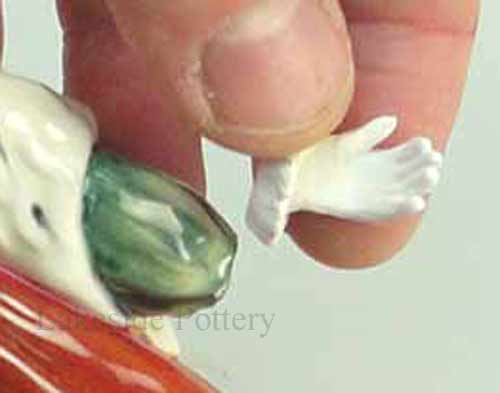
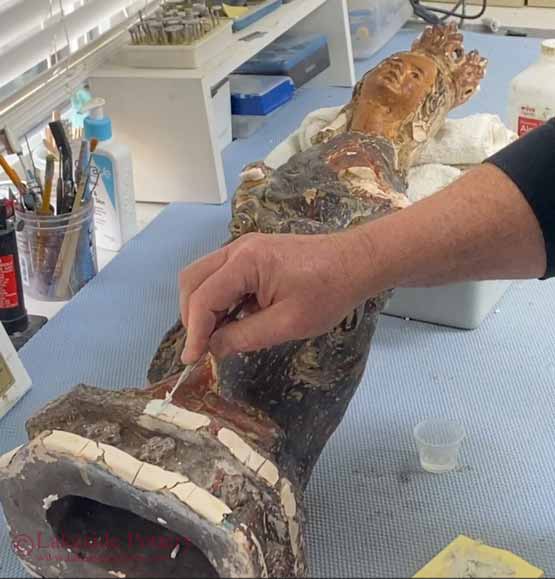
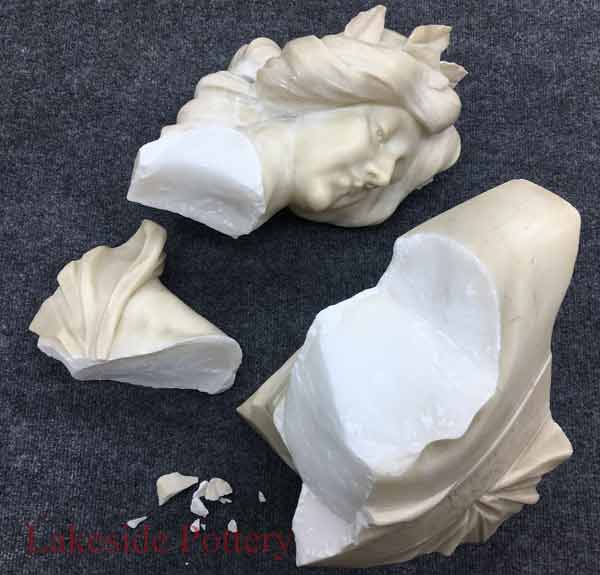
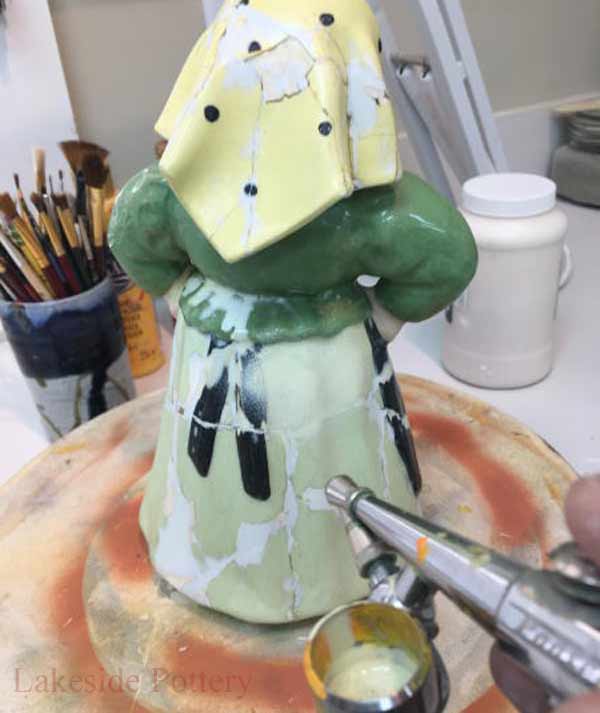
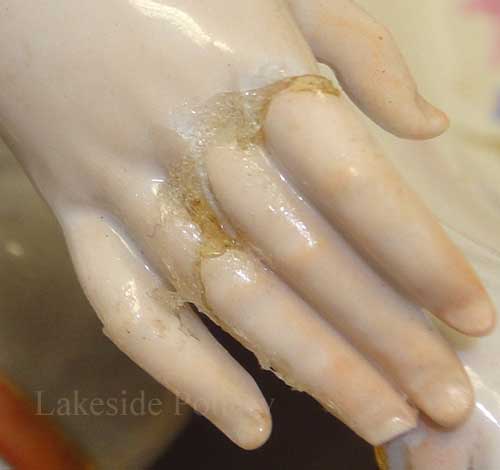
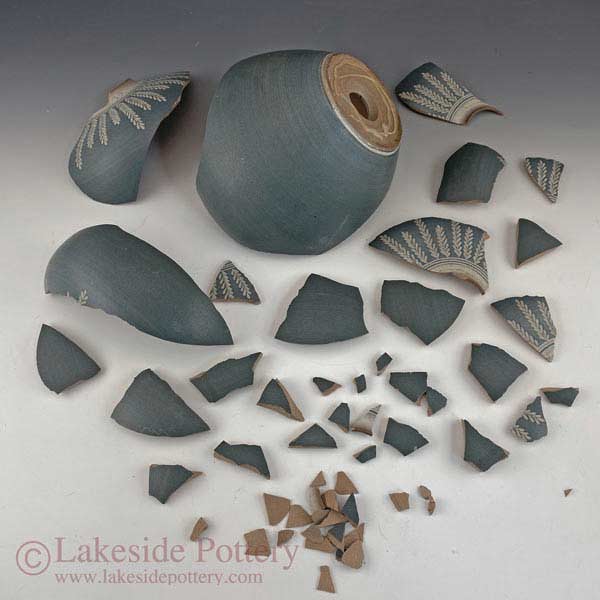
Hi Keith, thank you for your note. Yes, we restore a wide range of ceramic or sculpting work, small, large, antiques and modern. To be able to determine what is required and to provide you with an approximate estimate, please forward the following:
1) Dimensions (approximate) and how many units?
2) A couple of clear pictures (to be e-mailed)
3) Do you have all the broken pieces?
4) Where are you located?
As far as coloring the repaired area, it is years of experience knowing to make the right choices and process on a case by case basis. Most paintings requires several additives and several layers each different from the previous one using various techniques (brush, spray, dipping, and more). I could not possibly teach you this via e-mail - so sorry! Kindly, Patty and Morty
|
Name:
|
Keith pothecary
|
|
Email:
|
keithpothecary@hotmail.com
|
|
Input:
|
Hello,
I am trying to find some one who can direct me with regards to restoring pendelphin stoneware figurines.
Its mostly the touching up of small amounts of flaking paint.
My wife has a few larger pieces that are worth real money if perfect ,however as they are over 30 years old they are looking a little tired.
do you get involved with small stuff like this?.
Can you tell me how I would acquire the type of paint used on this type of figure ?.
Thanks
Keith
|
|
|
92)
|
|
Name:
|
Cheryl
|
|
Email:
|
cherylandgordon[at] hotmail.com
|
|
Input:
|
I live in Australia and am seeking someone JUST LIKE YOU. Do you have any contacts here? I am predominantly interested in tiles and particularly how to impart photos/paintings ets onto tiles
|
|
|
91)
|
Hi Mayson, tank you for your note. We do not offer such course but are looking for someone to learn it and works in the studio. However, you are far a way which makes it impossible - sorry!
Congratulations for your country's freedom - we are very happy for the people of Libya. Patty and Morty
|
Name:
|
mayson ali
|
|
Email:
|
mayson123454[at] yahoo.com
|
|
Input:
|
Good afternoon, I Mason from Libya I would like to learn ceramic restorations Do Vekm courses .... Thank you
|
Related Link: Pottery and Ceramic Repair and Restoration
|
|
90)
|
|
Name:
|
Debi Vaeth
|
|
Email:
|
davaeth[at] yahoo.com
|
|
Input:
|
I have been throwing for about 3 years now and have finally made the decision to buy my own wheel and kiln (purely for hobby). Your tips about drains, etc, will be Godsend! Thanks so much!
|
|
|
89)
|
|
Name:
|
lili
|
|
Email:
|
z.hajian[at] yahoo
|
|
Input:
|
hi I am an elementary school art teacher to teach in ways I need thank you
|
Related Link: Lakeside Pottery Tips Collection Page
|
|
88)
|
Hi Linda, if you are referring to clay needed to hold cemented broken pottery pieces in place, any clay will do the job.
|
Name:
|
Linda Clark
|
|
Email:
|
ldclark8[at] comcast.net
|
|
Input:
|
Hello, Which clay from Ceramic Supply Inc. do you recommend to hold a heavy Delft parrot finial to its lid so it can dry properly? (I just purchased the Devcon epoxy to repair it.
|
Related Link: Pottery and Ceramic Repair and Restoration
|
|
87)
|
|
Name:
|
jerry Bricker
|
|
Email:
|
jerryb1[at] ameritech.net
|
|
Input:
|
good throwing reminders.
|
|
|
86)
|
Hi David, we do not know of an epoxy that can be used on functional pottery safely (food safe) and withstand the typical functions (water, temp above 130 degree F, no potential health effects). Sorry!
|
Name:
|
David Jacobs
|
|
Email:
|
Jdavidjacobs[at] gmail.com
|
|
Input:
|
I fired a water jug and there is a small crack in the connection between the base of the spout and the body of the jug, such that water leaks when it leaves the jug and enters the spout. I thought I could apply epoxy at the external base of the spout to seal the connection and stop the leaking. The jug is glazed. I would want a clear epoxy, but your article suggests that epoxy yellows. Questions: Would you recommend epoxy? Is there a clear epoxy? Would you drink from the jug after epoxy has been applied?
Thanks.
|
Related Link: Pottery and Ceramic Repair and Restoration
|
|
85)
|
Hi Joan, good question and we'll add this answer to our tutorial for others to read.
In your case, PVA is probably a better choice mainly because you leave the repaired surface untreated or untouched. The bonding principal of PVA is that it soaks into porous materials such as old ceramic, bones, wood, etc. For best adherence strength and longevity, use the proper PVA viscosity (V15 or V25 for porous ceramic).
The benefits of PVA (Polyvinyl Acetate) are:
1) Will not yellow and has good stability to light (UV)
2) The gluing job can be reversible meaning, the glue will remain soluble and can be easily removed from a repaired subject later and be ready for re-gluing.
3) Easy to work with and easy to clean up
4) Low cost
The disadvantages of PVA:
1) Medium bonding strength (way less than new modern epoxies)
2) Cemented item can fail in humid, cold or hot storage
3) Will not work with non-porous objects
4) PVA shrinks and therefore will: a) distort repaired objects with thin walls and b) the repaired gap will be recessed a bit after drying
5) When dry, can leave a shiny outer surface which can be eliminated by wiping the surface with a lint free cloth saturated with PVA solvent (e.g., acetone).
We use mostly epoxy resins because:
1) Most projects that come our way use non-porous ceramic that makes PVA not suitable
2) Most projects we work on require complete restoration including color retouching. We use acrylic base finishing that will not discolor. Therefore the discoloring properties of epoxies is irrelevant.
3) Epoxy does not shrink as it cures
4) Epoxy has extremely strong bonding qualities
5) Epoxy does not chemically interact or effect acrylic finishing
6) Epoxies come in various options in terms of curing time and colors
7) Epoxies can be a filler and is workable (drilling, sanding, polishing)
Epoxy disadvantages:
1) Will yellow with time and can be an issue with restoration that does not require color re-finishing
2) Removing epoxies is difficult and therefore is not considered "reversible"
3) More expensive
4) Managing mixing two parts can be messy and wasteful
5) Tooling and working surface clean-up is more labor intensive
6) Strong smell and potential health issues when applying
As a general rule, epoxy resins should be avoided for archeological restoration. However, epoxies are occasionally required by conservators because nothing else has the required bonding strength. They are excellent when a very strong and permanent bond is required.
Hope the above helped. Kindly, Patty and Morty
--------------------------
Hi. Thank you for posting your tutorial on repairing ceramics. I am a
member of a local historical society, and have been involved in a local
archaeological dig over the past summer. We have many pieces of
stoneware crockery from the mid 1800's that I would like to re-assemble.
For historical integrity, we will not be trying to hide joints or paint
in-fillings. My question is the best adhesive to use. While your
tutorial seems to feel epoxies are best, I have also had recommended to
me the use of PVA white glues. Which is most appropriate for the repairs
I intend?
Thanks.
Joan Hill
Related Link: Pottery and Ceramic Repair and Restoration
|
|
84)
|
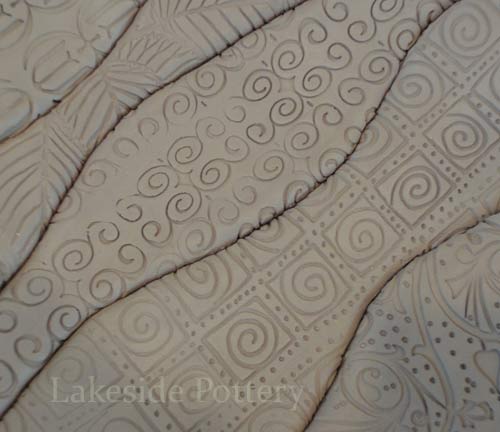
Hi Clarabella, a good question! We first create the texture on a flat clay as you may see in the tutorials shown in the links below. Once the texture is applied, we then cut the clay to the appropriate size / shape and assemble to whatever the final product is.
http://lakesidepottery.com/HTML%20Text/Tips/Impressing%20Patterns%20in%20Clay.htm
http://lakesidepottery.com/Pages/Pottery-tips/Making-clay-quilt-tutorial-lesson.htm
The only action we define as "buffing" is when we want to smooth the clay's surface and therefore not sure what the connection to the shop assistant comments. Kindly, Patty and Morty
|
Name:
|
Clarabelle Joubert
|
|
Email:
|
clarabellej[at] gmail.com
|
|
Input:
|
Hi, I actually want to ask a question rather than give input.
I saw at a handmade gift shop clay ornaments like hearts, that had imprinted on them patterns of material. One could clearly see the material fibers imprinted on the clay. It was beautiful. I asked the shop assistant about it, but she didn't really give me an useful answer about how the item had been made. She just said something about the clay being 'buffed'.
I would like to ask you (the clay experts :-)) how did the artist do the imprinting on the clay and what does’ buffing clay' mean?
I make home made bread and cold porcelain clay but I don't know anything about working with these types of clay.
Your input would be very appreciated! Sending regards from South Africa!
Clarabelle
|
Related Link: Lakeside Pottery Tips Collection Page
|
|
83)
|
Hi Susan, take the numbers from the glaze recipe and use 9,850 grams as 100% to calculate the percentage of each ingredients. E.g., 2000 grams Custper feldspar in percentage is 2000/9850 * 100 = 20.3%. Thank you, Morty
|
Name:
|
Susan Moore
|
|
Email:
|
susanmoore054[at] gmail.com
|
|
Input:
|
What are the % for your Olive Green Celadon, I noticed that the total is 9000+ and I usually X the % by 100 to get a smaller quantity
|
|
|
82)
|
Morty and Patty,
Wow! Thank you for the prompt and thoughtful reply! The thing I most love about the internet is communicating, like this, with experts I would never have had a chance to talk with in an earlier time. I am 72 (but don't look or act it!) and discovered pottery about three years ago. I fell in love with it at the first turn of the wheel, and I think I can say that I have now become an intermediate potter, after many hours of playing in my cellar studio.
I give my pots as gifts or donate them to charity silent auctions, and I'm hurrying to get my last batch bisqued and glazed and boxed up to mail to relatives for Christmas. Thus my question about speeding up the final drying.
At the moment my last two round lidded pots with texture from my new Steve tool are in my kitchen oven, set at about 180. Everything else is bone dry and in the kiln (in my garage), waiting for these final 2 pieces. I won't be able to start on the glazing until Monday noon, because of several events I must attend, so I do have time for a long pre-heat setting. I sure don't want these 2 nifty pots to explode!
Thanks and happy holidays, from
Ginny Clark
Fort Wayne, IN
-------------------------
Hi Ginny, very good point and further clarification is needed in the write up - thank you for your questions and the expanded explanation will be incorporated for others to benefit from.
Let's first define "damp" - Damp is referred to when the clay is almost dry but has slight signs of wetness. At this stage, most of the drying shrinkage has occurred and the clay does not have much remaining movement. Thus, it makes it relatively safe to expedite completion of the last bit of drying. The only exceptions are large forms, in particular flat forms, and pots with walls that are thicker than 1/2".
Generally, when candling in a computerized kiln going from ambient room temperature to 180 degree F, the temperature rise is slow and it takes approximately 2 hours to get there allowing the last minimal shrinkage and evaporation of the remaining water to occur gradually and slowly.
If the damp pots are placed in the kiln room when the room is not too hot and the kiln room temperature rise is slow, it will have a similar beneficial effect as candling. However, if you place damp pots in the kiln room when the room is already hot, the rapid temperature change will cause rapid drying and shrinkage which can place your pots at risk of cracking. Kindly, Morty and Patty
|
Name:
|
Ginny Clark
|
|
Email:
|
mapolder[at] aol.com
|
|
Input:
|
Can both of your statements above be true?
"If your pieces are not completely dry and you have damp clay, you may want to candle them first."
BUT YOU ALSO SAY:
"Do not store greenware that is not completely dried in kiln room while kiln is operating or room is above normal room temperature - pots will dry too fast and will crack or create stress on the pots which will more likely crack in the firing."
SO, can I safely hasten the drying of a piece for a bisque firing by leaving it in the oven at 180 overnight? It's not bone dry yet, but I want to add it to this load.
|
|
|
81)
|
|
Name:
|
Dana
|
|
Email:
|
Dana[at] LasswellArts.com
|
|
Input:
|
Your website is fabulous! I've been trying to steer folks at our studio away from exclusively doing gas cone 10 firings and I believe some of your beautiful glaze recipes will assist me with this difficult task! Thanks so much for sharing. I sooooo wish I lived closer and could participate in events at your studio! I'm going right into my studio to attempt the handbuilt vase! Happy Holidays, Dana
|
|
|
80)
|
Hi Elham, 1,400 sq feet will be sufficient. This is the size we have bush it was a bit larger (2,000 - 2,500) so that we can offer concurrent activities. We do all the commission work at our home studio (different location) which has about 450 sq ft.
|
Name:
|
Elham
|
|
Email:
|
mortazavi.elham[at] gmail.com
|
|
Input:
|
Hi,
Thanks for the info.
Would you also be able to give some input on the type of the space needed to set up such an studio?
For example for lakeshore how large is the space, considering the types of the activities being offered?
Thanks
|
Related Link: Lakeside Pottery Tips Collection Page
|
|
79)
|
Hello I live In Johnstown New York and I will be using it for display next to my pellet stove and possibly putting wood pellets in it
----------------------------
Hi David, where are you located (I assume England). It can be fixed using the method show in the link below (epoxy and Fiberglas resin on the inside. Do you plan to use it functionally or display only? Because it is a heavy piece, the resin and fiber require several layers (3-5).
http://lakesidepottery.com/Pages/Pottery-tips/restoring-art-antiques-ceramic-tutorial-lesson.htm
Good luck! Morty and Patty
|
Name:
|
Lance David
|
|
Email:
|
Super_man_736[at] yahoo.com
|
|
Input:
|
Hello I have a 25 gallon ransbottom ceramic croc that a very large piece broke of and was wondering what would be the best way to fix it> Plus it is very heavy its a two person lift. Any ideas are greatly appreciated thank you
|
Related Link: Pottery and Ceramic Repair and Restoration
|
|
78)
|
Thank you. Your website has been a big help to me during my search to use a kiln for the first time. It has a kilnsitter control and because I normally make large clay forms I have been hesitant to use this type of kiln. I have had my pieces fired for me in the past and with no info with the kiln it has been great to search your site to get the help I needed. You are doing a good service and I just wanted to say thanks. Jim
Related Link: Electric Kiln Firing and Tips
|
|
77)
|
|
|
76)
|
|
Name:
|
Barbara Gilson
|
|
Email:
|
bjgpotter[at] hotmail.com
|
|
Input:
|
your web site is more helpful than most sites. I took classes at a community college, but you have demonstrated different techniques which I have found to be more helpful than many I was previously taught.
|
Related Link: Lakeside Pottery Tips Collection Page
|
|
75)
|
Hi Meredith, thank you for your note. Every glass reacts differently with different glazes and we do not have specific information. Clear glaze works generally well with all glass although red glass is not always successful. Yellow and light blue glass seem to have the most consistent results with any glaze. Kindly, Patty and Morty
|
Name:
|
Meredith Moreau
|
|
Email:
|
mercator[at] dodo.com.au
|
|
Input:
|
Hi I'm a potter/glass artist and want to combine the two - The only thing I'm not sure of is the actual glaze contents - should specific ingredients be used to fuse better with the glass on top?
Love your website and hope to hear from you.
Regards
Meredith
Far North Queensland, Australia
|
|
|
74)
|
|
Name:
|
Mario
|
|
Email:
|
machien[at] ymail.com
|
|
Input:
|
Good job, keep up the energy , nice piece. Thank you for sharing it with the rest of the world.
|
Related Link: Lakeside Pottery Tips Collection Page
|
|
73)
|
|
Name:
|
Paula Reynolds
|
|
Email:
|
preynolds6510[at] charter.net
|
|
Input:
|
Great images and clearly written text. Thanks.
|
Related Link: Lakeside Pottery Studio Pictures
|
|
72)
|
|
Name:
|
otieno Richard
|
|
Email:
|
kotienor@[at] ahoo.com
|
|
Input:
|
thanks very much for your informative procedures. They are so beneficial to a civil engineer like me. kudos
|
Related Link: Lakeside Pottery Tips Collection Page
|
|
71)
|
Hi there, thank you so much for getting back to me. I hope to experiment with some of these glazes in the coming months. Wish me luck. :)
Thanks for your time,
Ben Greiling
---------------------------
Hi Ben, we do not "cookie cut" water measurement / glaze powder ratio. The ratio you mentioned is probably an average ratio. Every glaze can vary with water quantity based on the ingredients and the desired effect.
We use the "finger test" where we look for how fast the first drop or two drips off your finger. With an average glaze, the first drop falls quickly and the second one falls more slowly while the third one just stays hanging for a while.
Thin - first two drops fall relatively quick
Thicker - first drop falls off slowly
When you sieve it, leave the glaze on the thick side (yogurt like consistency) and add water as needed later.
- Zam Celadon needs to be on the thick side otherwise it settles
- Clear blue on the thin side but can also be thicker for different transparency affects. Clear blue can start smell bad after a couple of month - it is normal.
- Olive Green can be thin, thick or average. When thick, blue starts showing but be careful about running onto the kiln shelf. When average, it is does what it was designed to do - Olive green color. When thin, a nice browns start showing up.
-The others on your list are average thickness.
Note: With the Olive Green and Peggy's Blue, the glaze gets thicker a few hours later - do the "thickness" test the next day.
As with any new glaze, run some test tiles before glazing your hard labored pots.
Good luck, Patty and Morty
|
Name:
|
Ben
|
|
Email:
|
snigidah[at] gmail.com
|
|
Subject:
|
Water for glazes
|
|
Input:
|
Hi There,
I was wondering how much water should be added to your cone 6 glazes? Some other glazes I have used call for 1 quart for 1 lb of dry glaze. Would this work? Or do you kinda need to go by the consistency of the liquid. The glazes I am targeting are Zam Celadon, Matte Black, 2-D Blue, Peggy's Blue, Clear Blue, and Olive Green Caledon. Let me know the best way to make these glazes. Thanks so much. Happy throwing!
Ben
|
|
|
70)
|
Hi Jennifer, thank you for your note and glad you found our web site to be useful.
The clay we use is a buff cone 6 clay made by standard - Baldwin 192. See link below for all of our glazes and if you choose cone 6 (more functional and durable), pay close attention to the write up at the bottom of the page about using underglazes with cone 6. Most underglazes / clear glaze fail at this temperature and we "weeded out" the good from the bad for whomever decides to use our path (doing so for almost 10 years successfully). Kindly, Patty and Morty
|
Name:
|
Jennifer Christian
|
|
Email:
|
jchristian[at] henry.k12.ga.us
|
|
Input:
|
So glad to have "stumbled upon" your site! Love what your place is all about! I am an art teacher in Georgia and finally about to dive into my own clay studio at home. Hoping to have summer workshops for kids (and adults). I have only used low-fire clays, but love what I see on your site with the vibrant colors. I think I read that you use Cone 6 white clay? Will you share with me the glazes/clay that you use specifically so I can give it a whirl? Thanks! Jennifer Atlanta, GA
|
Related Link: Lakeside Pottery's Mid-range (Cone 6) Glaze Recipes
|
|
69)
|
|
Name:
|
Julie Pajulie Pottery
|
|
Email:
|
Pajuliepottery[at] gmail.com
|
|
Input:
|
Antique White Glaze is Beautiful! When will you release the recipe? It is exactly what I have been looking for. Great breaking.
|
|
|
68)
|
Hi Adrien, Opulence 508 Goldenrod will give you very similar results. It does not run. For the yellow you see in the picture you have sent, dip it twice. Make sure glaze is not mixed too thin so avoid settling. Good luck, Patty and Morty
|
Hello,
I observed a wonderful looking yellow glaze "Golden Rod" (see below) on your website and noticed that the recipe was "...not published at this time." Does that mean it may get published in the future? Or is it a commercial glaze? I have been looking for a nice (oxidation fire) yellow glaze recipe and this one seems to be right up my alley. Please let me know if the recipe is or will be available. Thank you for your time.
|
|
|
67)
|
Hi Cynthia, either epoxy mentioned in our web tutorial will yield the same end results assuming the timing is not an issue. Make sure that the epoxy strength is 2000 lbs or greater. Note that you will see the seam line if your effort will end at gluing. Good luck, Patty and Morty
|
Name:
|
Cynthia
|
|
Email:
|
cynthiam166[at] gmail.com
|
|
Input:
|
Hello, I had a shelf in my living room fall and four Indian pottery figurines were damaged. the pieces are fairly large so I thought I'd try DIY. Which epoxy do you recommend for American Indian pottery? They only have the quick dry one at the hardware store and I'd like a little more time to work the pieces into place.
|
Related Link: Pottery and Ceramic Repair and Restoration
|
|
66)
|
|
Name:
|
Ashley
|
|
Email:
|
asuviyanon[at] yahoo.com
|
|
Input:
|
I'm a beginner in my ceramics class, these pictures and steps are great. I struggle most with making the floor, so just a little more description with making the floor would be helpful.
|
|
|
65)
|
Hi Rob, Perhaps you want try it without adding anything. Make sure you let it dry very slowly and use plaster, masonite or wooden bat (in that order of effectiveness). Sieving with a mesh 60 will be sufficient and easier to push the soft clay / slip through. Not that slip should not be too thick and it if it cracks in places, it will do so in low peeks (valleys) which it is easier to fix using a rubber tip tool when the slip is starting to get leather hard. To fill in gaps or cracks, dry some of the slip to leather hard before applying to cracks (if any).
-----------------------------------------
Hello,
I am a potter and was thinking of making slip with my clay in the way that you mentioned on your website. (basically mixing well, and sieving to remove grog, apply to leather hard pot).
I was wondering if a deflocculant needs to be added so that the slip does not crack on high peaks?
I will try making slip in the way you mentioned, and sieve in an 80 mesh screen. Hopefully it will work with this screen. The clay body is a fine dark throwing body with LOTS of iron and manganese. any help appreciated. Thanks, Rob
PS I love your website! Thanks for sharing such great info....
|
|
64)
|
Hi Patty and Morty! I’m from Oroville California. I was really surprised that you replied to my email. It’s great that you’re considering my advice on putting the link on your list of sources. I’m sure a lot of people would be able to benefit from this link if it was posted on your website. Hope to hear from you again. Jacob ‘Coby’ Crane
--------------------------
Hi Jacob, thank you for your note and the time spend writing it. We will correct the broken links next time we update the web. We check the links every so often but with hundreds of pages on our web site, your help is very useful in identifying problems and stale links. Have you visited our "Pottery Tips" page where we have numerous lessons and tutorials (see below)?
http://lakesidepottery.com/Pages/Tips.html
-----------------------------------------
Hi, thank you for sharing these links to home school parents. I am really pleased about the number of links in addition to the great content available on http://lakesidepottery.com/Pages/usfulllinks.html. At this point, I am keen on teaching my daughters some craft work and thought of pottery. I spent hours online looking for a good resource until I discovered your website. It was a breeze going through your page - you really did a good job here. Such a big help for a busy single dad like me. Now your site is just a click away from my bookmark.
Oh and by the way I did find the following broken links on your website. I thought you might want to replace them with new ones:
http://www.cactustech.com/XiaopingStore/index.php
http://www.potteryfinder.com/
http://ceramicartsdaily.org/pottery-making-illustrated/pmionline.html
I am hoping that you continue to maintain your page and as a simple token of my gratitude, I'd like to give you an educational website that I know would be a very good addition to your list. I also use http://www.startlocal.com.au/articles/educational_pottery.html as reference; it is also good source of information on pottery such as its history, basic process, and the industry. That page also has a link to your site, that’s how I found your page.
I hope I was able to help you in some way because you surely did help me by making my job easier. Love to know if you found my suggestions helpful.
Cheers, Jacob 'Coby' Crane
|
|
63)
|
|
Name:
|
apari sam
|
|
Email:
|
sampido[at] yahoo.com
|
|
Input:
|
I really find the site loaded with ceramic info. Pls I’ll encourage the donor of this site to continue their good work.
|
Related Link: Lakeside Pottery Tips Collection Page
|
|
62)
|
Hi Natalie,
Thank you for your note and good luck with the large platter. One thing we did not mention in the tutorial (we should) - do not turn the wheel too fast. Let us know if it worked out.
|
Name:
|
Natalie
|
|
Email:
|
dragonworxpottery[at] hotamil.com
|
|
Input:
|
Love your large platter, great idea, I have just added a fancy footing to a huge funky teapot for a mad hatters tea party, so am going to try your platter next - not so large first time though.. thanks for your information - Perth W.A.
|
|
|
61)
|
Right! Make sure you have a long wire a head of time and run it soon after you thrown the pot. The wire should not be too thin to make sure a good separation (clay from bat). A thick guitar string will do a good job. Ask for help when running the wire. It is hard to see if the wire is lined up ok with such a big platter. Another option is to use a plaster bat which will eliminate running the wire step. However, large plaster bats are very expensive and very heavy (flipping over is a bear). Let us know how it worked out.
------------------------------------------
Hi Lakeside, thanks for the tip. I assume the pot releases from the wood bat the same as if it were on a plaster bat, right? June
-----------------------------------------
Hi June, you make a large coil and place it on the inside of the platter. The coil need to be higher than the platter's highest point. You then place a large bat on top of the coil. So your "sandwich" from top to bottom is with 1) Large bat, 2) large coil, 3) your leather hard platter and 4) large bat. You (if very strong) or with another person, flip the "sandwich" upside down and you are ready for trimming.
|
Name:
|
June Rosenberry
|
|
Email:
|
jrosefine[at] earthlink.net
|
|
Input:
|
I love your demo of making a large platter on a 36" wooden bat. My question is how do you get it off the bat?
Thanks,
June
Los Angeles
|
|
|
60)
|
|
Name:
|
Tanya Ospino
|
|
Email:
|
dataheos[at] hotmail.com
|
|
Input:
|
I appreciate your expertise in this
type information the glue, clay and the putty
thank you again
have a great day
|
Related Link: Pottery and Ceramic Repair and Restoration
|
|
59)
|
Hi Benjamin, for the blue effect: thickness like slightly thin yogurt / thin jell. I suggest you make some test tiles and determine yourself. Very hard to describe accurately in particular when the glaze feels thinner or thicker before and after mixing. For the test tiles, mix the glaze normally, and make tile 1 - one dip, tile two - two dips (wait only 2 seconds between dips). Note that when applied thick, the glaze moves and you have to be careful with enough clearance on the bottom of your pot.
|
Name:
|
Benjamin Kant
|
|
Email:
|
kantb777[at] gmail.com
|
|
Input:
|
Hi. I am interested in the beautiful olive glaze recipe you have. You stated that applied thicker gives bluish tones, like on the fish. How exactly can you describe the "thicker" part. Normally, a glaze has a certain floury/milky feel when dipping into it. Would thicker be more of a pancake batter consistency? In other words, how thin should it be to get the green?
|
|
|
58)
|
|
Name:
|
JOANNE
|
|
Email:
|
ICESKATER1955[at] AOL.COM
|
|
Input:
|
THANKS FOR THE GREAT IDEAS AND EDUCATION , I WISH I COULD TAKE A CLASS...
|
Related Link: Lakeside Pottery Tips Collection Page
|
|
56)
|
|
Name:
|
Melanie Banfield
|
|
Email:
|
melaniebanfield[at] hotmail.com
|
|
Input:
|
This is the best website I have found regarding the fusion of pottery and glass. When I go to the glass supplier link, what type of glass do you buy or is it all the same, just different sizes? Terrazo? I want to make "sea" themed relief tiles with the glass as water for a bathroom installation. Does is keep it's structural integrity or deteriorate over time? Any input you have for me would be greatly appreciated. Thanks.
|
|
|
55)
|
|
Name:
|
Charlotte Eve
|
|
Email:
|
charmae1958[at] yahoo.com
|
|
Input:
|
Sooo glad to find your site! I'm just sick over a lovely vase that my son's girlfriend made me for Christmas last year. Well...I was pushing a (too wide) slice of florist foam down the middle of the piece and broke it but good!!
I will take my list with me to town tomorrow, and gather the items I need.
If I think I can manage it...I will send you a before and after!!
Thanks for the "hope" in repairing it!!
Char
|
|
|
54)
|
|
Name:
|
Michael
|
|
Email:
|
blueeyedmichael[at] yahoo.com
|
|
Subject:
|
lead
|
|
Input:
|
Thanks for the useful information about lead in a ceramic coffee mug. I will order a test kit and do the 24 hour government test. I bought 2 nice ceramic coffee mugs at Goodwill and want to be sure they are safe for coffee. They are beautiful and hand made and signed. I got them for 37cents believe it or not. Now I guess it will be $20 to be sure they are safe. Still a bargain! Thanks, Michael
|
|
|
53)
|
|
Name:
|
Mary Cole
|
|
Email:
|
whitethumper2[at] yahoo.com
|
|
Input:
|
Thank you for being there. I have a broken ceramic horse. It is over a foot tall, broke in a fire. I saved the pieces now I can repair it. Thank you.
|
Related Link: Pottery and Ceramic Repair and Restoration
|
|
52)
|
Hi Robin, Oxidation.
|
Name:
|
robin campo
|
|
Email:
|
robin[at] robincampo.com
|
|
Input:
|
are these oxidation or reduction glazes?
|
|
|
51)
|
Hi Kathy, Great! Let us know how it went, Patty and Morty
|
Name:
|
Kathy Horn
|
|
Email:
|
mizkathyrobin[at] yahoo.com
|
|
Input:
|
I'm very interested in the glass mixed with pottery, this is the first time I've seen it. I will be trying it out!
|
|
|
50)
|
|
Name:
|
STEPHANIE EASTMAN
|
|
Email:
|
steffiee1[at] me.com
|
|
Input:
|
Thank you - very informative. I am a new potter and my husband purchased me a Skutt with kiln sitter.
I am still unsure of what to bisque fire to and glaze to. My first fire with glaze didn’t turn out well - Clear over glaze was cloudy and my dipped glazes turned out dry and powdery and another pieces the colors looked over baked and not the color they were dipped in. My pieces were bisqued at my class to cone? and my over glaze was cone6 and I fired to cone 05.
Have lots of questions -
thanks for you help
|
Related Link: Electric Kiln Firing and Tips
|
|
49)
|
|
Name:
|
Fran hargadon
|
|
Email:
|
franiha[at] yahoo.com
|
|
Subject:
|
oxidation cone 6 celadon recipe
|
|
Input:
|
Hi, Nice web site. do you have a celadon oxidation cone 6 recipe you would share with me? I would be very appreciative.
|
|
|
48)
|
|
Name:
|
Audrey
|
|
Email:
|
wmbaw[at] yahoo.com
|
|
Input:
|
Thank you so much for publishing these glazes. I am a teacher at Vicksburg High School in Vicksburg, MS. We have discussed mixing our own glazes and when I did a search for cone 6 recipes, your site was the first to pop up. The glazes are beautiful. I also just made a bunch of tiny tests of my underglazes to see if they would hold up at cone 6. I haven’t fired them yet, but I was thrilled with your addendum on underglazes. If you publish more of the recipes that are not available to the public at this time, please send out a note!
|
|
|
47)
|
Hi Susan,
Thank you for your note! We use Standard's Baldwin 192 cone 6-10 stoneware.
|
Name:
|
Susan Gladstone
|
|
Email:
|
thehappyrock[at] earthlink.net
|
|
Input:
|
thanks for all your tips. What clay do you use for classroom and glazing.
|
Related Link: Lakeside Pottery Tips Collection Page
|
|
46)
|
|
Name:
|
Christine Ankenbrand
|
|
Email:
|
christine.ankenbrand[at] labour-travail.gc.ca
|
|
Input:
|
Good day, I just read and viewed all of Isaac's videos and I must say that he was a true artist at heart and I wonder why a country as great and beautiful as Britain would let such history (buildings and installations) go to waste... surely there must be a way to gather money to renovate the buildings to their original state and have Isaac's memory and his work be revived and he a tourist attraction... there is an enormous potential for sightseeing and seeing potters in action in the original buildings... think of the potential...
By the way, I live in Canada and am in the process of setting up a studio in my home basement... and am quite anxious to start potting again in my studio I've dreamed of having for years...Cheers
|
|
|
45)
|
Hi Peggy, thank you for your comments. So sorry but do not have a good answer to this one. Did you try and LED flash light where the light is very narrowly pointed?
|
Name:
|
Peggy Cowan
|
|
Email:
|
mlcc[at] windstream.net
|
|
Input:
|
What is it you can put on the cones so they will show up better through the peep. We can not always see the cones even with our glasses on. Thank you. Your tips are just great!!! Peggy
|
Related Link: Lakeside Pottery Tips Collection Page
|
|
44)
|
I have a Paragon 7 kiln and can fire up to 1700. I do glass slumping, fusing and beadwork as well as traditional stained glass (both lead came and foil).
Way, WAY back in high school I spent a couple of years doing ceramics at a ceramics studio and liked it very much. No throwing of pottery however. I am familiar with glass (coe etc), underglazes and glaze.
As I said before, I had purchased a set of clay (I believe clay base) tiles a couple of years ago with what looks like a couple of different glazes (tan and dark brown in areas on the top with the VERY same cracked glass look featured on your page below. At the same place the artist also had large plates, bowls and platters done with the same technique. This was out of state when I was on vacation.
I have been trying to find information on how to achieve this look and until finding your site I have had no luck. I am pretty confident that by applying crushed glass or frit over the proper glazes with the proper temperature I could get the look I am trying to achieve-I don't know what the propers are though. It truly is quite the same as your turquoise and yellow samples on the left side of the page on your site.
My problem is that I wonder #1. Do I have to make my own tiles out of clay and what kind of clay to use if I do, #2 What glazes to use and then what temperature all needs to be fired at. Like I said, I can only go to 1700 degrees in my kiln. Can a premade bisque tile be used (not kiln washed?) Can a premade already glazed store ceramic tile be used? Just not sure where to go from here.
Any insight you can give would be greatly appreciated. Thanks, Sue
------------------------------------
Hi Sue, glad you found our glass/clay posting. What is on our web page (see link below) is what we do in our studio. I am not sure what other information you are looking for. Do you have a kiln? Are you a potter?
http://lakesidepottery.com/HTML%20Text/Tips/firing-fusing-glass-on-pottery-ceramic.htm
|
Name:
|
Sue Kuehl
|
|
Email:
|
suelk[at] abe.midco.net
|
|
Input:
|
Upon numerous hours of research I have finally found the article on combining and firing glass clay with pottery on your site. I have been searching for some instruction on this ever since purchasing a tile 3 years ago. I am in SD so am to far to attend any class that you may have offered on this but please advise me what references I can obtain for specific instruction for this. I would gladly purchase any written materials you could provide on the subject. Thanks in advance for your help. Sue
|
|
|
43)
|
Hi John, glad you found the information useful! If you have any further questions, please let us know.
|
Name:
|
John Campbell
|
|
Email:
|
jcampbell[at] ci.stamford.ct.us
|
|
Input:
|
I just came across your article on the internet. Just what I am trying to get done at Westhill H.S. The clay has been clogging the art traps for years. Thanks for your post.
|
|
|
42)
|
|
Name:
|
Sue Kuehl
|
|
Email:
|
suelk@abe.midco.net
|
|
Input:
|
Upon numerous hours of research I have finally found the article on combining and firing glass clay with pottery on your site. I have been searching for some instruction on this ever since purchasing a tile 3 years ago. I am in SD so am to far to attend any class that you may have offered on this but please advise me what references I can obtain for specific instruction for this. I would gladly purchase any written materials you could provide on the subject. Thanks in advance for your help. Sue
|
|
|
41)
|
|
Name:
|
Denise Austin
|
|
Email:
|
deniseaustin1@wingerter
|
|
Subject:
|
magic water
|
|
Input:
|
thanks so much for sharing recipe. can't quite get it to work right. confused regarding application. I live in Hammond, la. and teach wheel classes in Ponchatoula, la. would love to take a class with you if I get a chance!
|
|
|
40)
|
Name: Ginny Clark
Email: mapolder [at] aol.com
Reference Tip: Surface Texture - Using Gear Technique
Please explain what holds the gear on the pipe on the bottom end? It must spin freely, so has something been glued to the pipe below the gear, like the flange above it??
Thanks!! I love these tips! Wish I lived in CT rather than IN!
Answer: Hi Ginny, good question! The gear spins freely on an 1/2" copper pipe. Two 3/4" copper pipe narrow pieces are soldered on both sides of gear. See link below.
http://www.lakesidepottery.com/Media/JPG_Images/Surface-texture-potters-wheel/The-gear.jpg. Glad you liked the tips.
|
|
39)
|
Name: Cynthia
Email: cynthiam166 [at] gmail.com
Reference Tip: Repairing broken pottery
Hello, I had a shelf in my living room fall and four Indian pottery figurines were damaged. the pieces are fairly large so I thought I'd try DIY. Which epoxy do you recommend for American Indian pottery? They only have the quick dry one at the hardware store and I'd like a little more time to work the pieces into place.
Answer: Hi Cynthia, either epoxy mentioned in our web tutorial will yield the same end results assuming the timing is not an issue. Make sure that the epoxy strength is 2000 lbs or greater. Note that you will see the seam line if your effort will end at gluing.
|
|
38)
|
Name: Michael
Email: blueeyedmichael [at] yahoo.com
Reference tip: Lead and pottery
Thanks for the useful information about lead in a ceramic coffee mug. I will order a test kit and do the 24 hour government test. I bought 2 nice ceramic coffee mugs at Goodwill and want to be sure they are safe for coffee. They are beautiful and hand made and signed. I got them for 37cents believe it or not. Now I guess it will be $20 to be sure they are safe. Still a bargain! Thanks, Michael
|
|
37)
|
Name: Melanie Banfield
Email: melaniebanfield [at] hotmail.com
Reference tip: Firing-fusing-glass-on-pottery-ceramic
This is the best website I have found regarding the fusion of pottery and glass. When I go to the glass supplier link, what type of glass do you buy or is it all the same, just different sizes? Terrazo? I want to make "sea" themed relief tiles with the glass as water for a bathroom installation. Does is keep it's structural integrity or deteriorate over time? Any input you have for me would be greatly appreciated. Thanks.
Answer: Followed up with a phone call
|
|
36)
|
Name: Joanne
Email: ICESKATER1955 [at] AOL.COM
Reference Tip: Pottery tips and tutorials
THANKS FOR THE GREAT IDEAS AND EDUCATION , I WISH I COULD TAKE A CLASS...
|
|
35)
|
Name: Benjamin Kant
Email:kantb777 [at] gmail.com
Reference tip: Lakeside Pottery cone 6 glazes
Hi. I am interested in the beautiful olive glaze recipe you have. You stated that applied thicker gives bluish tones, like on the fish. How exactly can you describe the "thicker" part. Normally, a glaze has a certain floury/milky feel when dipping into it. Would thicker be more of a pancake batter consistency? In other words, how thin should it be to get the green?
Answer: Hi Benjamin, for the blue effect: thickness like slightly thin yogurt / thin jell. I suggest you make some test tiles and determine yourself. Very hard to describe accurately in particular when the glaze feels thinner or thicker before and after mixing. For the test tiles, mix the glaze normally, and make tile 1 - one dip, tile two - two dips (wait only 2 seconds between dips). Note that when applied thick, the glaze moves and you have to be careful with enough clearance on the bottom of your pot.
|
|
34)
|
Name: Tanya Ospino
Email: dataheos [at]hotmail.com
Reference Tip: Repairing broken pottery
I appreciate your expertise in this type information the glue, clay and the putty. Thank you again have a great day!
Answer: Hi Tanya, thank you for the note and glad the information was useful.
|
|
33)
|
Name: June Rosenberry
Email: jrosefine [at] earthlink.net
Reference Tip: Throwing a very large and altered platter
I love your demo of making a large platter on a 36" wooden bat. My question is how do you get it off the bat?
Answer: Hi June, you make a large coil and place it on the inside of the platter. The coil need to be higher than the platter's highest point. You then place a large bat on top of the coil. So your "sandwich" from top to bottom is with 1) Large bat, 2) large coil, 3) your leather hard platter and 4) large bat. You (if very strong) or with another person, flip the "sandwich" upside down and you are ready for trimming. Make sure you have a long wire a head of time and run it soon after you thrown the pot. The wire should not be too thin to make sure a good separation (clay from bat). A thick guitar string will do a good job. Ask for help when running the wire. It is hard to see if the wire is lined up ok with such a big platter. Another option is to use a plaster bat which will eliminate running the wire step. However, large plaster bats are very expensive and very heavy (flipping over is a bear). Let us know how it worked out.
|
|
32)
|
Name: Apari Sam
Email: sampido [at] yahoo.com
Reference Tip: Pottery tips and tutorials
I really find the site loaded with ceramic info. Pls I’ll encourage the donor of this site to continue their good work.
|
|
31)
|
Name: Natalie
Email: dragonworxpottery [at] hotamil.com
Reference Tip: Throwing a very large and altered platter
Love your large platter, great idea, I have just added a fancy footing to a huge funky teapot for a mad hatters tea party, so am going to try your platter next - not so large first time though.. thanks for your information - Perth W.A.
Answer: Thank you for your note and good luck with the large platter. One thing we did not mention in the tutorial (we should) - do not turn the wheel too fast. Let us know if it worked out.
|
|
30)
|
Name: Rob Addonizio
Email: taikoearth [at]gmail.com
Reference Tip: Making large amount of slip
Hello, I am a potter and was thinking of making slip with my clay in the way that you mentioned on your website. (basically mixing well, and sieving to remove grog, apply to leather hard pot). I was wondering if a deflocculant needs to be added so that the slip does not crack on high peaks? I will try making slip in the way you mentioned, and sieve in an 80 mesh screen. Hopefully it will work with this screen. The clay body is a fine dark throwing body with LOTS of iron and manganese. Any help appreciated. Thanks, Rob
PS - I love your website! Thanks for sharing such great info....
Answer: Hi Rob, Perhaps you want try it without adding anything. Make sure you let it dry very slowly and use plaster, masonite or wooden bat (in that order of effectiveness). Sieving with a mesh 60 will be sufficient and easier to push the soft clay / slip through. Not that slip should not be too thick and it if it cracks in places, it will do so in low peeks (valleys) which it is easier to fix using a rubber tip tool when the slip is starting to get leather hard. To fill in gaps or cracks, dry some of the slip to leather hard before applying to cracks (if any). Kindly, Patty and Morty
|
|
29)
|
Name: Eydie Romano
Email: Spicabanas[at]aol.com
Reference Tip: Mixing and using glazes
Reference Picture
I found your site on the Internet and it's awesome!
I have a question that I couldn't find, and hope you can answer.
I have recently fired several pieces of pottery and when they came out of the kiln, the items had tons of pits in the glaze throughout the items. I am wondering if you have any idea what causes this? Attached is a picture of the bad glaze or bad peppers as I have it saved. Thanks for taking the time to look at it, much appreciated. Many thanks!
Answer: Hi Eydie, what you are experiencing is called blistering or craters. It results from glaze bobbling and cooling off in bubbling midstream.
Bubbling causes:
1) Glaze / clay combo incompatibilities
2) Kiln gases are not properly vented during the glaze firing process (pots are too close to wall or each other, using a whole kiln shelf instead of two halves, no air flow (e.g., no kiln vent).
3) Lack of oxygen
4) Borax, potassium carbonate, soda ash, magnesium sulfate, fluorine and magnesium sulfate can produce large amounts of out-gassing
Possible fixes:
1) Change clay body
2) Increase air movement (more oxygen) and exit of containments from the kiln. EnviroVent is the best way to achieve it.
3) Increase holdup time at end firing cycle enabling the bubbles to melt / settle properly before cooling starts.
4) Increase temperature slightly to get passed this specific glaze bubbling / boiling stage
5) Reduce temperature slightly to stop firing below this specific glaze bubbling / boiling stage
6) Apply the glaze a bit thinner (blisters settle faster and more effectively)
7) Do not use this glaze
Through our experiences, the action we take with any glaze the exhibit blistering / craters and requires special treatment, we learned that the problem will repeat itself and therefore we take it our of circulation. Unless, proper venting solves the problem. Through the years, a couple of time the vent failed during firing and some pots exhibited your mentioned problem.
Good luck and please let us know if any of the above fixed the problem
|
|
28)
|
Name: Theresa O'Reilly
you entire site is an inspiration. I am in the process of opening a shop a lot like your's, although so much smaller. I agree that clay gives children more than what meets the eye... thanks... T
Email: therorl [at] aol.com
Reference tip: General web info
|
|
27)
|
Name: Molly Micheals
Email: molly.micheals[at]gmail.com
Reference tip: Using and firing an electric kiln
Great info. I'm writing a proposal for a kiln in our school, which requires this information. We would also need to add a shed as a room for kiln, clay use. Thank you, M. Micheals
|
|
26)
|
Name: Christina Morello
Email: cmorello08[at]yahoo.com
Reference tip: Starting a pottery business
Thank you for posting this! My dream is to open a pottery school here in FL in the next 2 years I should have my plan in action...hopefully! This is so helpful and it reminds me of all the things I need to do to get up and running.
|
|
25)
|
Name: MB
Reference tip: Pottery consulting and custom made Tagin
Some local Moroccan restaurant asked me if I cam make tagines for them with their logo. I feel reluctant getting into it, event though I think it will be fun, primarily not knowing much about flameware (what kind of clay to use, firing temperature, glaze) that will be used on direct flame or stove top. All the Tagine's manufacturers warn of cracking when extreme temperature differences occur (in heating or cooling). Do you know of a good clay body for the above application and what firing range. Note that when I tap on the Tagine the restaurant uses today with my wedding band, it sounded like an earthware (hollow and lower frequency).
Answer: Here are some recommendation for your Tagines project. You will need low fire red clay with grog. By extra 48/f grog so you can wedge more into the clay. Try to get a much extra grog into the clay as possible without making the clay too short and unplastic. When you throw the form keep the cross sections as uniform in thickness as possible. For this size project 3/8" or below a 1/2" cross section is best. Bisque fire the pieces to c/010. You can then use a food safe clear transparent glaze on the ware and glaze fire to c/06 but no higher. You can also use this glaze formula for a clear glaze.
- Ferro frit # 3195 95
- EPK 5
- Bentonite 2
The ware should be open enough to dissipate thermal shock when heated directly however, as you know this is a tricky thing. Firing the glaze at c/010 will improve the thermal shock properties but you loose some fired strength. You might have to test both firing options out in any case. I think the real trick is to get as much grog in the ware and still have it throwable.
|
|
24)
|
Name: Lynda
Email: lynda[at]tregurthen.co.za
Reference tip: Lakeside Pottery cone 6 glazes
Can one paint the base of a pot with underglaze or will it stick to kiln shelf when taken to glaze temperature (1300 degrees Celsius)?
Answer: Yes, you could with following conditions: 1) Test the underglazes and make sure it is not shiny (about half of underglazes have some silica components in it). Stains will be safer (e.g., Mason's stains). 2) Apply kiln wash on the kiln shelf. Good luck!
|
|
23)
|
Name: Lauge Brixvold
Email: brixvold[at]gmail.com
Reference tip: Lakeside Pottery cone 6 glazes
Thank you so much for supplying the watercolor green recipe: I've been hunting for a green to put on to SCM. Kind regards from Bornholm Denmark
Answer: Hi Lauge, There are some concerns you need to know when applying water color green over SCM. If you fire it cone 6 electric, too much Water Color Green over CMS will generate some blisters. Therefore, we found that spraying it will yield best results. Do some test tiles first
Reply: uh wow, thank you, I was actually contemplating doing cone 9 reduction. I thought I couldn't get the turquoise out without reduction? I will spray it though, thanks. Kind regards from the now extremely rainy Baltic sea
|
|
22)
|
Name: Sue Salvaterra Hintz, Salvaterra Pottery
Email: salvaterra[at]frontier.com
Reference tip: Firing-fusing-glass-on-pottery-ceramic
Hi Morty and Patty, I found your web-site and appreciate all of the info. Including the link to where you get your glass. I have experimented with the glass beads you buy for flower arrangements and the results were beautiful. But…. Sometimes there are popped bubbles in the glass. I will have one piece right next to the other—one is perfect, the other bubbled. The pieces were practically exactly the same. Do you ever have this problem with the glass from your recommended supplier? Do you do something to prevent this from happening, such as a hold at the end of the firing. I to fire at cone 6 with a computerized kiln.
Also, what size of glass do you buy? Any other suggestions to get red? So appreciate the help.
Answer: We are glad you found our site useful. Thank you for the comments.
Some times we get bubbles when we place too much glass. We also saw bubbles years ago when we started to experiment with glass until we settled with the glass supplier we mention in our tutorial (see link below). When you go to the tutorial page, you'll see that we added the part numbers for the glass we are using for years now. Different glasses have different melting temperature which might be the cause of the bubbles you see (requires more than cone 6 perhaps). We use a hold up time of 15 minutes (cone 6). As far as getting red, create a test tile using the red glass we recommend with your different glazes. The results will vary and will help you to narrow down the red you want to see.
http://www.lakesidepottery.com/HTML%20Text/Tips/firing-fusing-glass-on-pottery-ceramic.htm
Kindly, Patty and Morty
|
|
21)
|
Name: Linda Hadley
Email: hadley126[at]sbcglobal.net
Reference tip: Firing-fusing-glass-on-pottery-ceramic
What type of glass do you get from the American specialty glass? I would like to try the glass in a couple of my pieces. I would assume you put the glass in after you bisque
Answer: Hi Linda, below is the list of glass we use for ASG and yes, we place the glass on bisqued pots. Good luck, Patty and Morty
1) Turquoise S-533 #3 (by far the most used with the best and consistent results with all of our glazes)
2) Yellow S-161 #3 (second best with consistent results with all of our glazes)
3) DK Blue BN-301 #3
4) DK Purple S-142 #3
5) DK Green S-123 #3
6) Red S-151 #3
7) Champagne S-591.1 #3
|
|
20)
|
Name: Charles Losito
Email: charles.losito[at]db.com
Reference tip: Firing-fusing-glass-on-pottery-ceramic
I am new to the world of clay and found your website. You've been bookmarked and I continue to read with enthusiasm. I have a question regarding your "Firing, Melting and Fusing Glass on Pottery" section. I ordered some glass from the website you recommended (American Specialty Glass). I ordered some of their samples kits to play around with. They have a mirrored glass as one of the samples. Have you tried using mirror before? Would you recommend it? Are there any dangerous fumes from the mirrored surface? Please let me know when you get a chance. And again, thanks very much for putting together such a comprehensive and informative sight for a newbie to gain some insight. Best, Charles
Answer: Hi Charles, thank you for your note and we are glad you are using the information we posted on our web site. Modern mirrors is made out of regular glass and aluminum is the most commonly used as the metallic coating for the reflector. Some manufactures can use Chrome. If the kiln is vented properly, you should be ok firing it although I am not sure what will the metallic material effect will have mixing with glass and / or your glazes. Try it and you find a moment, share your findings with us. Kindly, Morty and Patty
Next reply: Hi, I wanted to take a moment to thank you for your earlier response and the recommendation of using ASG Glass for incorporating glass into glazing. While I haven't had the chance to use the mirrored glass yet, I did want to share my pics of the three recent things I've done with the glass. Thanks again so much for your website and creative ideas. All the best, Charles
|
|
19)
|
Name: Liz Fisher
Email: fisher1[at]atlanticbb.net
Reference tip: Lakeside Pottery cone 6 glazes
Hi guys - I stumbled upon your website while searching for beautiful cone 6 oxidation glazes. I am excited to explore your information-filled site. I am a "reborn" newbie potter/sculptor (discovered it about 10 years ago, then was busy getting 2 girls just about into/though college). I have a used electric kiln that's never been fired by me in my shed, and several newly created sculptural pieces that need to be glazed. I am worried I will ruin them all at this stage, but hope tips I learn here (along with many test pieces) will help me get going. Thanks for this site.
|
|
18)
|
Name: Frank Bales, Montgomery
Email: frank.bales[at]gmail.com
Wow! I was very impressed with your website. I sure wish we had a place like yours here in Alabama!!!
|
|
17)
|
Name: NANC
Email: nmitchell[at]lbusd.k12.ca.us
Reference tip: Potter's Wheel Chatter Texture - Tall Forms
As a high school teacher, I have begun playing 5 min videos while I am taking roll...and I have to say, they are not texting, talking or sleeping...thank you for the few of yours I have shared w/them.
|
|
16)
|
Name: Lee Fountain
Email: leef3535[at]gmail.com
Reference tip: Firing a kiln
Thank-you for great basic information. I haven't potted for about seven years and am getting my enthusiasm back for the craft and have forgotten basic firing times for bisque and glazeware. Your input gave me some guidelines , so kudos for the info!
|
|
15)
|
Name: Brittney
Email: bjlkt2[at]gmail.com
Reference tip: Firing-fusing-glass-on-pottery-ceramic
I really enjoy the site and had a quick question about fusing glass on pottery. I see that you say because of the cracks in the glass, it is not food safe. I am wondering what would happen if I fired the piece once with the glaze and glass on it, then after the first firing re-glazed it with a clear glaze and fired it again? Would the clear top glaze stay on top of the glass, coating it and making it food safe, or would the glass melt again, the glaze mixing in with it and it still have cracks? Your input and experience is very much appreciated!
Answer: Hi Brittney, Re firing it with glaze will not hide / seal the cracks. The glass will melt again and will crack again. Glad you enjoyed our site, Patty and Morty
|
|
14)
|
Name: Gaye Thomas
Email: arthway[at]bigpond.com.au
Reference Tip: Starting-a-pottery-ceramic-studio-business
Hi, Your site is inspiring I originally came from S.A. now living in Australia and about to start up my pottery studio again. I run a successful pottery studio in S.A. only part time and am now looking at starting up part time teaching evening and weekend and then hopefully will be above to make it my business. Thank goodness there are inspiring people like you that are willing to share all your information
Thank you.
|
|
13)
|
Name: Debbie
Reference Tip: Fix Broken Pottery
Email: wheland[at]k12tn.net
After using epoxy can you eat from the plate? Looking for a glue to repair and still be able to use the bowl to eat from. Any suggestions?
Answer: Hi Debbie, Epoxy has a lot of toxic materials in it and I would not eat from it. Generally, I will not eat from any ceramic type material unless it is glazed with a "shiny glaze" that was fired in a kiln properly. Thanks, Patty and Morty
|
|
12)
|
Name: Courtney
Email: prncessneenee26[at]aol.com
Reference Tip: Hand Building Methods
hey um you did the pinch pot thing we are doing that in art and we are making piggy banks but not just pigs like character pigs and stuff like that I think you should try it !!
Answer: Thank you Courtney! If you have pictures you can e-mail us that can show us what you mean ("character pig"), we would love to see it. Kindly, Patty and Morty
|
|
11)
|
Name: Mona
Email: moonstruck2002[at]comcast.net
Reference Tip: Making Ceramic Tiles
How do I make deco tiles, with like acorns and trees, etc.? Thanks
Love your site!
Answer: Hi Mona, what you attached is made out of a plaster or press mold. Another way to make it is to make a slab of clay for the base and use the product in the link below for the sculpting part (leafs, etc.). You than have to attach the two (slip and score).
http://www.handbuilding.com/HTM/hb_forms.htm
Good luck, Patty and Morty
|
|
10)
|
Name: Daren
Email: pakafields[at]yahoo.com
Reference Tip: Fix Broken Pottery
My grandmother gave me a crock to make pickles in. It has a crack in it. Would the epoxy process still be ok to use since there will be food kept in it. Thanks !
Answer: Hi Daren, Thank you for your note. Glues have all sort of toxic material that can leach into food in particular when they have salt and acid in them. So unfortunately, once ceramic or any vessel that holds food is glued, it is not food safe.
Kindly, Patty and Morty
P.S. - your question is a good one and will add this info to our web site for others to benefit from your effort.
|
|
9)
|
|
|
8)
|
Name: Lynn
Reference tip: Firing-fusing-glass-on-pottery-ceramic
Email: newdittbenner2000[at]yahoo.com
Have you tried the following glass and what was the results if so -marbles? Glass melted marbles you use for flower arrangements? Combination of clean recycled broken glass off the ground from a salvage yard from old windows and doors which includes everything from old leaded windows to car windows and newer window and hurricane glass? Soda, wine or beer bottles? Also, how do you achieve the look of stained glass that is see thru in the middle? If I use a glass mold to melt a glass bottle, can I use some unfired glazed pieces set in the middle safely or should I try to fire them first then drop them in when I try to melt the bottle - or will that even work? I am pretty new to working with clay and I would like to try this on my hand built pottery. It isn't my kiln so I don't want to end up damaging it. I am really excited to try new things and the glass sounds like so much fun! Your website is so inspiring!!! THANKS FOR YOUR KNOWLEDGE AND HELP!!!
Lynn
Answer: Hi Lynn, It is nice to see enthusiasm in reference to pottery. We tested many glasses type and they all work (cone 6) but give different results depending on the glass type and what glaze it is over. If you use too much glass one or all of the following could occur: 1) Glass bubbles 2) The thick glass tension can break the pot (depending on the pot structure and it's thickness (and leak all over the kiln shelf). Think of the glass as if it was ice. So if you use marble, it will melt and it's volume will distribute on the available surface just like water will. Any other variables (e.g., stain glass, bottles, etc., you will require a test tile (or a small test bowl) to see the results before you attempt it on your pot (might ruin your pot, the kiln shelf and possible other potter's work in the kiln. Thank you, Patty and Morty
|
|
7)
|
Name: Linda Colson
Email: lindakaye[at]frontiernet.net
Reference Tip: Step by step tutorial throwing a pot on the potter's wheel
This step by step tutorial is the most helpful guide I have found. I am retired, live in AL, and have always wanted to learn how to throw pottery. This would be a nice tool for my son who is an art teacher in GA. I will pass it on to him. Thank you.
|
|
6)
|
Name: David D. Gilbaugh
Email: dgilbaugh[at]earthlink.net
Reference tip: Magic Water and Paper Clay information
This is very well done. I will definitely pass on the link to this very useful well written content. Thank you for sharing your knowledge and information so freely.
David D. Gilbaugh
|
|
5)
|
Name: Jane Murray-Smith
Email: janepots[at]shaw.ca
Reference tip: Lakeside Pottery cone 6 glazes
Great site. I am going to have fun exploring it. I did notice though, that the total for Hannas Blue Ash glaze adds up to 4040, not 4020, so am wondering if the addition is incorrect, or has one of the ingredients been incorrectly entered. Cheers, Jane
Answer: Hi Jane, The addition is correct even though it does not add up. Sorry about the confusion. Kindly, Patty and Morty
|
|
4)
|
Name: Deb
Email: mad potter[at]y7mail.com
Reference Tip: Making clay hedghog
Great stuff! I love the hedgehog I was told by a shop keeper there was a need for hedgehog & Gaots to so keep on making them Patty & Morty
|
|
3)
|
Name: Steve
Email: stevebootonceramic
Reference Tip: Throwing a pot using a Roulette Gear technique for surface texture
I never cease to be amazed by the ingenuity gards. Steve
|
|
2)
|
Name:
Email: arisechicken82
Your works is very beautiful and inspiring - love your glazes
Related Link: Gallery
|
|
1)
|
Name:
Email: pazcecipaz
Thank you for this great pottery resource
Related Link: Lakeside Pottery Tips Collection Page
|