Pottery made to order | repair and restoration studio in Southern Delaware
Kintsugi: Repairing Pottery With Gold

How Kintsugi Is Performed in Our Studio Using Real Gold and Gold-Effect Methods

What this page covers: a clear, photo-based walkthrough of how we mend, fill, and finish broken pottery using either real 23.5K gold over lacquer or a brass-based gold-effect method. The structure (mending and filling) is the same; the final finish materials differ.


Side-by-Side Kintsugi Comparison
See more examples furhter below

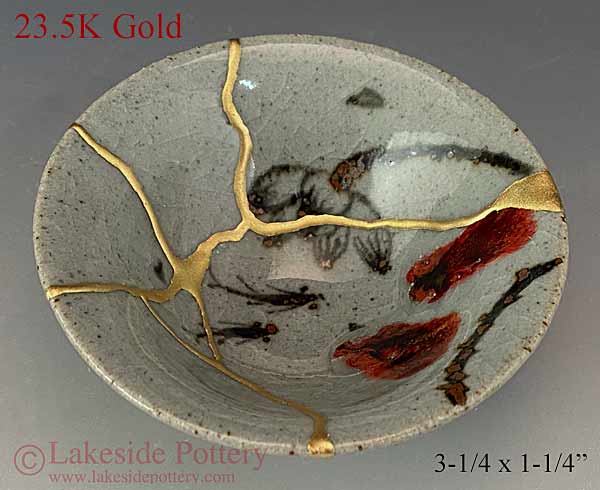
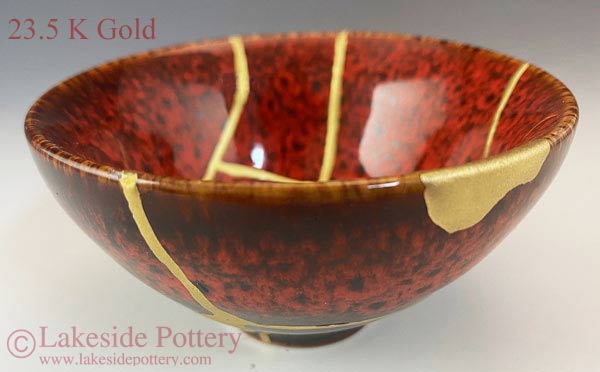
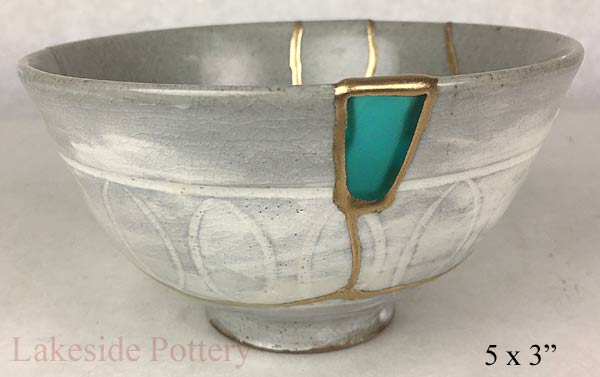
23.5-Karat Gold & Lacquer Example

Our 23.5K gold process blends genuine fine gold with lacquer, honoring the traditional spirit of Kintsugi and creating a timeless, unmistakably authentic finish. This option is often chosen for heirlooms, high-value ceramics, and collectors who want true precious-metal Kintsugi.

The difference between Real Gold Kintsugi and Gold Effect

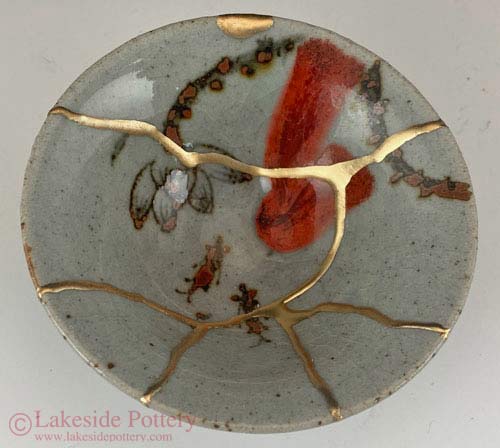
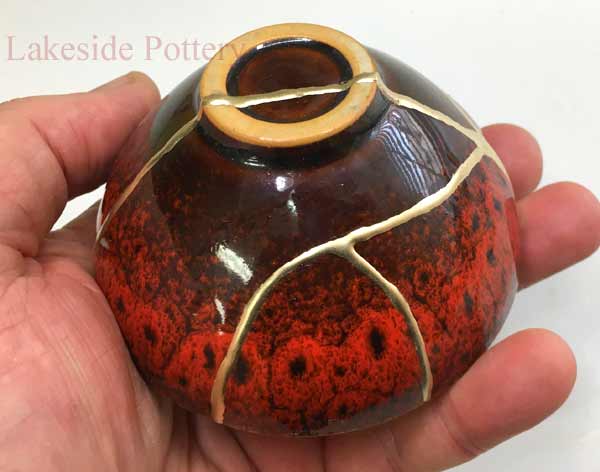
Gold Effect Kintsugi Example

Our proprietary Gold-Effect method uses a custom blend of brass, copper, and zinc to recreate the warmth and luster of gold. When encapsulated, the finish stays bright and is visually very close to real gold, typically at less than half the cost of the 23.5K process.

The difference between Real Gold Kintsugi and Gold Effect


How Our Kintsugi Process Is Done - Video


This lesson shows the highlights of the process.


Mending and Filling Steps
Identical for Real Gold & Gold-Effect Methods
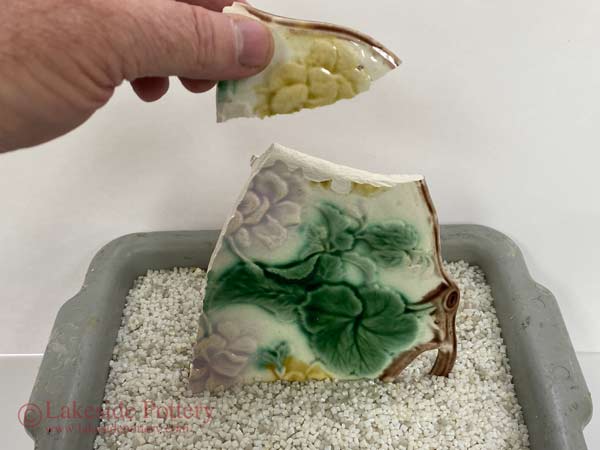
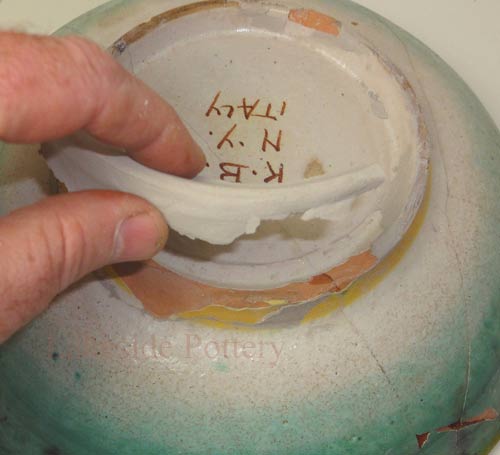
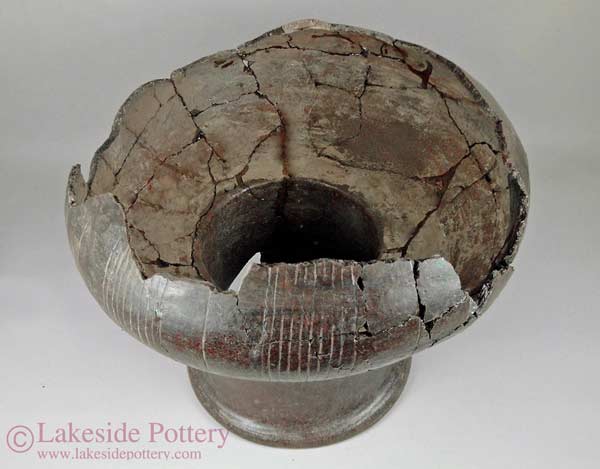
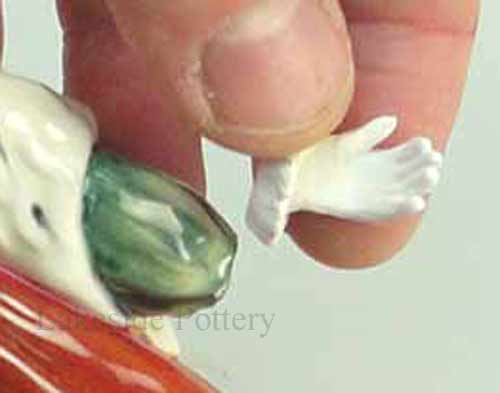
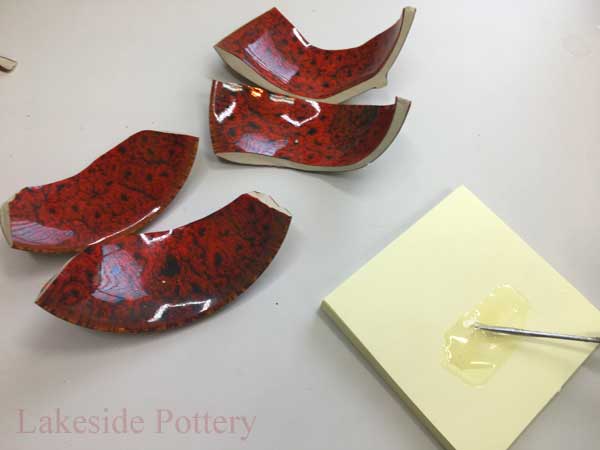
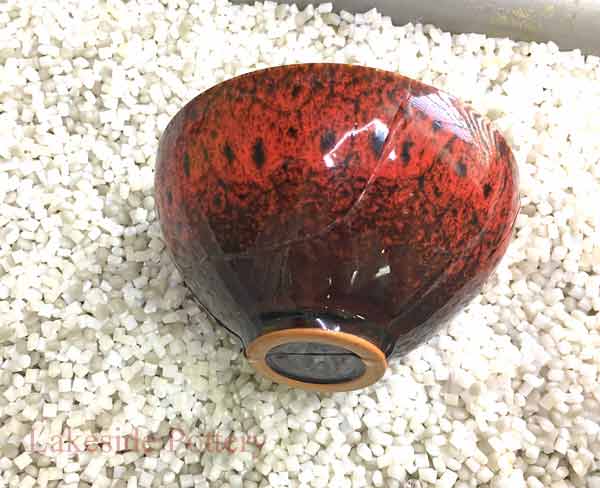
Breaking vessels require some practice to insure the break is just right with aesthetically pleasing shapes
Broken pottery can happen by accident, or it can be broken intentionally to create a specific pattern.
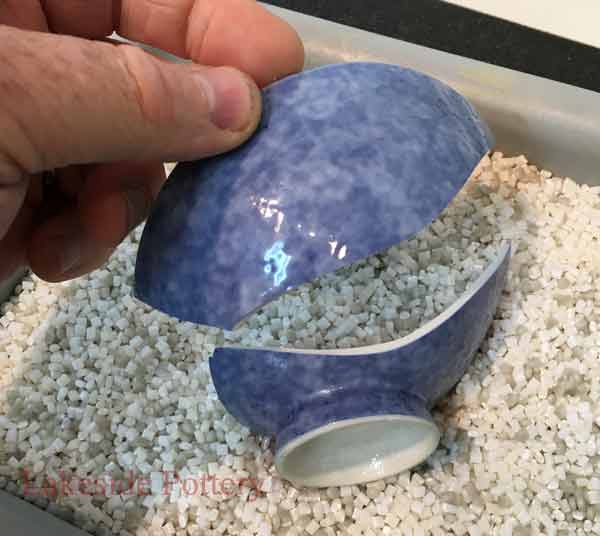
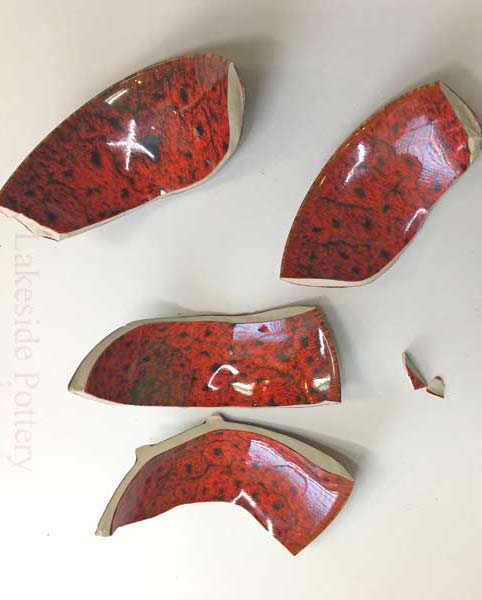
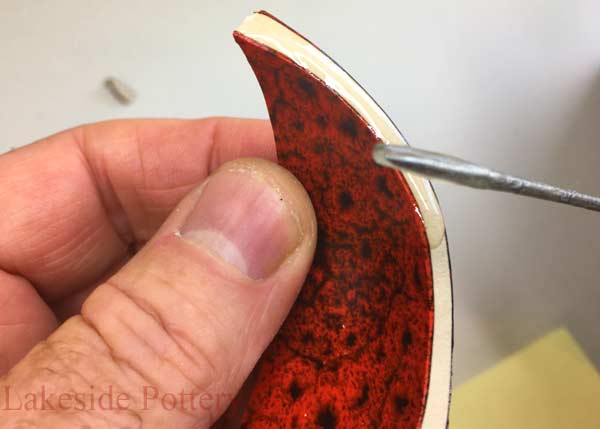
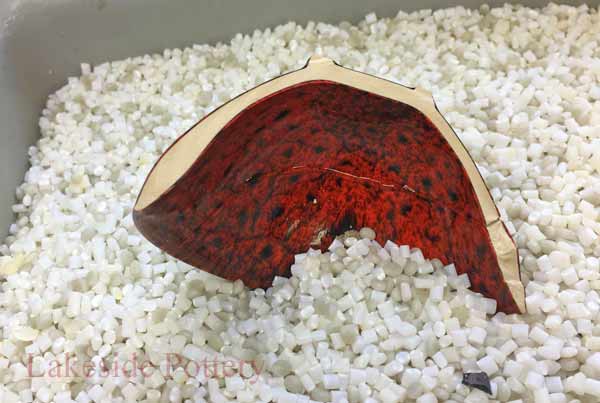
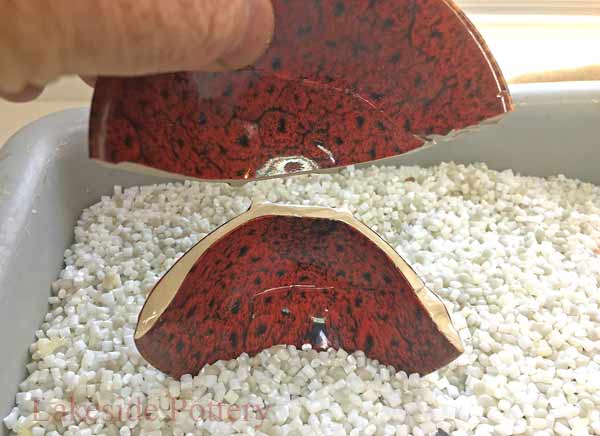
Breaking a Vessel Example
We use different breaking methods depending on the vessel type and structure. Is it a bowl, vase, or plate? Porcelain, stoneware, or earthenware? Wall thickness, uniformity, and size all influence the impact point, force, and tool. The goal is a controlled break so the pattern matches your vision and the project budget. Breaking in stages helps achieve the precision needed, though results are never fully guaranteed. Always wear goggles.
Cement broken pieces using two part 5-minutes epoxy
Cement broken pieces using two part 5-minute epoxy Learn more details in the cementing "How to" lesson and instructions

Mix epoxy well with a pin tool, paper clip or a wooden stick.
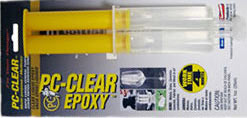
Mix epoxy thoroughly with a pin tool, paper clip, or wooden stick - where to get this epoxy.
Apply epoxy mix to one side using a pintool
Apply epoxy to one edge using a pin tool or wooden stick. Use just enough adhesive to fully wet the edge. Too little can leave gaps and weaken the repair.

Place broken piece over the epoxy.
Join the broken pieces together. Important: You have only about 60-90 seconds from the start of mixing to position the pieces permanently before the epoxy becomes gummy and difficult to work.

Quickly join the pieces together while applying light pressure to squeeze extra epoxy out.
Quickly bring the pieces together and apply light pressure to squeeze out excess epoxy.
Verify that pieces can stay steady during the cure
Verify the pieces can remain steady during curing (75 degrees F or warmer is best). Let the epoxy cure for 60 minutes or more before removing excess cured epoxy with a blade.

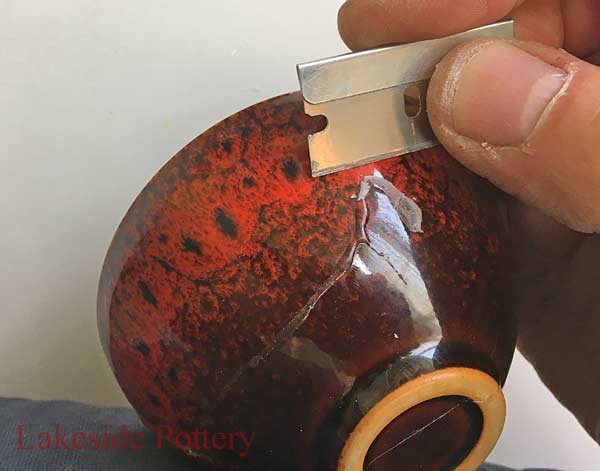
Scrape off excess epoxy and wipe all surfaces
Scrape off excess epoxy and wipe all surfaces with 91% alcohol to remove dust and hand oils before applying filler epoxy.

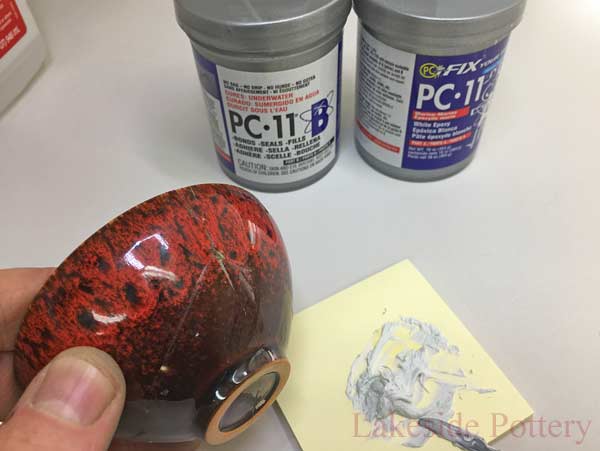
Mix even parts of PC-11 epoxy filler
Mix equal parts of PC-11 epoxy filler (where to get). For easier application, work at room temperature above 70 degrees F.

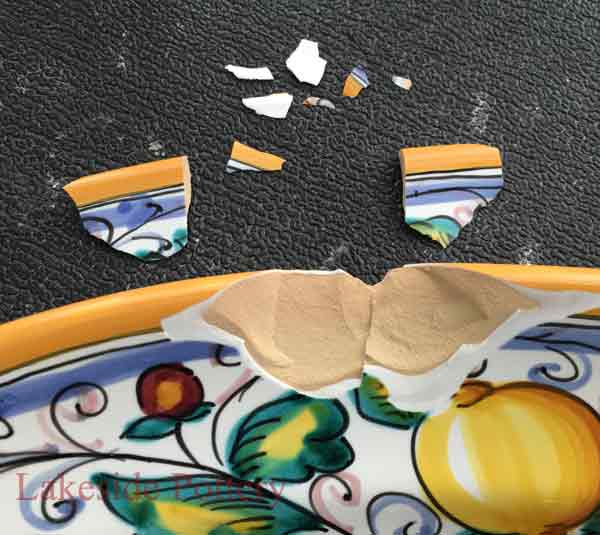
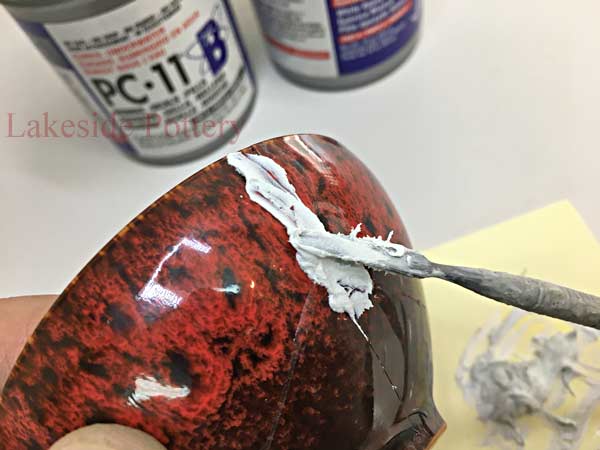
Apply thin layer of filler while pushing in to fill cracks and missing fragments
Apply a thin layer of filler, pressing it in to fill cracks and missing areas.

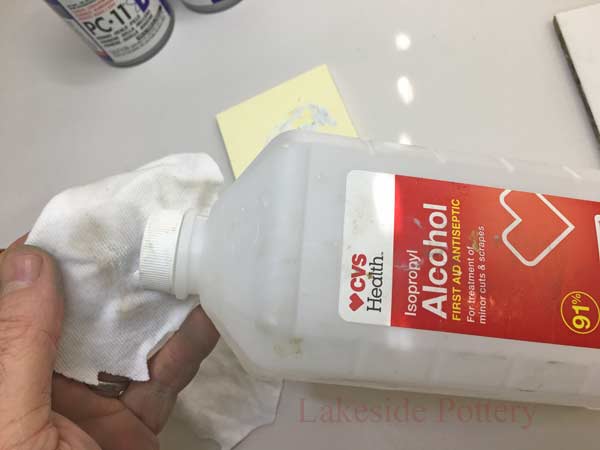
Saturate rag with 91% alcohol
Saturate a rag with 91% alcohol.
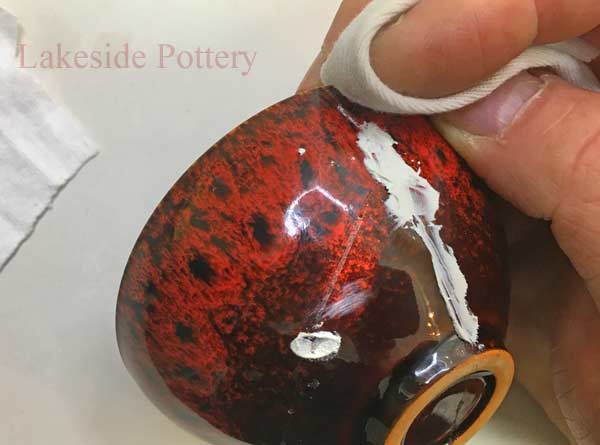
Use the rag and alcohol and rub off the PC-11 filler epoxy from surfaces
Use the alcohol rag to wipe PC-11 from the surrounding surfaces. Be careful not to remove too much filler from the gaps.


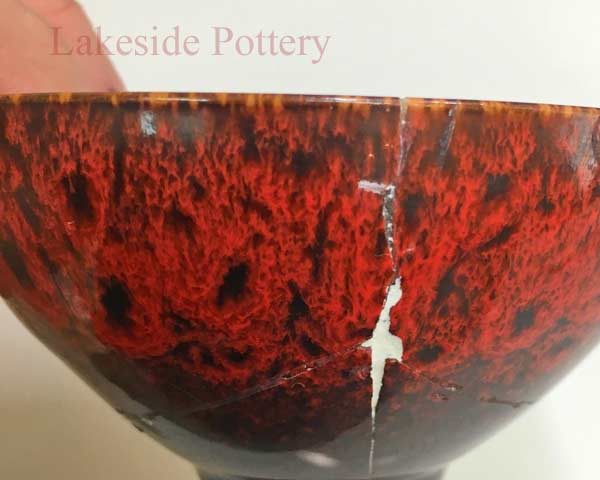
Allow filler epoxy to cure for 12 hours or more at a temperature of 7
Allow filler epoxy to cure for 12 hours or more at 75 degrees F or warmer, or wait 2-3 days in cooler temperatures.

Real Gold Over Lacquer
This begins with the same mending and filling steps used for the brass-based gold-effect method above.

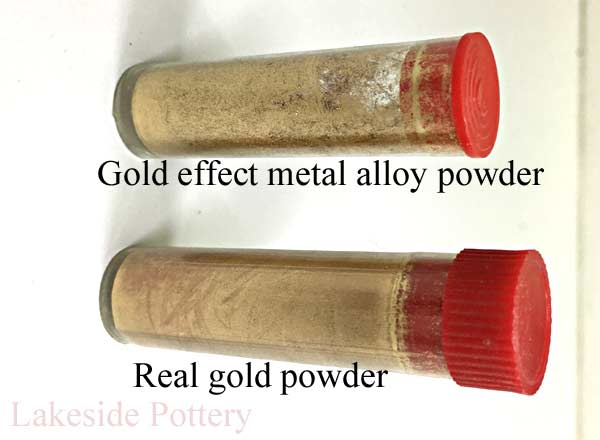
Kintsugi metals - real gold and metal alloyed creating a realistic and durable gold effect
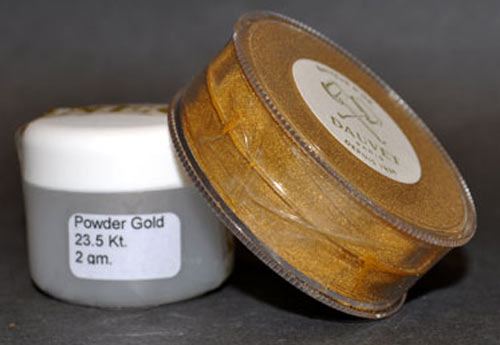
Kintsugi metals: real fine gold and a proprietary metal alloy that creates a realistic, durable gold-effect finish.

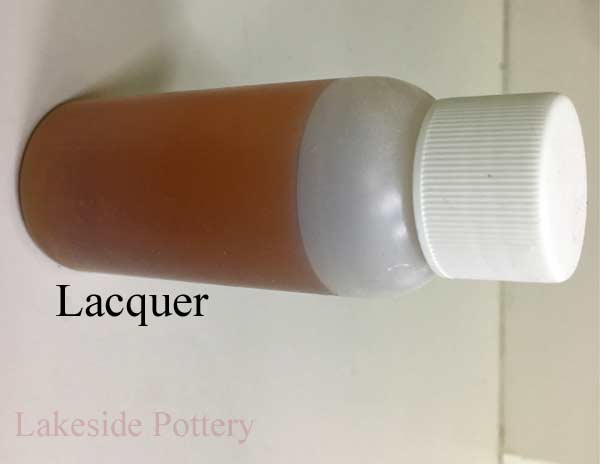
Lacquer to be used with the real gold traditional Kintsugi application
Proprietary lacquer used for our traditional real-gold Kintsugi application.
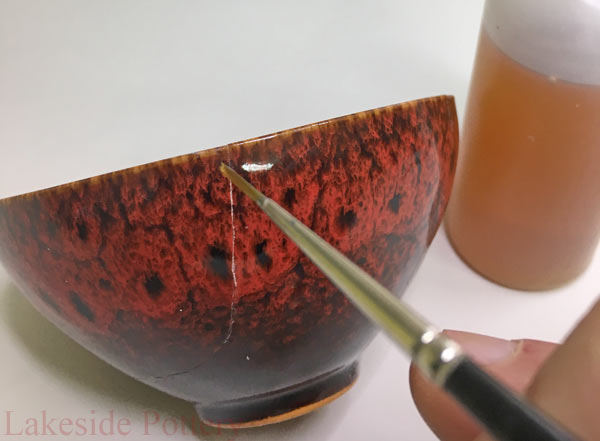
Apply lacquer with thin brush over the repair line in the desired thickness
Apply lacquer with a fine brush along the repair line in your desired width and thickness.
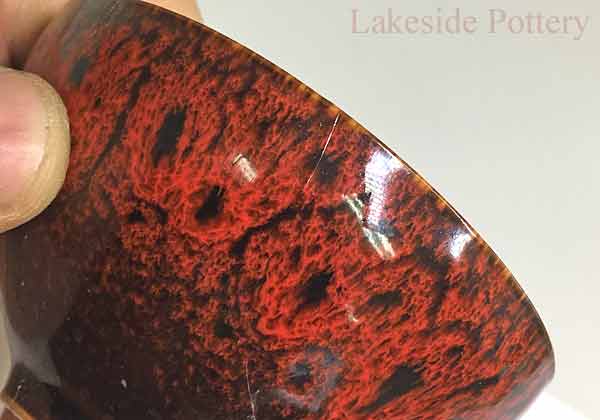
Apply lacquer with thin brush over the repair line in the desired thickness
Let the lacquer set so it wont smear but is still tacky before applying the gold powder.

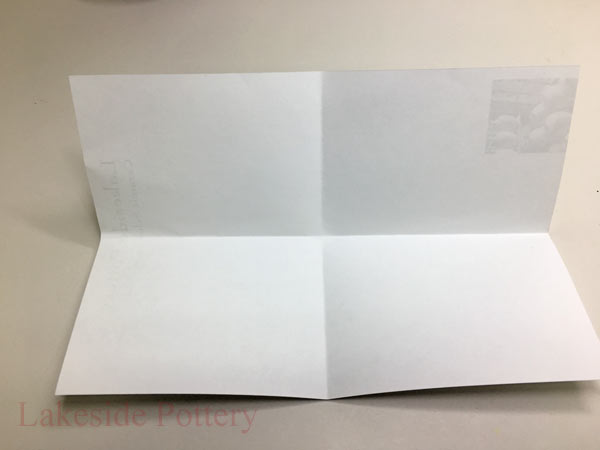
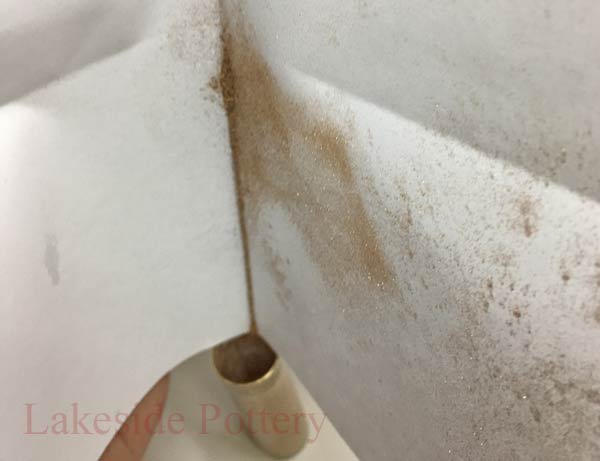
Place bowl over folder paper to collect the excess gold powder
Place the bowl over folded paper to collect excess gold powder.
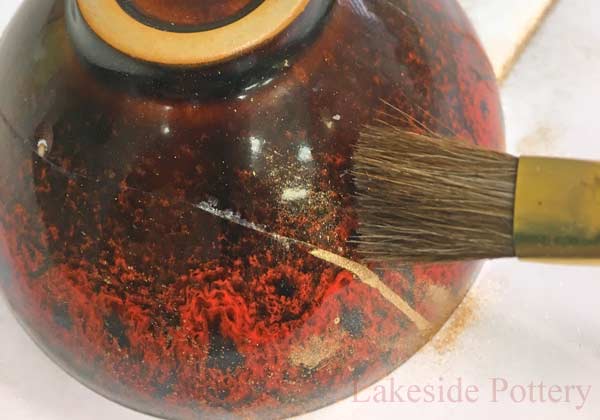
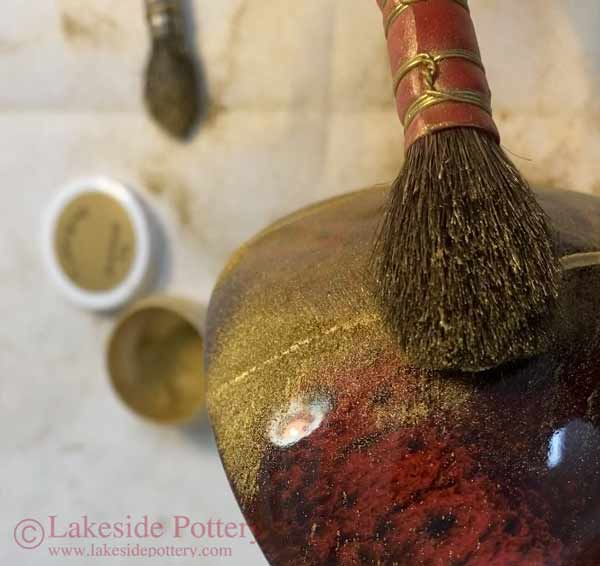
Use very soft brush to apply the gold powder over the lacquer
Use a very soft brush to apply fine gold powder over the lacquer.Where to get gold powder and soft brushes

Wait until the lacquer hardness and brush off excess gold powder
Once the lacquer firms up a bit more, gently brush off excess gold powder.
Wait until the lacquer hardness and brush off excess gold powder
Pour the collected gold powder back into its container.

Gold lines ready for burnishing
Gold lines ready for burnishing.
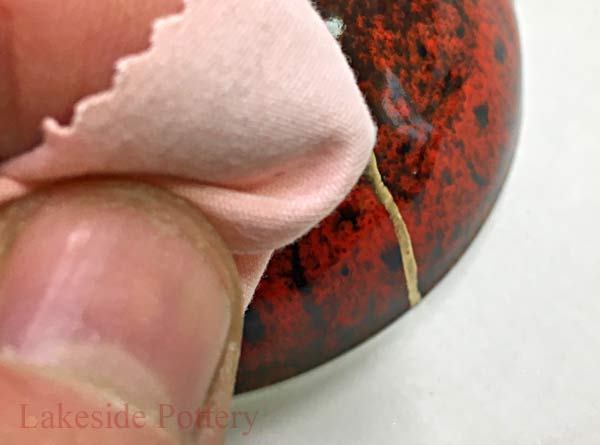
Use soft cotton cloth to burnish the gold applied over the lacquer
Use a soft cotton cloth to burnish the gold applied over the lacquer.

Gold Effect Kintsugi
Begin with the same mending and filling steps shown above

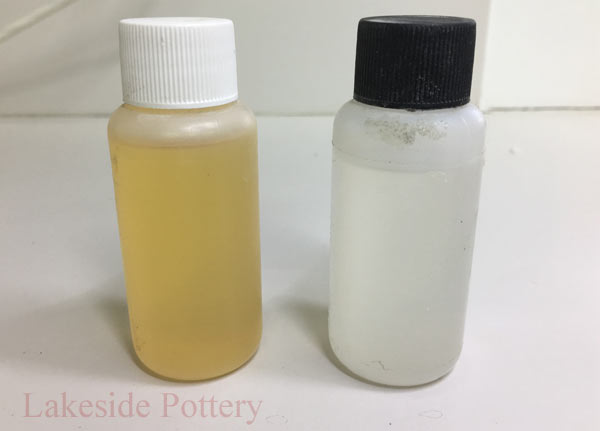
Encapsulating two part non-yellowing epoxy
Encapsulating two-part, non-yellowing proprietary epoxy.
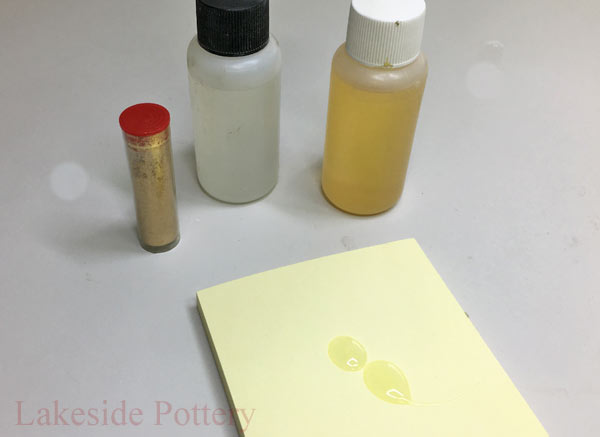
Place even amount of epoxy on a pad
Place equal amounts of epoxy on a pad.
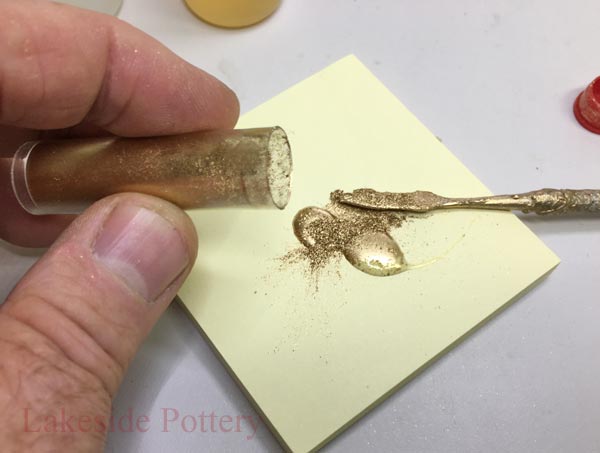
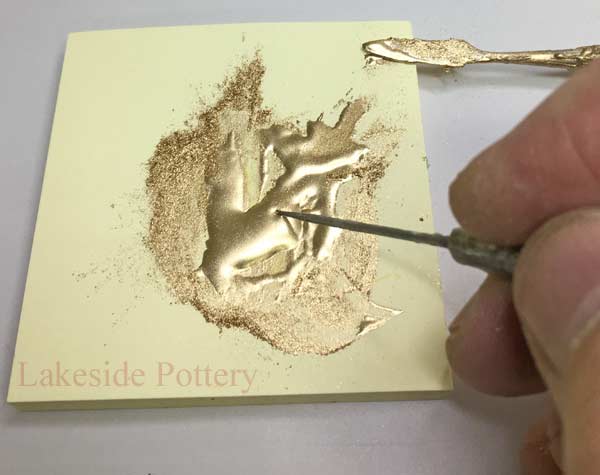
Apply about 35% metal alloy (consists of brass, copper and zinc)
Add our proprietary gold-substitute alloy powder (custom made for us; consists of brass, copper, and zinc; not sold by us).

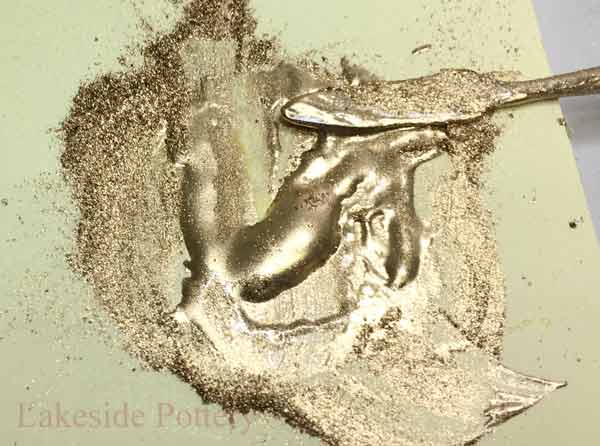
Mix well
Mix the brass-based gold-effect metals thoroughly.
Use a sharp tool to carry the gold effect
Use a sharp tool to carry and place the gold-effect mixture.
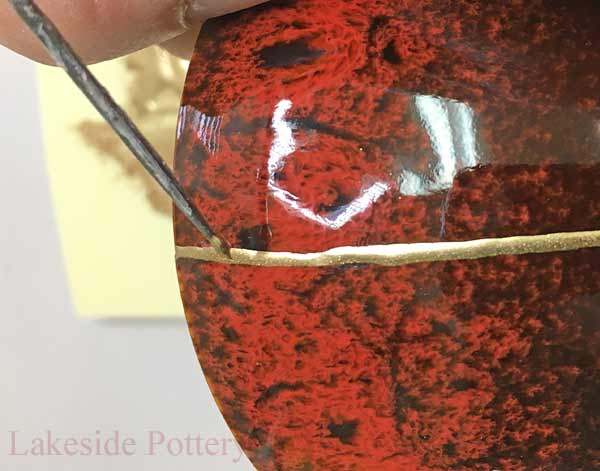
Apply the desired width and thickness over the repair lines
Apply the desired width and thickness over the repair lines in one continuous pass.

Allow to cure before handling
Allow to cure fully before handling.

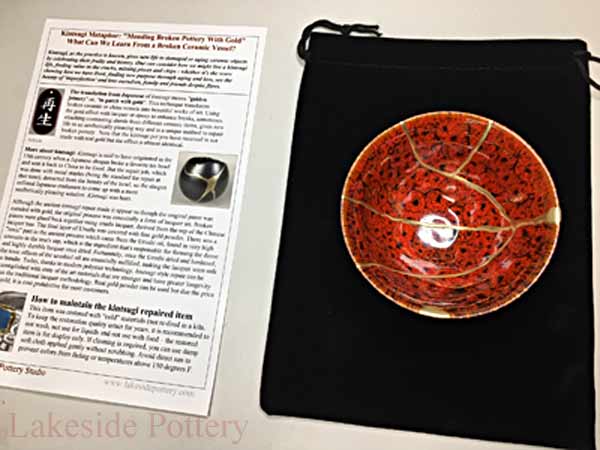
Kintsugi bowl ready for shipment
Kintsugi bowl ready for shipment.

IMPORTANT: Kintsugi repair materials are not intended for liquids or heat above 180 degrees F. Repaired items should not be used for cooking or food service to avoid premature failure or possible contamination.

Real Gold Examples - More examples
Real Gold Kintsugi examples

Real Gold Kintsugi examples


Gold Effect Examples - More examples
Gold Effect Kintsugi examples

Gold Effect Kintsugi examples

Gold Effect Kintsugi examples

Gold Effect Kintsugi examples


COPYRIGHT Lakeside Pottery LLC ; COPYRIGHTÂ policy; Protected by Copyscape including reporting to search engines