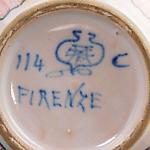
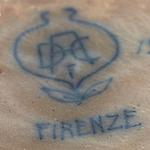
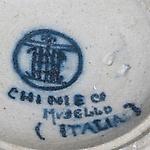
What Kind of Porcelain Mark Are You Looking At?
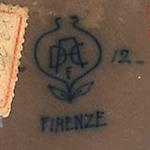
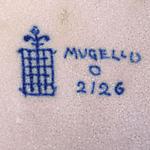
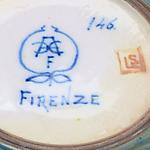
Before trying to identify a name or symbol, it helps to determine what kind of mark you have. A single piece may carry more than one type.
- Factory or maker's mark - identifies the company or factory that manufactured the porcelain body or blank.
- Decorator's mark - identifies the studio or company that painted or decorated a piece made elsewhere.
- Retailer or distributor mark - identifies the company that sold or imported the piece, not necessarily the manufacturer.
- Artist, painter or pattern marks - handwritten numbers, initials or symbols may relate to the decorator, pattern, shape or production process rather than the manufacturer.
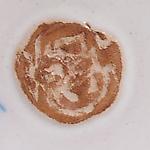
Do not assume the most prominent mark is the maker's mark. Look at every stamp, symbol, number and impressed mark on the base before comparing it with references.
What a Porcelain Mark Cannot Tell You by Itself
A maker's mark can be an important clue, but the mark alone usually cannot establish authenticity, exact age or monetary value. Manufacturers changed marks over time, some marks were reused, decorator and retailer marks can be mistaken for factory marks, and prestigious marks have often been copied or imitated.
For a more reliable assessment, the mark should be considered together with the ceramic body, glaze, decoration, construction, condition, provenance and the specific version of the mark.
History and Origins of European Porcelain Marks
The earliest porcelain mark in the history of European production is the monogrammed Meissen “AR” mark, which stands for Augustus Rex, sometimes known as Augustus the Strong. As the king of Saxony in the eighteenth century, Augustus commissioned the first production of European hard-paste porcelain. Soon after, the Meissen Royal Manufactory began producing pieces with the famous crossed swords mark, which has become the most recognizable (and most imitated) porcelain mark in history.
Most porcelain marks on fine antique china, such as the Meissen marks, are "underglaze", meaning they were applied to the piece prior to firing. For the first hundred years or so of porcelain production, there were only two known pigments that could withstand the high firing temperatures necessary: iron red and cobalt blue. Cobalt became the most popular, so most European porcelain marks are cobalt blue underneath the glaze.
An important exception is the work of the Dresden porcelain studios, operating in the Saxon capital during the late nineteenth century. These famous artists, including Carl Thieme, Helena Wolfsohn, and Franziska Hirsch, procured blanks from other factories and applied their own hand painting or sculpted embellishments. In many cases, these blanks already bore factory marks. The Dresden decorators would cover the original marks with gold glaze and then apply their own above-glaze mark, usually a blue crown.
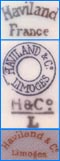
This explains why many pieces bear two marks: one beneath the glaze, indicating the factory that produced the blank, and the other above the glaze, showing the decorator. For example, much Haviland china bears the green underglaze mark "Haviland France" and the red decorator's stamp "Haviland & Co. Limoges."
Another common type of porcelain mark is the retailer or distributor's mark. In certain cases, large importers would special-order china to be marked with the names of domestic retailers. This is common with Haviland china, which can bear stamps from stores such as Sanger Brothers (Dallas, TX) or W.J. Petee & Co. (Oklahoma City, OK). These retailer marks do not indicate where the porcelain was manufactured or decorated.
Because of their prestige, the marks of factories like Meissen, Dresden, and Haviland have been widely imitated. Some 18th-century Meissen pieces even carry Oriental-style designs with fake Chinese or Japanese marks. Ironically, the now-celebrated Dresden decorators were once dismissed as Meissen imitators, and some, like Wolfsohn and Thieme, even faced lawsuits for using deceptively similar marks. Yet today, those very works, even with fraudulent "AR" monograms, are highly prized by collectors and have inspired further imitations over the last century.
How to Identify Porcelain and Pottery Marks at Home
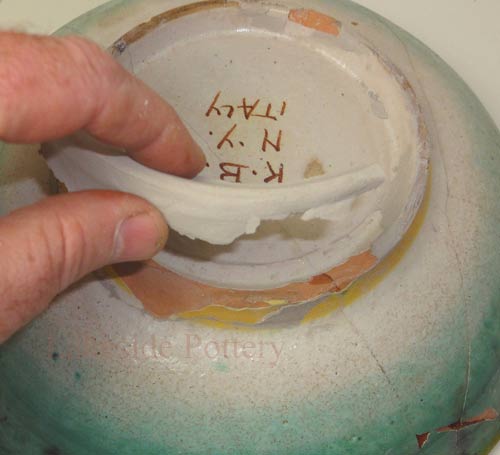
When examining your porcelain, turn the piece over and look at the underside. The mark may be painted, impressed, or stamped. A few helpful steps:
- Use good lighting and magnification - Many antique marks are faint or partly worn.
- Check under the glaze -True factory marks are often applied before firing (underglaze), while decorator or retailer marks may be added afterward.
- Look for color clues - Cobalt blue and iron red were the most durable pigments during early porcelain production, making them common in underglaze marks.
- Compare with references - Use collector’s guides or reputable online resources to verify authenticity.
Common Porcelain Mark Identification Mistakes
Not all marks tell the full story:
- Fakes and imitations - Prestigious manufacturers like Meissen, Royal Crown Derby, and Limoges were copied extensively. Some reproductions even carry convincing, but fraudulent, marks.
- Decorator vs. manufacturer's mark – A piece may have both. One indicates where the blank was made; the other identifies who painted or decorated it.
- Retailer marks - These only show who sold the china, not who made it.
- Assuming a mark alone establishes value - Rarity, condition, age, workmanship, provenance and current collector demand can matter as much as the name on the base.
Why Identification Matters for Porcelain Restoration
Before investing in restoration, it's important to know the origin and value of the porcelain.
- Material differences - Some clays are softer, some glazes respond differently. A restorer adjusts methods based on the manufacturer.
- Value considerations - A professional restoration may preserve or enhance the display value of a collectible piece, but if the porcelain has little monetary or sentimental worth, restoration may not be practical.
- Historical preservation - Knowing the story behind the maker's mark helps ensure the restoration process honors the original craftsmanship.
Considering professional restoration?
View Before & After Restorations | Restoration Services
Request a Restoration Estimate
Frequently Asked Questions About Porcelain Marks
What are porcelain marks?
Porcelain marks are identifying stamps, symbols, or signatures placed on china, often under the glaze, to indicate the factory, decorator, or retailer.
How do porcelain marks affect value?
Marks from well-known factories like Meissen, Limoges, or Royal Doulton often increase a piece’s value, especially if they are early or rare versions.
Why do some pieces have two marks?
Many fine porcelains were made in one factory and decorated in another. For example, Haviland china often bears both a factory stamp and a decorator’s mark.
What is the difference between underglaze & overglaze marks?
Underglaze marks are applied before firing and are permanent. Overglaze marks, applied afterward, may wear over time.
Can you tell me what my porcelain is worth?
We are not able to provide appraisals or valuations. However, knowing your mark is the first step in finding an expert appraisal service.
How can I identify an unknown pottery or porcelain mark?
Start with a clear photograph of the entire mark and note whether it is painted, printed, stamped or impressed. Search the exact words, initials and symbols, then compare the mark with reliable reference sources. Also examine the object itself because a mark alone may not establish its maker, age or authenticity.
What do numbers on the bottom of porcelain mean?
Numbers may refer to a pattern, mold, shape, decorator, artist or production code. They are not necessarily a date, and their meaning varies by manufacturer.
Does an old-looking porcelain mark mean the piece is valuable?
No. A mark is only one factor. Value can depend on the maker, age, rarity, authenticity, decoration, condition, provenance and current collector demand. Some well-known marks were also widely imitated.
Tips for Collectors
- Research the factory history, many companies changed marks over time, which can help date your piece.
- Be cautious with pieces bearing only "Made in" labels, as they may be later reproductions.
- Remember that even imitations, such as 19th-century Dresden pieces painted with "fake" Meissen marks, can now be highly collectible in their own right.
About This Guide
This guide was prepared by Lakeside Pottery Studio from more than two decades of hands-on experience repairing and restoring ceramic, porcelain, pottery and sculpture. In restoration work, maker's marks can provide useful context about an object's origin, materials, decoration and history. This page is intended as an educational reference and not as an identification, authentication or appraisal service.
About Lakeside Pottery Studio | View Restoration Examples
Conclusion
Porcelain marks offer a window into history, telling the story of each piece and its maker. Whether your porcelain was produced by a world-famous factory such as Meissen or Royal Crown Derby, or by a lesser-known regional studio, the maker's mark is an essential starting point for understanding its origin and value.
At Lakeside Pottery Studio, we use our restoration experience to help preserve both the look and history of ceramic and porcelain pieces. While we cannot provide appraisals or valuations, we can carefully repair and restore items so they can continue to be enjoyed for years to come.