Ceramic & Sculpture Repair Lessons
(click pictures)
|
Can Repaired Ceramics Be Food Safe? Understanding Epoxy and Other Mending Materials, Safety Limits, and Restoration Standards
For years, we have received one recurring question at Lakeside Pottery Studio: "Is there a food safe adhesive or mending material that will make a repaired ceramic safe to use with food or drink?"
This question comes up often because restored pieces can look flawless and feel structurally solid, and many adhesive and mending products are advertised in ways that suggest they might be suitable for functional use. People naturally wonder whether a repaired bowl, cup, or plate can return to everyday service once the break has been fixed properly. It is an understandable assumption, especially when the repair is strong and visually seamless, but the answer carries important considerations that are not always obvious.
The answer is: No, with one exception.
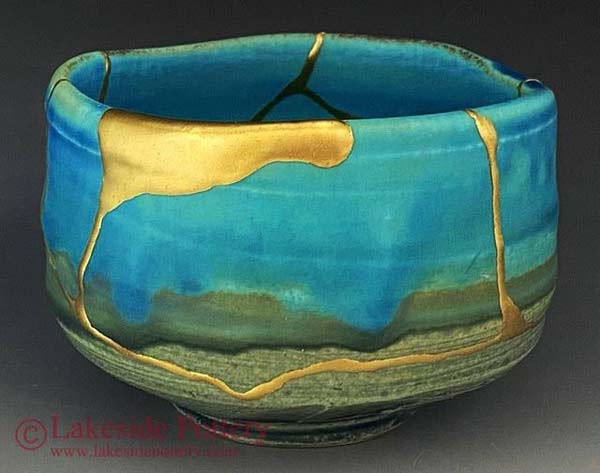
Ordinary ceramic adhesives and mending products do not establish food safety. Traditional Urushi Kintsugi, when properly applied and fully cured, can be food-safe, provided the repaired vessel is suitable for functional use.
Below is a clear explanation of why this is the case, what "food safe" actually means, and why all reputable conservation studios including ours advise against using repaired items for food or liquid contact. For deeper definitions and regulatory context, see Appendix A below.
 . . 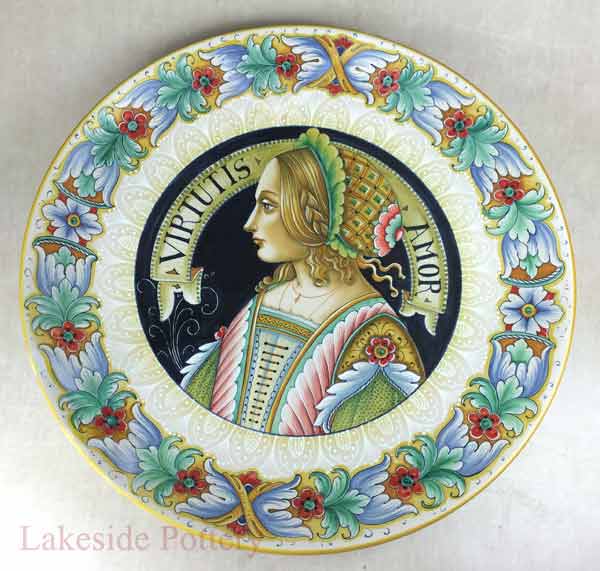
Even when a repair looks flawless, it is not food-safe.
Restored pieces should be treated as decorative only
Table of Contents
What Does "Food Safe" Mean for Repair Adhesives
The phrase sounds simple: a repair material that will not transfer harmful substances into food. In reality, food-contact compliance depends on the specific material, its intended use, curing, and testing. A food-contact claim for a product does not certify a repaired ceramic vessel.
Regulations do exist for industrial coatings used in manufacturing food containers, but an industrial coating approval does not automatically apply to ceramic repairs made with epoxies, cyanoacrylates, polyurethane adhesives, or other repair products. Intended use, application, curing, and testing all matter. Additional clarification on how industrial standards differ from restoration materials is provided in Appendix A.
Why This Matters For Repairs
A repaired ceramic vessel introduces variables that cannot be standardized or tested in the way industrial coatings are.
Examples include:
- Incorrect mixing ratios where two-part products are used
- Incomplete curing
- Temperature fluctuation during cure
- Acidity and alcohol content of the food
- Pigments and additives affecting chemical migration
- Moisture or atmospheric exposure affecting certain curing systems
- Layer thickness differences
- Skill level and consistency of the application
Depending on the product, deviations can leave residual chemicals, weaken adhesion, or change surface durability. Food-contact safety cannot be assumed without appropriate evidence. A structured breakdown of why these variables make repairs scientifically incompatible with food-contact safety appears in Appendix B.
How Industrial Food Contact Coatings Actually Work
An example of regulated food-contact materials is the specialized interior lining of a beverage can, which may use epoxy or other coating chemistries.
This coating has been:
- Engineered specifically for mildly acidic liquids
- Applied with precision robotics
- Tested continuously in quality control laboratories
- Manufactured using only approved base chemicals
- Monitored for consistency across thousands of batches
Even this controlled system is not foolproof. A 2024 investigation revealed epoxy based BPA contamination inside Coke cans, showing how even heavily regulated environments can experience migration issues.
Industrial food-contact controls cannot simply be assumed for a hand-repaired ceramic vessel.
Why DIY Mending Materials Cannot Establish Food Safety
Some adhesives and coatings advertise "food safe" or "food grade," but those claims must be evaluated against their exact intended uses and testing.
To establish food-contact suitability, a repaired surface would need to:
- Be composed only of materials approved for food contact
- Cure under strict temperature, humidity, and chemical controls
- Be laboratory tested for chemical migration using standardized food simulants
- Be applied identically every time
- Be tested for durability under heat, acidity, and alcohol exposure
A typical home or studio repair is not validated as a complete food-contact article. Epoxies, acrylics, cyanoacrylates, polyurethane adhesives, and other repair materials differ from fired glaze and have product-specific curing and durability limits.
For further detail on why ordinary repair materials cannot be assumed suitable for food contact, see Appendix B.
Can A Repaired Bowl, Plate, Cup, Or Pitcher Ever Be Used For Food
No. Not for food, beverages, oils, alcohol, or acidic contents.
Even after sanding, top coating, or sealing, the repair remains unsuitable for functional use.
Why sealing does not help:
- Any coating applied over a repaired joint introduces another layer whose food-contact suitability must be established
- If the underlying adhesive or filler is not suitable for the intended exposure, the risk remains
- As the top coating wears through with use and washing, food contact with the repair becomes likely
Food safety is about consistency and control, not creativity or aesthetics. Repair work is inherently variable and artistic.
Examples of why repaired bowls, mugs, and platters cannot meet food-contact standards are shown in Appendix C.
Why Some Products Still Claim To Be "Food Safe"
There is enormous market demand from crafters making charcuterie boards, cutting boards, and resin art serving pieces.
This demand has encouraged some companies to make overreaching claims that are not supported by regulation or laboratory testing.
The phrase "food safe" is often used loosely to boost sales, even when:
- The material has not been tested for its claimed food-contact use
- The formulation or intended application may not meet applicable food-contact requirements
- The mixing and application methods cannot be standardized
- The product is intended strictly for decorative use
As a professional studio with decades of restoration experience, we strongly advise clients to be cautious with such claims. Additional clarification of common misconceptions appears in Appendix D.
If You Still Want To Use Repair Products On Surfaces That Touch Food
We do not recommend using repaired ceramic vessels for food contact. For other projects involving adhesives, resins, or coatings, follow the product manufacturer's specific instructions and verify the intended food-contact application by:
- Following the specified mixing ratio and measurement method for two-part products
- Following the manufacturer's required curing temperature and time
- Checking whether alcohol contact is within the tested conditions
- Avoiding unapproved pigments and additives
- Avoiding strong alkaline or acidic cleaners
- Choosing manufacturers who disclose chemical composition transparently
These precautions do not establish that a repaired ceramic is food safe. Only evidence relevant to the finished article and its actual use can support that conclusion.
A Note About Traditional Kintsugi And Urushi
Traditional Kintsugi uses natural urushi lacquer, which becomes an inert polymer when fully cured. Urushi lacquerware has been used safely in Japanese culture for centuries.
However, this does not mean a Kintsugi repaired ceramic vessel becomes a fully functional food safe item.
Important limitations include:
- Urushi repairs are not intended for hot or very acidic foods
- Prolonged moisture exposure can affect the finish and joints
- Alcohol and oils should be avoided on repaired areas
- Japanese users understand and respect these limitations, while Western expectations often assume normal everyday use
In addition, most modern Kintsugi practiced outside Japan uses epoxy rather than urushi, and epoxy based Kintsugi is never food safe. For these reasons, even authentic urushi repaired vessels are best considered decorative rather than functional.
Additional examples and limitations related to repaired vessels are described in Appendix C.
Lakeside Pottery Studio's Guidance
For ceramic, pottery, stoneware, porcelain, and sculpture repairs:
- Repaired cracks, chips, and breaks are never food safe
- Restored items must remain decorative only
- Do not use restored items with liquids, heat, oils, or food
- Never place restored items in dishwashers, microwaves, ovens, or direct sunlight
This position is shared across professional conservation studios worldwide.
We aim to give clients clarity, not marketing language, so they can make informed decisions about the objects they love.
For more detailed explanations, examples, and clarifications that support this guidance, see the appendixes that follow.
Conclusion:
Can Repair Adhesives Make Ceramics Food Safe
Not on the basis of an adhesive label alone. Ordinary ceramic repairs using epoxy or other mending materials have not been validated as finished food-contact articles, even if an individual product advertises a limited food-contact use. If your item is restored, enjoy it visually and proudly, but keep it decorative.
Appendix A:
What "Food-Safe" Actually Means in Regulations
The term "food-safe" refers to materials that have been tested to ensure they will not release harmful chemicals into food or drink under normal use. This testing is normally done on factory-produced surfaces such as glazes, plastics, or industrial coatings, not on repaired objects. Certified food-safe materials must pass migration tests under controlled conditions involving heat, acidity, detergents, alcohol, and repeated washing.
In ceramic restoration, the materials used, including adhesives, fillers, pigments, and coatings, are generally not evaluated as part of a finished, repaired food-contact vessel. Even if an epoxy appears hard or stable, that does not make it equivalent to a fired glaze. Food-safe status applies only to materials used exactly as tested, under the same conditions, thickness, cure cycle, and environment. None of these can be met in a repair environment.
Appendix B:
Why Common Mending Materials Cannot Establish Food Safety for Ceramic Repairs
Common ceramic mending products are selected for bonding, strength, clarity, or workability, not necessarily repeated food contact. Examples include two-part epoxies (Araldite, J-B Weld, PC-11, Devcon, and Loctite epoxy), cyanoacrylate super glues (Krazy Glue and Loctite Super Glue), polyurethane adhesives (Gorilla Glue Original), PVA glues, acrylic adhesives, polyester resins, and restoration fillers. Their performance depends on their individual formulations, application conditions, and aging. Even when fully cured, the repaired seam is chemically different from a fired-glaze surface.
Typical concerns include:
- Chemical composition: Different products contain different chemical systems. Some epoxies use bisphenol-based resins and reactive hardeners; cyanoacrylates, polyurethanes, PVAs, and acrylics have different ingredients and curing mechanisms. A brand name does not establish food-contact suitability.
- Surface unpredictability: A repair seam contains microscopic gaps and porous channels that allow contact with underlying adhesive.
- Environmental degradation: Heat, washing, UV exposure, and acidity can affect different repair products in different ways, potentially weakening joints or changing their surfaces.
- Additives: Pigments and fillers used for color matching are also untested for food contact and increase the uncertainty of long-term stability.
For these reasons, even the strongest or most beautiful restoration does not meet the requirements needed to classify a surface as safe for food or beverages.
Appendix C:
Examples of Repaired Items and Why They Are Not Food-Safe
These real-world examples illustrate how different types of repaired items, even when professionally restored, cannot safely return to functional use.
- Repaired Mug or Cup:
A crack or break passing through the rim or interior exposes the repair to hot liquids, repeated washing, and abrasion. The joint is not chemically inert and can degrade over time, which makes it unsafe for beverages.
- Repaired Bowl Used for Soups or Sauces:
Acidity, oils, and heat repeatedly contact the repaired seam. Even a perfectly smooth repair surface does not replicate the chemistry of a fired glaze.
- Large Decorative Platter:
While visually seamless, long repaired seams or filled areas are untested for durability under food exposure. Serving moist or acidic foods increases migration risk.
- Hairline Crack Reinforced on the Back:
Even when the interior appears untouched, thermal expansion can open microscopic pathways between the adhesive and the food-contact surface, making long-term safety unpredictable.
These examples demonstrate that a repaired ceramic may be structurally sound and visually pristine, but it does not meet the standards required for safe contact with food or drink.
Appendix D:
Common Misconceptions About "Food-Safe" Repairs
Many assumptions about adhesives, coatings, and repair methods come from misunderstanding how food-safety standards work. These are the misconceptions most frequently encountered.
- "If the adhesive is labeled food-safe, the repair is food-safe."
A material can be "food-safe" only when used exactly as tested. A ceramic repair-with joint seams, fillers, and pigments-does not replicate those conditions.
- "If the repair is only on the outside, it is safe to drink from."
Most vessel walls are thin. Stress, flexing, or expansion can eventually connect interior and exterior surfaces, making outside-only repairs unreliable for safety.
- "Cold or dry foods are safe on repaired surfaces."
Oils, acids, and moisture interact with polymer surfaces even at low temperatures. Repeated exposure slowly weakens coatings and can increase leaching.
- "A clear topcoat will make the repair safe."
Adding another untested coating creates additional uncertainty. As the top layer wears away, the underlying repair material becomes exposed again.
These misconceptions arise because repair adhesives can look durable and seamless, but appearance does not reflect chemical stability or tested safety.
Appendix E:
Safer Alternatives When You Want Functional Dinnerware
Many clients hope to continue using a favorite ceramic item after restoration. While repaired pieces must remain decorative, there are safe and practical alternatives for everyday use.
- Use the restored item decoratively:
The safest approach is to enjoy repaired ceramics visually while reserving functional use for intact pieces.
- Use only for non-contact roles:
If the piece must be used, limit it to wrapped, dry, or decorative items where food does not touch the repaired surface.
- Commission a replacement for functional use:
Many clients choose to have a functional replica made while preserving the repaired original for display.
- Re-glazing and re-firing (rare but possible):
In special cases, a potter may repair, glaze, and re-fire a piece to create a true food-safe surface, but the item must withstand firing temperatures and should be leach-tested afterward.
These alternatives ensure that clients can preserve sentimental or historical pieces while safely enjoying functional dinnerware in daily life.
Back to top
|