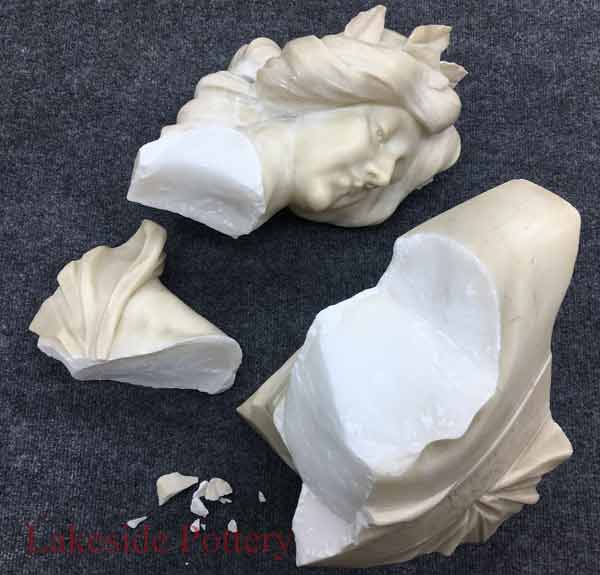
When a ceramic, sculpture, figurine, or decorative object breaks, the damage is rarely “just” physical. Owners react to what the piece represents in their lives: a person, a memory, a belief, a milestone, or a hard-earned collection. The break can stir up sadness, guilt, fear, or simple frustration.
This page looks at why people choose to restore cherished objects, both emotionally and practically. It also explains when a seamless repair makes sense, when Kintsugi is a better fit, and when restoration is a straightforward value-based decision.
How People React When Something Breaks
When ceramics and sculptures break, people rarely see “just broken material.” They see a story suddenly interrupted. The reaction depends on what the object stands for, who it belonged to, and how the break happened.
Grief Over Losing a Personal Connection
Some clients feel grief because the object carried a link to someone they love or miss. A bowl made by a parent, a wedding gift, a figurine bought on a special trip, or a small statue from a family home can hold deep meaning. When it breaks, it can feel as if a part of that connection has been damaged. The sadness comes from the fear that the memory or story tied to the piece may feel less complete if the object is gone.
Extending the After-Life of a Loved One’s Belongings
When an object belonged to someone who has passed away, restoring it becomes more than saving a damaged item. It becomes a way of keeping that person’s presence alive in daily life. A cup a father used every morning, a figurine a grandmother always displayed, or a small sculpture that sat in a parent’s home can hold years of memories and emotional meaning. When such an item breaks, families often describe the loss as more than physical. It can feel like losing a small piece of that person all over again.
Restoring the piece gives it what many clients describe as an “extended after-life.” Once repaired and returned to a visible place in the home, it continues to spark thoughts, feelings, and stories connected to the person who owned it. Instead of being discarded or tucked away in a drawer, the restored object remains present and active in the family’s emotional landscape. It becomes a quiet way of keeping a loved one close, allowing their memory to stay alive through an object that meant something to them.
In this way, restoration becomes both practical and deeply personal. The repaired object serves as a bridge between past and present, offering comfort, continuity, and a tangible reminder of someone who is no longer physically here.
Fear and Guilt After an Accident
Fear and guilt are different from grief. These emotions come from responsibility for the accident. Clients often say things like “I broke my mom’s favorite thing” or “My wife will send me to the dog house.” The fear is about disappointing someone or facing their reaction. The guilt comes from feeling careless or from the sense that they failed to protect something important to someone else.
Responsibility When the Item Belongs to Someone Else
Sometimes the broken piece does not belong to the person seeking the repair. Cleaning staff, movers, decorators, contractors, or other service providers may break a client’s item while working in their home or business. A spouse or family member may break an object that emotionally belongs to someone else in the household. In these cases, the main stress comes from wanting to make things right. A careful restoration becomes a way to show respect, repair the mistake, and restore trust with the owner.
Why Restoration Often Feels Like Healing
As the broken pieces are cleaned, aligned, and joined, many clients feel a sense of relief. They see that the break is not the end of the story. Watching a cherished ceramic or sculpture return to its form helps them work through the emotions they felt at the moment of the accident. When the piece is returned, it often brings a feeling that something in their own experience has been repaired as well.
The Role of Trust in the Restorer
Handing over an irreplaceable object requires trust. Clients want high-level craft, but they also want the meaning behind the object to be understood and respected. Whether the piece is for themselves, a family member, or a client they serve, they rely on the restorer to protect what cannot be replaced. Good restoration is both technical and personal.
When Clients Choose Kintsugi Instead of Seamless Repair
Many people first ask for a seamless repair because they want the object to look as if it never broke. As the story behind the piece and the break is discussed, some realize that hiding the damage no longer fits what the object has come to represent. At that point, they sometimes change course and choose Kintsugi instead.
Rebirth and Visible Scars as Symbols of Healing
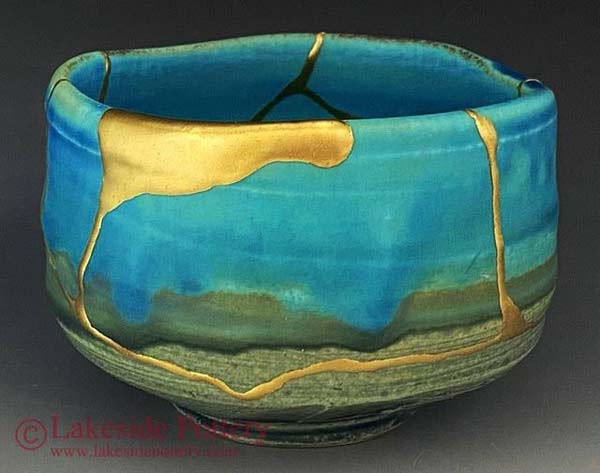
Kintsugi does not disguise the break. The gold lines clearly mark where the damage occurred. These visible “scars” become part of the design and part of the story. Many clients see this as a form of rebirth. The object returns, not as it was, but in a new state that openly carries its history.
The scars of Kintsugi can stand for healing, recovery, and growth. People often see their own life experiences in the repaired seams. For example, a client who broke a piece inherited from a parent may choose Kintsugi because the visible lines honor both the loss and the continuation of the family story. A couple may choose Kintsugi for an item broken during a difficult time in their relationship, letting the gold seams symbolize moving forward together. Someone who has gone through illness, loss, or major change may find comfort in a piece whose scars are shown with pride rather than hidden.
In these situations, Kintsugi becomes more than an artistic choice. It is a quiet statement that healing is possible, scars can be beautiful, and what has been broken can return with added strength and meaning.
More About Kintsugi
Restoring Religious or Spiritual Objects
Many religious and spiritual objects carry a different kind of weight. A small statue from a home altar, a temple piece, a ritual object, or a devotional figure can represent faith, protection, blessing, or family tradition. When these items break, the need to repair them can feel urgent. We also frequently restore pieces for churches, temples, synagogues, meditation centers, and other places of worship, where the objects play an important role in community practice and shared heritage. In all of these settings, restoration becomes a way to show respect, maintain continuity, and preserve something that holds meaning for individuals and entire communities.
Objects with Historical or Cultural Importance
Some pieces have value not only to one owner, but also to history and culture. Pre-Columbian ceramics, Native American pottery, Han or Tang dynasty figures, and other archaeological or ethnographic objects often belong in this category. These works may carry religious, cultural, or scholarly importance and may be protected by laws or collecting guidelines.
Decisions about restoring these items should be made very carefully. In many cases, conservation rather than full cosmetic restoration is the best path. Conservation aims to stabilize the object, prevent further loss, and keep as much original material and surface as possible. Owners of historically important objects are strongly encouraged to consult qualified conservators and appraisers before any work is done, so that both the cultural meaning and the material history of the object are respected.
For these pieces, documentation, reversible methods, and minimal intervention are often more appropriate than heavy cosmetic changes. The goal is to protect the object’s story for future generations as much as possible.
Purely Transactional Decisions Based on Value
Not every restoration decision is emotional. Many choices are practical and based on market value, insurance, or replacement cost. In those cases, the question is simple: “Does this repair make financial sense?”
When Repair Makes Financial Sense
For high-value objects, repair is often an easy decision. For example, if a ceramic plate by a major artist such as Picasso is worth $25,000, a professional restoration costing several hundred dollars is a logical step. The repair protects a valuable asset and helps preserve its display and market value.
When Repair Does Not Make Financial Sense
At the other end of the spectrum, a figurine worth a modest amount is usually not a candidate for a costly repair unless the owner has strong sentimental reasons. Paying more for the restoration than the piece is worth on the open market does not make sense for clients whose main concern is value or resale.
Many decisions fall between these two extremes. Collectors and owners compare the repair cost to the item’s current value, what it would cost to replace, and how important the piece is in a set or collection. In those cases, the choice is a straightforward calculation rather than an emotional one.
How Repair Affects the Value of Pottery, Ceramics, and Statues
Other Practical Reasons People Choose Restoration
Beyond emotion and market value, there are other clear reasons to restore. Some pieces cannot be replaced because the artist is no longer working, the glaze or finish cannot be duplicated, or the form is unique. Others are restored to prevent further deterioration in a collection or to avoid throwing away well-made objects. In these cases, restoration is a practical choice that supports long-term preservation and reduces waste.
The Journey From Breakage to Return
Whether the motive is emotional, symbolic, practical, financial, or historical, most clients move through a similar path: the shock of the break, concern about what to do, the decision to trust a restorer, the waiting period, and finally the relief of seeing the object whole again. For owners, the return of the piece often restores a sense of balance. For those who broke an item while responsible for it, a successful repair can ease stress and help repair relationships.
In the end, a restored ceramic or sculpture carries more than its original purpose. It also carries the story of its break and renewal. For many people, that story makes the piece more meaningful than it was before it ever broke.